
Your Comfort Isn’t the Point
The Quiet Cost of Choosing Comfort Over Responsibility


Your Comfort Isn’t the Point
The sign on the clinic wall was laminated, the corners curling: Please be patient. We are doing our best.
Maya read it twice while the man in front of her argued with the receptionist about the wait time. He kept glancing back, as if the room owed him an apology for existing.
“I’ve been here forty minutes,” he said, loud enough to recruit allies. “This is ridiculous.”
Maya checked her phone. Forty minutes felt long only if you believed your time mattered more than everyone else’s. She thought of her mother, who had waited four hours on a plastic chair last winter because the buses were late and the doctor was short-staffed. Her mother hadn’t complained. She had knitted.
When it was Maya’s turn, the receptionist smiled with a practiced softness. “Thank you for waiting.”
Maya nodded. “No problem.”
It wasn’t heroism. It was understanding. There’s a difference.
Later that day, at work, the comfort-first mindset arrived again—this time wrapped in professional language. The team meeting was about a new outreach program. The data showed that certain neighborhoods were underserved, that barriers were real and measurable. Maya suggested longer hours and mobile services.
“That sounds… intense,” a colleague said. “People might burn out.”
Maya felt the familiar tightening in her chest. Burnout was real. She respected it. But she also knew how often “comfort” was used to slow progress just enough to feel reasonable.
“People are already burning out,” she said gently. “They’re just not the ones in this room.”
The room went quiet. Someone cleared their throat. The meeting moved on without a decision.
That evening, Maya met her friend Jonah for coffee. Jonah liked to say he was “empathetic but honest,” which often meant he preferred peace to truth.
“You’re always pushing,” he said, stirring sugar into foam. “Don’t you ever get tired of being uncomfortable?”
Maya smiled. “All the time.”
“So why keep doing it?”
She thought of the clinic. The meeting. The long waits and short budgets. She thought of how comfort had become a currency, spent freely by those who had plenty and hoarded from those who didn’t.
“Because my comfort isn’t the point,” she said.
Jonah frowned. “Whose is?”
“Sometimes, no one’s,” Maya replied. “Sometimes the point is just to do what’s needed.”
On the walk home, she passed a small protest outside city hall. Cardboard signs, tired faces, a chant that kept losing rhythm. A man in a suit slowed to complain about the noise. “Can’t they do this somewhere else?” he asked no one in particular.
Maya stopped. The protestors weren’t blocking traffic. They weren’t violent. They were simply inconvenient.
She stepped closer and listened. It was about housing. About rent increases that outpaced wages. About families choosing between groceries and heat.
One woman caught Maya’s eye and nodded, as if acknowledging a shared understanding. Maya felt the old instinct to stay neutral, to keep moving, to protect the smooth surface of her evening.
Instead, she stayed.
She didn’t chant. She didn’t hold a sign. She stood, present, for twenty minutes that felt longer than forty. Cars honked. The suited man scowled and left. The chant regained rhythm.
When Maya finally walked away, she felt lighter, not heavier. Discomfort, she realized, was not the same as harm. Often, it was the doorway to honesty.
That night, she wrote a note on her fridge with a marker that squeaked: Your comfort isn’t the point.
Not as a reprimand. As a reminder.
Because comfort can be a cushion that dulls urgency. Because growth rarely happens on soft surfaces. Because justice doesn’t arrive politely, asking permission to disrupt dinner plans.
Maya knew she would still rest. She would still laugh and protect her limits. But she would no longer confuse ease with goodness.
Some days would ask more of her patience. Others would demand her voice. None would promise comfort.
And that was okay.
The point, she decided, was not to feel good—but to do right, even when it didn’t.
About the Creator
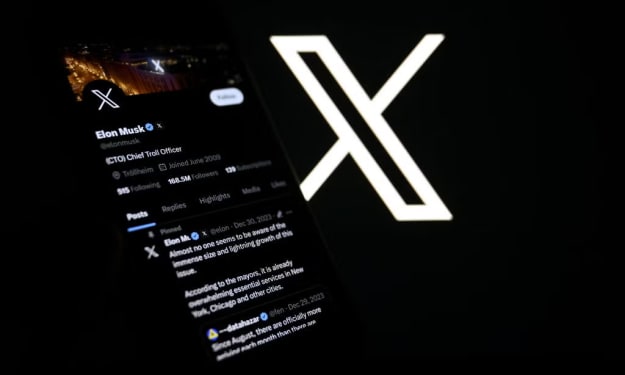
X Account Hacking: Advanced Protection Against Modern Cracking Threats
The Evolving Battle for Your X (Twitter) Account In the rapidly changing landscape of social media, X (formerly Twitter) has become a central hub for communication, news, and business. This significance makes it a prime target for cybercriminals who continuously refine their attack methods. While understanding these threats is crucial for defense, it is vital to recognize that attempting to hack into an account you do not own is illegal, unethical, and can result in severe legal consequences, including criminal prosecution. This guide, informed by cybersecurity experts, details the modern threat landscape and provides a definitive, actionable blueprint to fortify your X presence against sophisticated attacks in 2026.
By Alexander Hoffmann5 days ago in Lifehack



Comments
There are no comments for this story
Be the first to respond and start the conversation.