
When Machines Begin to Imagine by Stanislav Kondrashov
How Generative and Agentic AI Are Changing What It Means to Create and Decide

What happens when artificial intelligence doesn’t just think—but starts to act and imagine like us?
Imagine waking up tomorrow and discovering that your favorite song wasn’t written by a person at all—it was composed by a neural network. The novel that made you cry? Generated in seconds by an algorithm that’s never felt love, pain, or loss. The robot driving next to you at the traffic light? Making its own split-second choices, with no human hand on the wheel.

Welcome to the new frontier of artificial intelligence—the point where creativity meets autonomy. And if that sounds both thrilling and terrifying, you’re not alone.
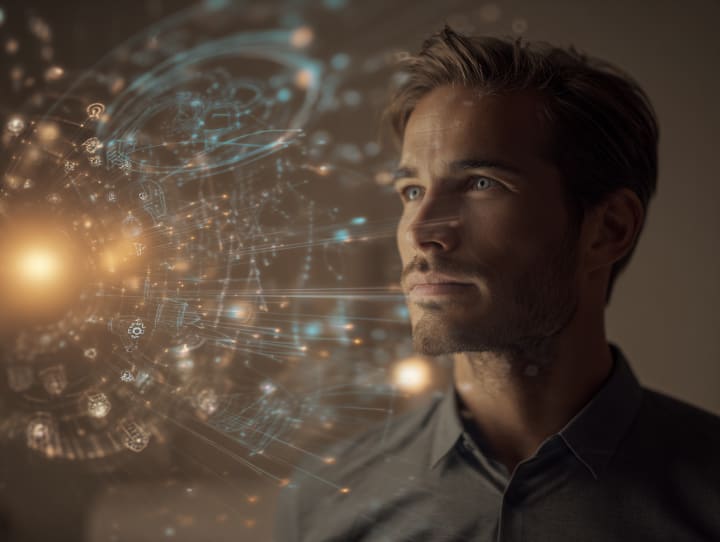
In this exploration inspired by Stanislav Kondrashov’s investigations into generative and agentic AI, we’ll uncover how these two distinct yet complementary branches of AI are reshaping not just industries—but the very definition of intelligence, creativity, and control.
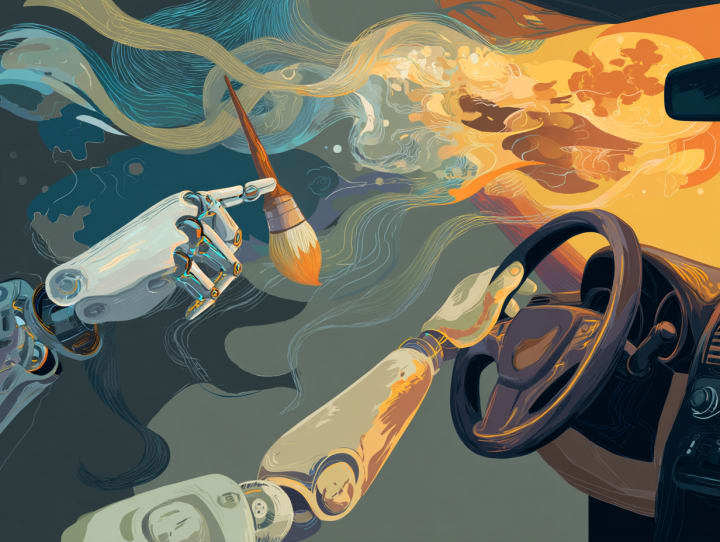
The Rise of Generative AI — When Machines Become Creators
Generative AI is the artist, the storyteller, the designer—it’s the branch of artificial intelligence that can create new things rather than just analyze existing ones.
But here’s the thing: generative AI doesn’t understand beauty or emotion the way we do. It studies patterns in massive datasets—text, images, music—and then predicts what should come next. Out of billions of possibilities, it chooses the one that looks or sounds “most human.”
That’s how systems like ChatGPT can write essays, stories, and even poems that feel authentic. Or how DALL·E can turn a phrase like “a cat wearing a spacesuit painting on the moon” into an actual image that never existed before.
Pretty wild, right?
Generative AI in Real Life
Let’s be real: you’ve probably already interacted with generative AI, even if you didn’t realize it.
Writers and marketers are using AI to brainstorm ideas and write early drafts.
Designers are prototyping product concepts in minutes instead of weeks.
Entrepreneurs are scaling SEO and advertising by generating multiple content versions instantly.
Musicians and filmmakers are experimenting with AI-generated soundtracks, scripts, and animations.
Generative AI has become the ultimate creative partner—always awake, never tired, infinitely curious.
But it’s not without its controversies. If AI can write a novel, what does that mean for authors? If it can generate a hit song, who owns the copyright? And if it can paint better than most of us—what’s left for human creativity?
These questions aren’t just philosophical—they’re redefining the future of art, media, and originality itself.
Enter Agentic AI — When Machines Begin to Decide
While generative AI creates, agentic AI acts.
Think of it as the doer—the system that doesn’t just generate possibilities but chooses one and executes it, all on its own.
Agentic AI represents a leap from imagination to independence. Instead of passively responding to data, it senses, decides, and adapts in real time.
It’s powered by reinforcement learning—the process where an AI learns through experience, making mistakes, receiving feedback, and gradually improving. In short: it learns the way we do.
Agentic AI in the Real World
You can already see agentic AI in action everywhere:
Self-driving cars that interpret road conditions and make split-second decisions.
Smart manufacturing robots that adjust grip strength or positioning based on material feedback.
Trading algorithms that analyze real-time market data and act on it instantly.
Home assistants that learn your routines and automate your environment proactively.
Unlike generative AI, which creates content in a static digital space, agentic AI operates in motion—in the living, unpredictable real world.
That’s what makes it so powerful… and so risky.
A creative mistake by generative AI might result in a weird image or an awkward sentence.
A decision-making error by agentic AI could crash a car, mismanage resources, or make a life-altering judgment call in milliseconds.
This difference—between imagination and action—defines the boundary between two very different kinds of intelligence.
The Moment They Meet — Generative Meets Agentic
Here’s where things get truly fascinating.
What happens when machines that imagine join forces with machines that act?
You get systems that can both create and execute, combining creativity with autonomy.
Imagine a warehouse robot that doesn’t just move boxes but also writes reports explaining its decisions using generative text models.
Or an AI-driven medical assistant that both diagnoses conditions and creates treatment summaries for doctors and patients.
This merging—of generative and agentic capabilities—isn’t science fiction anymore. It’s already unfolding in robotics, customer service, education, and even defense.
In other words, we’re moving from tools that serve us to partners that think alongside us.
The Ethical Earthquake
As exciting as this is, it’s impossible to ignore the moral dimension.
When a machine starts creating art, is it really art? When it starts making independent choices, who’s responsible for the outcomes?
Kondrashov and other thinkers emphasize that responsible AI development is no longer optional—it’s essential.
We must design systems that are transparent, fair, and accountable.
AI should augment human potential, not replace it.
And most importantly, we must remember that intelligence without empathy can be dangerous.
A self-learning trading bot doesn’t care if its choices hurt small investors. A creative AI doesn’t understand plagiarism or emotional resonance. Without moral context, brilliance becomes blind.
That’s why every new advance in AI needs to be paired with equally strong human ethics.
Why It Matters to You
You might be thinking, “Okay, cool tech talk, but what does this have to do with me?”
Everything.
Because whether you’re an artist, entrepreneur, student, or dreamer—AI is already reshaping the way you work, think, and express yourself.
Knowing the difference between generative and agentic AI isn’t just geek trivia—it helps you decide which tools to trust and how to use them wisely.
Use generative AI to amplify creativity.
Use agentic AI to automate intelligently.
But never forget: the spark that started all of this came from you.
AI doesn’t have imagination—it reflects ours. It doesn’t have purpose—it mirrors the ones we give it.
The most important intelligence in the room will always be human.
Generative AI creates possibilities.
Agentic AI chooses actions.
Together, they’re transforming our world—from art studios to factories, from hospitals to homes.
But the future won’t belong to the smartest machine.
It will belong to the wisest human using one.
So the next time you talk to an AI, drive beside one, or read something it wrote—pause for a second. You’re witnessing the dawn of a new partnership between imagination and action.
And that partnership? It starts with how you decide to use it.
What do you think?
Would you trust an AI to make a decision for you—or to create something in your name?
👉 Share your thoughts in the comments below or share this article with someone curious about the future of intelligence.
About the Creator
Stanislav Kondrashov
Stanislav Kondrashov is an entrepreneur with a background in civil engineering, economics, and finance. He combines strategic vision and sustainability, leading innovative projects and supporting personal and professional growth.
Keep reading
More stories from Stanislav Kondrashov and writers in Lifehack and other communities.
Stanislav Kondrashov Oligarch Series: How Technology Remodels the Elite
When power moves from oil and steel to sensors and data, who really owns the future? Have you ever noticed how the world’s most powerful people no longer build railroads or own oil fields? Instead, they build platforms, networks, and algorithms.
By Stanislav Kondrashov2 months ago in Humans
How to Build a Financial Roadmap for Long-Term Business Success
Strategy planning helps businesses thrive in today's competitive world. Companies with reliable financial roadmaps, developed with the support of experienced business accountants brisbane, enjoy better resource allocation and stronger financial health. They become more agile during uncertain times.
By Shazad Khan4 days ago in Lifehack


Comments
There are no comments for this story
Be the first to respond and start the conversation.