
Wear OS 6 Makes Smartwatches Feel Smarter and Easier on Battery
How Google’s latest update quietly improves daily smartwatch use

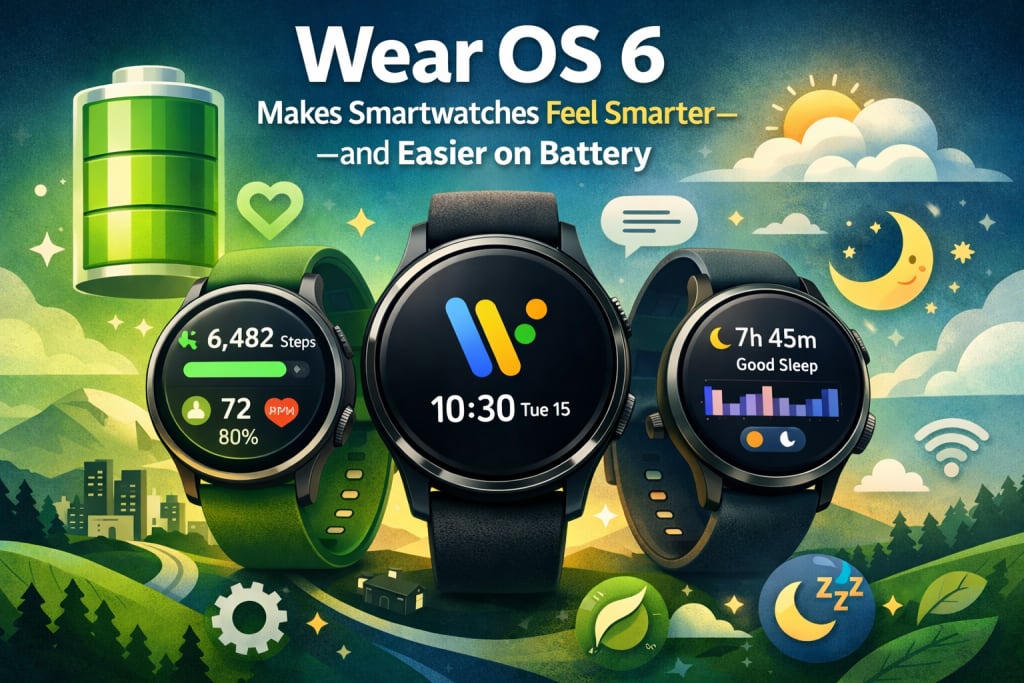
Wear OS 6 Makes Smartwatches Feel Smarter—and Easier on Battery
Smartwatch upgrades don’t normally attract much notice. Most enter silently, alter a few icons, add a setting or two, and walk on. For many people, they’re something you install and forget about.
Wear OS 6 feels different—not because it’s showy, but because it affects how a smartwatch operates during typical, daily usage. It doesn’t beg for greater attention. It really asks for less.
And in 2026, that matters.
The Problem Smartwatches Have Always Had
Smartwatches offer convenience, but they’ve frequently generated their own form of friction.
Short battery life. Too many alerts. Features that seem beneficial but feel unpleasant in actual life. Over time, some people quit wearing their watch daily—not because it’s awful, but because it becomes one more thing to handle.
Wear OS 6 seems to recognize the issue explicitly. Instead of putting additional features on top, it concentrates on behavior: how the system functions, when it speaks out, and when it remains silent.
That alteration alone transforms the experience.
Smarter Doesn’t Mean Louder Anymore
For years, “smarter” software meant more recommendations, more prompts, and more automation. That strategy succeeded at first, but it also led to exhaustion. Users don’t want to continuously approve, reject, or control their watch.
Wear OS 6 provides a more restricted approach.
Smarter features are still present, but they seem less obtrusive. Notifications are handled more wisely. Background processes feel quieter. The system appears better at recognizing when to act—and when not to.
The result is a watch that feels attentive without being demanding.
Battery Improvements You Actually Notice
Battery life has always been one of the greatest pain areas for smartwatches. Even tiny enhancements may impact how consumers use their gadgets.
Wear OS 6 doesn’t promise miracles. Instead, it focuses on efficiency.
Background chores are controlled more carefully. Apps that don’t require continual activity are cut down automatically. System behavior adjusts better to everyday routines rather than operating at full capacity all the time.
What does it signify in real life?
Fewer moments of battery worry. Less need to worry about charging schedules. More confidence wearing the watch all day—and sometimes into the next.
That psychological difference counts just as much as the technical one.
Why Consistency Matters More Than Peak Performance
Most individuals don’t use their watches intently for short spurts. They use it sparingly and regularly.
Checking alerts. Tracking steps. Glancing at the time. Monitoring sleep. These acts happen hundreds of times a day, not all at once.
Wear OS 6 looks geared for such an approach. Performance seems constant rather than jagged. Animations are smoother. Delays are less visible. Nothing stands out—but nothing gets in the way either.
This type of regularity is easy to ignore, but it’s what makes a gadget seem dependable long-term.
A More Thoughtful Approach to Notifications
Notifications are both the finest and worst feature of a smartwatch.
Too few, and the watch seems meaningless. Too many, and it gets bothersome.
Wear OS 6 improves this balance slightly. Notifications feel more deliberate. Less urgent signals don’t necessitate quick action. Important ones still come through clearly.
The system seems better at prioritizing without forcing the user to continuously modify settings.
That’s an indication of maturity in platform design.
Smarter Features That Fit Into Real Life
Wear OS 6 adds improved system behavior, but what jumps out is how silently it does it.
Instead of showcasing intelligence, the platform lets it function behind the scenes. Suggestions feel more relevant. System activities seem better linked with context.
For example, battery-saving behavior varies organically based on how you use your watch. You don’t need to switch modes repeatedly or supervise settings.
The watch adapts to you—not the other way around.
Why This Update Feels More “Human”
Good technology seems human not because it imitates humans, but because it respects them.
Wear OS 6 respects:
attention
time
routine
energy
It doesn’t attempt to lure you in. It aims to remain helpful without becoming the center of interest.
That design idea is becoming more significant as consumers become bored of devices vying for attention all day.
How This Changes Daily Habits
One of the easiest ways to analyze a smartwatch update is to ask: does it impact how frequently you wear the device?
With Wear OS 6, the answer for many users is yes.
Better battery life promotes extended wear. Calmer alerts minimize the impulse to take the watch off. Smarter background behavior helps the gadget seem less distracting.
Over time, such tiny improvements build up to improved habits and more regular usage.
A Platform That’s Finally Settling In
Wear OS has gone through numerous stages. Early experimentation. Feature overload. Redesigns. Performance fixes.
Wear OS 6 seems like a platform that’s finally coming into itself.
Instead of striving to show what it can do, it concentrates on doing fewer things well. That confidence is obvious.
It shows that the platform isn’t following trends anymore—it’s polishing its identity.
What This Means for Different Users
Wear OS 6 won’t excite everyone in the same way.
People who seek spectacular new features may find the update underwhelming. But those who prioritize comfort, battery longevity, and consistency will welcome it instantly.
This update is particularly significant for:
everyday smartwatch users
folks who use their watch for health monitoring
users bored of charging anxiety
anybody who wants a watch that fades into routine
It’s less about enthusiasm and more about trust.
The Role of Google’s Long-Term Strategy
Behind Wear OS 6 is a bigger design move from Google.
Across its platforms, Google has been pushing toward calmer software—systems that anticipate demands without overwhelming consumers. Wear OS 6 fits neatly into that path.
It’s not about demonstrating AI or features. It’s about letting technology drift into the background.
For wearables, that’s precisely where it belongs.
Why Battery Life Is a Trust Issue
Battery life isn’t simply a technological problem—it’s an emotional one.
A gadget with inconsistent battery life increases tension. Users start planning around it, reducing usage, or abandoning features.
Wear OS 6 doesn’t guarantee eternal battery, but it develops trust. And confidence is what keeps individuals wearing their watch every day.
When consumers cease worrying about batteries, the device has done its job.
Small Improvements, Big Impact
It’s tempting to dismiss upgrades like Wear OS 6 as incremental. But gradual gains are frequently the most meaningful ones.
They don’t demand correction. They don’t need relearning. They just make life simpler over time.
That’s the type of progress people truly maintain.
Concluding Remarks
Wear OS 6 doesn’t strive to reinvent smartwatches. It aims to help them feel better to live with.
Smarter system behavior, increased efficiency, and quieter alerts combine into an experience that feels more balanced and more human. It’s an upgrade geared for regular living, not demonstrations.
In 2026, such a strategy seems perfectly correct.
The finest smartwatch software isn’t the one that does the most—it’s the one you forget about as it quietly performs its job effectively.
And that's where Wear OS 6 really shines.
About the Creator
abualyaanart
I write thoughtful, experience-driven stories about technology, digital life, and how modern tools quietly shape the way we think, work, and live.
I believe good technology should support life
Abualyaanart
Keep reading
More stories from abualyaanart and writers in Lifehack and other communities.
Google Pixel Watch 4 Feels Smarter With New Gestures and AI Replies
Google Pixel Watch 4 Feels Smarter With New Gestures and AI Replies Smartwatches have reached an intriguing phase. They’re no longer novel or experimental, and most people now understand what they’re for. They provide alerts, measure health, and save you from taking out your phone every few minutes.
By abualyaanart3 months ago in Lifehack
How to Save Money When You Live Paycheck to Paycheck
Saving money feels impossible when paying bills and putting food on the table becomes a weekly struggle. It seems like Pac-Man swoops in and gobbles up all the bills the second your paycheck hits the bank. But there’s always room to save. Life happens. It's better to be prepared for those rainy days than caught in the storm. Get your savings on by making small lifestyle changes. A few tweaks can help uncover money you didn’t realize you had. Put the money toward your nest egg and leave one worry behind. Check out the simple ways you can reduce costs and save money.
By Criminal Matters2 days ago in Lifehack



Comments
There are no comments for this story
Be the first to respond and start the conversation.