
Vitamin B1 and SUGAR Experiment: WARNING
Vitamin B1


Warning: Do not try this at home. I'm telling about the experiment between sugar and what sugar does to vitamin B1. The average person in the world is definitely doing this experiment unknowingly. So today we're going to talk about what this experiment is in relation to what high levels of carbohydrates do to certain nutrients, specifically vitamin B1, and all the consequences that occur from that.
And, of course, the sugar I'm talking about at the top of the list is the refined sugars, but not only that; there are hidden sugars, like starches. A starch is really sugar if you're consuming the starch that is in most foods in the world So it's a combination of those starches and sugars that will deplete your B1 and create all sorts of symptoms that you might think are connected to something else, but they're merely a vitamin B1 deficiency.
But let me just touch on my personal story with sugar and B1. Growing up, I lived on a lot of sugar, but further along in my 20s, I met my future wife. We ended up at a restaurant, and we both consumed a tremendous amount of pasta, pizza, wine, and one of the waiters was going past us with a dessert tray. He said, "Before I throw these out, do you want to sample any of these desserts?"
I was raised to never waste food, so of course we sampled every single dessert. Now, as I drove home that night, I had this thought: "I think I ate too much sugar." I put my head on the pillow, and what do I hear? Pounding in my inner ear; just my heart is pounding like crazy. But you would think I would learn from that situation.
No, I continued to consume pasta, breads, cereals, crackers for several years later. And then, of course, I had a sleeping problem at that point. So what did I do? I created a sugar coma to sleep. Every night, I had a pint of Ben & Jerry's before I went to sleep. Now, that worked to at least get me to sleep, but I woke up completely with fluid retention, which, by the way, is a B1 deficiency.
But what happens when you eat that much sugar without the B1? You get too much lactic acid, and that developed something called Restless Legs Syndrome. As time went on, my health started going down, down, down, down to the point where I had pre-diabetes. The inside of my eyelids were completely like sandpaper, bloodshot.
I didn't know what that was. Obviously, I finally figured things out, and here I am today; I don't have a B1 deficiency anymore. But at that time, I was in an experiment just like I think a lot of people are in the same experiment right now. An average person's diet is well over 50 to 60 to even 70% refined carbohydrates. But I want to kind of hone in on this B1. B1 is a fascinating vitamin, and a lot of the complications that occur from all sorts of diseases, especially type 1 and type 2 diabetes, are a lot with just the B1 deficiency.
B1 has everything to do with supporting a healthy nervous system, also everything to support the fuel to be turned into energy. But I want to kind of hone in on this B1 deficiency. So one of the first symptoms is nervous tension, irritability, restlessness, brain fog, and also something called air hunger, where it affects your breathing. You're going to start getting numbness on the bottom of your feet or the fingertips. You might have tremors with the hands. You might be very confused.
Also, your pulse rate might be low, but then when you actually do just a little bit of something, it goes way too high. Personality changes; they have very low tolerance to stress. You see that a lot with alcoholics. Well, that's because the alcohol really depletes B1, probably more than sugar does. Loss of manual dexterity; the coordination is off, headaches, insomnia.
Other than that, you're going to be perfectly fine; nothing to worry about. Some people will say, "Well, when I eat my junk food, it's enriched with B vitamins." Let's just talk about natural versus synthetic B1. Unfortunately, the top one nowadays is synthetically made, and the name for the synthetic version would be thiamine mononitrate. Extremely cheap; you can buy a kilogram of this stuff for roughly $30. So when you see a bottle of 100 pills and each one has 100 mg of B1, and it only costs $5.50, you have to realize you're still making a massive profit.
The bottle is more expensive than the material, whereas natural B1 is more expensive because you have to use natural sources. One natural version that I like is called alamine. It's very different from the synthetic version; it's actually fat-soluble, and so it can penetrate a lot of different tissues, whereas the water-soluble one is not able to penetrate through some of these fat-soluble membranes.
The synthetic version is dependent on something called active transport when it gets absorbed, which means there's a certain protein that allows it to go into the body. Number one, it gets saturated pretty quick, so only a certain amount goes into your body. Also, if you have gut problems—because I'm talking about the absorption in the small intestine—anything going on with the GI system or inflammation, you're going to have a hard time absorbing the synthetic version of B1, whereas the natural B1 doesn't need active transport; it can go right in.
So you can get a lot of it with just small doses. One thing I like about the natural version is that it can penetrate the blood-brain barrier. When you're taking the synthetic version and you're also consuming carbs, alcohol, chances are you're not going to get very much absorption. When I talked about B1 helping you make energy, it's this natural version of B1 that really can help the mitochondria produce more energy. Another question that people want to know is, "What about benfotiamine?"
Benfotiamine is good for something called Advanced Glycation End Products. Now, what does that mean? Well, that's a situation when you're consuming sugar and carbohydrates at the same time, and with this sugar connects to the protein and makes the protein unavailable. So it basically makes a lot of sticky proteins that clog everything up in your body. So if you're a diabetic, go with the benfotiamine.
The other thing you should really know is that in order for B1 to work, you need to have co-enzymes, and the big one is magnesium. Like I said before, when you consume too much carbohydrate and you don't then compensate by taking more B vitamins, that fuel is not going to be utilized. Of course, over time, all that sugar without the B1 damages the machine. Now you're going to have a hard time using energy, and this is what's behind Alzheimer's because the neurons can no longer get energy from glucose and many other tissues.
And this is why the ketogenic diet is so important, because it bypasses all that and it gives the body a different type of fuel from fat, not sugar, and it's in a form of kind of a packaged fat that we can absorb called ketones. Now we can start supporting these cells, but you better also increase the B1 that's deficient, or else you might still have issues. Let's talk about the foods that have the most B1. It's not really vegetables. Vegetables have some, but they have anti-B1 nutrients like oxalates, right?
That's an anti-B1. Pork, believe it or not, has the most B1, and then beef, wheat germ, whole grains—but I don't recommend that because that's going to give you the gluten and the other issues with the carbs. Organ meats, eggs, fish, nuts, things like that. But fat and dairy don't have a lot of B1. Nutritional yeast that's unfortified has a good amount of B1. So like I said before, warning: Do not try this experiment at home. If you are on a high-carbohydrate diet, go on a low-carbohydrate diet. Also, make sure you don't become vitamin B1 deficient.
About the Creator
Keep reading
More stories from srinivasan chandra govindharaj and writers in Lifehack and other communities.
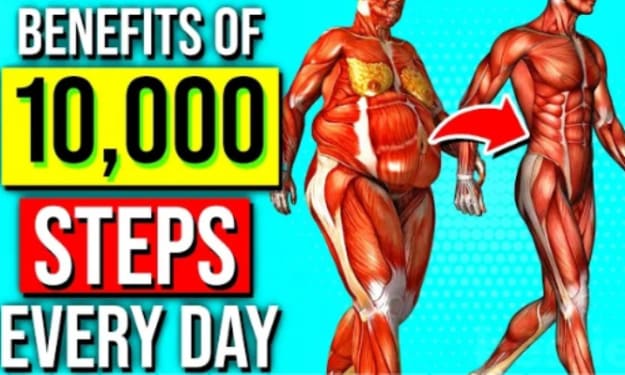
10 Unexpected Benefits of Walking 10,000 Steps a Day
Hello friends! Did you know that walking just 10,000 steps a day may lower your risk of heart disease by up to 21% and mortality risk by 39%? According to the British Medical Journal group, walking may seem basic, but its benefits go far beyond just keeping you active. And the best part? You don't need fancy equipment or a gym membership—just comfortable shoes and the determination to move.
By srinivasan chandra govindharajabout a year ago in Lifehack
5 Simple Lifehacks to Keep Your Teeth Healthy Every Day
Healthy teeth aren’t just about occasional dental visits—they’re shaped by the little choices you make every day. Simple habits, when done consistently, can prevent cavities, gum issues, sensitivity, and other oral concerns while keeping your smile bright and comfortable. These lifehacks are easy to integrate into your routine and don’t require drastic lifestyle changes.
By Smile Sydney6 days ago in Lifehack



Comments
There are no comments for this story
Be the first to respond and start the conversation.