
Understanding Breast Cancer: Awareness, Detection, and Hope
A Complete Guide to Prevention, Diagnosis, and Treatment


Introduction
Breast cancer is a most common type of cancer in women around the world and also men but at a relatively lower frequency. It begins when the breast has abnormal cells that divide uncontrollably and create a tumor that is capable of spreading to other parts of the body. Over the years, awareness and caution, early detection, and advanced treatments have ensured the prevention of the impact of breast cancer. However, it is a serious health concern that should be addressed, learned about, and supported.
What Is Breast Cancer?
Breast cancer develops in breast tissue, most often in the ducts (the milk tubes) or the lobules (the milk glands). Sometimes it also spreads to surrounding lymph nodes or even to more distant organs such as bones, lungs, or liver. The condition may occur in different ways, such as:
Ductal Carcinoma in Situ (DCIS): An early cancer with abnormal cells within the lining of a breast duct.
Invasive Ductal Carcinoma (IDC): Most common, where cancerous cells spread beyond the ducts.
Invasive Lobular Carcinoma (ILC): Begins in the lobules and may extend into surrounding tissue.
Every breast cancer is different, and treatment is determined by the stage and type of the tumor.
Risk Factors
There is no one reason why breast cancer develops, but certain factors do increase the likelihood. These are:
Gender: Women are much more likely than men.
Age: Risk increases with age.
Genetics and family history: Gene mutations like BRCA1 and BRCA2 significantly increase the risk.
Hormonal factors: Premature menstruation, late menopause, or hormone replacement therapy.
Lifestyle risk factors: Obesity, smoking, alcohol consumption, and a lack of physical activity increase risk.
Radiation history: Having had radiation to the chest previously can increase the risk of developing breast cancer.
It should be noted that it doesn't always mean an individual will get breast cancer with risk factors, but it's better to be informed and avoid and monitor them.

Signs and Symptoms
Breast cancer can develop silently without noticeable symptoms at some point. However, the following should not be underestimated:
Lump or thickening in the breast or underarm.
Change in size, shape, or texture of the breast.
Unusual breast or nipple pain.
Nipple discharge, potentially with blood.
Skin changes such as redness, dimpling, or puckering.
Inverted nipple or its inversion.
These changes may be detected by regular self-examination and regular screening at an early stage.
Diagnosis
If a physician suspects breast cancer, various tests can be performed:
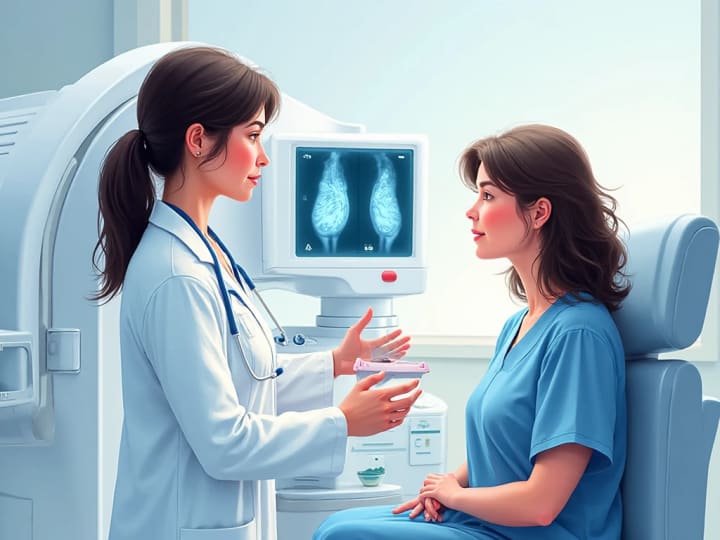
Mammogram: Breast X-ray to look for unusual growths.
Ultrasound: Used to scan out lumps and differentiate between solid and fluid-filled areas.
Biopsy: Taking a very small sample of tissue to see if cancer cells are there.
MRI: Provides precise images of the breast to study further.
Accurate diagnosis is important to select the correct treatment course.
Stages of Breast Cancer
Breast cancer is staged, from Stage 0 (noninvasive) through Stage IV (cancer that has spread). Staging is based on the size of the tumor, whether lymph nodes are involved, and whether cancer has spread to other parts of the body. Cancers diagnosed at an early stage have a much greater chance of successful treatment.
Treatment Options
Treatment depends on the type and stage of the cancer and the patient's overall health. Treatment used includes:
Surgery: Removal of the tumor or, in some cases, the entire breast (mastectomy).
Radiation treatment: Strong beams destroy cancer cells in the treated areas.
Chemotherapy: Drugs kill cancer cells or stop them from growing.
Hormone therapy: Interferes with hormones like estrogen or progesterone that feed some breast cancers.
Targeted therapy: Destroys proteins or genes that assist in the growth of cancer cells.
Immunotherapy: Stimulates the body's immune system to fight cancer cells.
Most often, a mix of these is recommended as optimal for outcomes.
Prevention and Lifestyle Habits
While not all breast cancer can be prevented, some lifestyle modifications do decrease risk:
Maintain a healthy weight through a balanced diet.
Exercise regularly.
Reduce alcohol consumption and quit smoking.
Breastfeed, if possible, as there has been a linkage with reduced risk.
Get regular screenings if you have a family history.
Genetic testing and counseling may also be desired by those with a high family history.
Emotional and Social Impact
The breast cancer diagnosis affects not just physical health. Anxiety, depression, and emotional stress can be a consequence. Fear of body image alteration after surgery or therapy is frequent among most patients. Familiarity from the family and friends as well as medical professionals is very significant. Counseling and support groups bring solace, endurance, and hope. Survivors generally emphasize the significance of positive mindsets and supportive emotional networks in recovery.
Living With Breast Cancer
With existing medical technology, survival becomes extremely high in breast cancer cases, especially if detected early. The majority of patients recover and live active, productive lives after treatment. Follow-up tests are required to confirm healing and detect recurrence. Lifestyle change, ongoing exercise, and stress management can help survivors attain overall well-being.
Conclusion
Breast cancer is a serious health crisis, but awareness, early detection, and advances in medical care offer hope. Education about risk factors, routine screening, and lifestyle with healthy habits can take a long way. Appropriate treatment and emotional support for positive well-being for those diagnosed are crucial to them in their recovery process. Breast cancer is not just a physical disease—body. It impacts the mind and spirit too. Through joint efforts, higher awareness, and sympathy, society can ensure no one endures it single-handedly.
About the Creator
Kiruthigaran Mohan
art writing...
Keep reading
More stories from Kiruthigaran Mohan and writers in Lifehack and other communities.
Cholesterol and High Blood Pressure: Practical Ways to Protect Your Heart
Heart disease remains one of the leading causes of illness and death around the world. Two of the most important risk factors are high blood pressure and elevated cholesterol levels. Both are often described as "silent killers" because they often develop without symptoms until after the damage has been done.
By Kiruthigaran Mohan4 months ago in Lifehack
How I Reversed My Fatty Liver Without Starving or Living in the Gym: A Personal Success Story
Here’s how I reversed my fatty liver. And how you can, too. Let’s be brutally honest for a second. When I first saw the words “fatty liver” on my lab results, I felt a cold wave of panic, followed by a heavy, numbing sense of failure. My doctor’s voice sounded distant: “…early stage… lifestyle-driven… reversible.” Reversible. That word felt like a hollow promise, a medical platitude. All I could think was, “I’ve tried diets before. I know I should exercise. Nothing sticks.” I left that appointment with a pamphlet and a crushing weight of confusion. I was overwhelmed, skeptical, and honestly, a little scared.
By John Arthor4 days ago in Lifehack
How I Reclaimed 5 Hours a Week by Automating Image Descriptions
We live in a visual world. Whether I am writing a blog post, updating a portfolio, or managing social media content, I deal with dozens of images daily. But there has always been a hidden time-killer in my workflow: the need to turn those visuals into text.
By Thomas Vance7 days ago in Lifehack


Comments
There are no comments for this story
Be the first to respond and start the conversation.