
UK Disposable Vape Ban Explained: Why They're Banned & What It Means for Vapers
UK's ban on disposable vape sales is now in effect (June 1, 2025). Understand the new law, why they're banned, penalties for selling & impact on users.


The familiar sight of brightly colored, flavor-packed disposable e-cigarettes, or "vapes," on shop shelves across the UK is now a thing of the past. As of June 1, 2025, a nationwide ban on the sale and supply of all single-use disposable vapes has come into force. This significant legislative action, implemented across England, Scotland, Wales, and Northern Ireland, aims to tackle two pressing national concerns: the alarming rise in youth vaping and the substantial environmental damage caused by these throwaway devices. This guide unpacks why this ban has been introduced, what it specifically covers, the penalties for non-compliance, and the broader context of vaping and health in the UK.
Why is the UK Government Banning Disposable Vapes?
The decision to prohibit disposable vapes stems from a confluence of growing public health and environmental concerns that have become increasingly prominent in recent years.
1. Tackling the Surge in Youth Vaping
A primary driver for the ban is the "alarming rise in youth vaping." Despite it being illegal to sell any vape product to individuals under the age of 18, disposable vapes, with their often sweet and fruity flavors (like bubblegum or candy floss), vibrant packaging, ease of use, and relatively low "pocket money prices," proved highly attractive and accessible to children and teenagers.
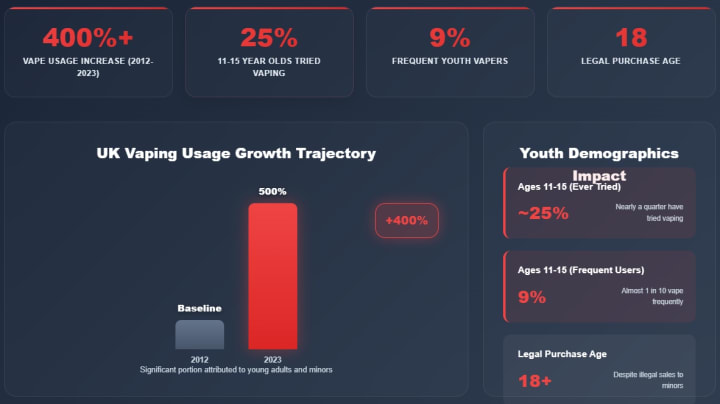
- Government and health charity data highlighted this worrying trend. For instance, Action on Smoking and Health (ASH) reported that in 2024, around 18% of 11 to 17-year-olds (approximately 980,000 children) had tried vaping. About 7% (390,000 children) stated they currently vaped, a figure down slightly from 8% in 2023 but still significantly higher than the 4% recorded in 2020.
- NHS figures from 2023 showed a quarter of 11 to 15-year-olds in England had tried vaping, with almost one in ten using e-cigarettes regularly.
- The British Medical Association previously warned that flavors appealing to children could lead to early nicotine addiction.
The ban aims to significantly reduce the appeal and accessibility of these specific products to underage individuals, thereby protecting their health and preventing a new generation from becoming addicted to nicotine.
2. Addressing the Environmental Waste Crisis
The environmental impact of disposable vapes has become a critical issue. These single-use plastic devices, containing lithium-ion batteries and electronic components, are often improperly discarded, creating a substantial e-waste problem.
- According to the Department for Environment, Food, and Rural Affairs (Defra) and research by Material Focus, an estimated almost five million single-use vapes were being thrown away or littered in the UK every week in 2023.
- These devices are rarely recycled correctly due to their complex mixed materials and integrated batteries. They often end up in general waste bins, destined for landfill or incineration.
- The lithium-ion batteries within discarded vapes pose a significant fire risk in bin lorries and waste management facilities if damaged or crushed.
- Improperly discarded vapes can also leak toxic compounds such as cobalt, copper, lead, and arsenic into the environment, contaminating soil and waterways and posing a threat to wildlife.
The government's ban is a direct measure to combat this significant and growing stream of e-waste and to support the country's drive to end its "throwaway culture."
What Types of Vapes Are Banned vs. What Remains Legal?
The new law specifically targets single-use or disposable vapes. The government defines a vape as "single-use" if its battery cannot be recharged OR if it is not refillable with e-liquid. If a device fails either of these criteria, its sale and supply are now illegal. This ban applies to all disposable vapes, whether they contain nicotine or are nicotine-free.
Crucially, reusable vape products remain legal for sale to adults. For a vape to be considered reusable, and thus legally saleable, it must be both rechargeable AND refillable. This means it must have a battery that can be recharged (e.g., via USB) AND it must have a mechanism for refilling with e-liquid. This can be a tank that the user fills from a bottle or a system that uses replaceable pre-filled pods or cartridges, provided these replacement components (including replaceable coils, if applicable) are sold separately.

What Happens If You're Caught Using or Selling Disposable Vapes After the Ban?
For individuals, the ban primarily targets the sale and supply of these devices by businesses. It will not be illegal for an individual to own or be in possession of a single-use vape for personal use if they acquired it before the ban or legally purchased it abroad for their own consumption. Any existing stock of disposable vapes that sellers may have cannot be sold after the ban and must be properly recycled.
For businesses (shops, online retailers, manufacturers, wholesalers, importers, healthcare settings, and stop smoking services), continuing to sell or supply disposable vapes after June 1, 2025, is illegal and carries significant penalties. Trading Standards will seize any single-use vapes found on sale. In England, a business failing to comply faces a minimum £200 fine for a first instance, with repeat or serious infractions leading to an unlimited fine or even imprisonment.
The Broader Regulatory Context: Taxes and Future Restrictions
The ban on disposable vapes is part of a larger government strategy outlined in the Tobacco and Vapes Bill. This bill also includes provisions to:
- Introduce a new vaping duty (tax) on e-liquids, scheduled to start on October 1, 2026. This will be charged at a flat rate of £2.20 per 10ml of vaping liquid. Simultaneously, tobacco duty will be increased to maintain a financial incentive for smokers to switch to (reusable) vaping.
- Outlaw vape advertising and sponsorship to further reduce youth appeal.
- Implement measures to create the "first smoke-free generation" by making it illegal for those born on or after January 1, 2009, to ever legally buy tobacco products.
- Potentially restrict vape flavors, packaging, and retail displays to make them less attractive to children.
Health Impacts of Vaping: The Current Understanding
The NHS states that vaping "is not completely risk-free, but it poses a small fraction of the risk of smoking cigarettes." This is primarily because vapes do not produce tar or carbon monoxide, two of the most harmful elements in tobacco smoke. Vaping is acknowledged as a tool that can help adult smokers quit, with evidence suggesting vapers can be twice as likely to succeed compared to those using other nicotine replacement products.
However, the long-term health risks of vaping are not yet fully known due to its relatively recent widespread use. E-cigarettes can contain harmful toxins, and there are concerns about potential lung damage and the impact of high nicotine content on cardiovascular health. The World Health Organization (WHO) has also warned about the "alarming evidence" of damage caused by vaping. To better understand these risks, the UK government announced a £62m research project in February 2025 to track 100,000 young people for a decade.
The primary concern with any nicotine product is addiction. The Department of Health and Social Care has emphasized, "Vapes can be an effective way for adult smokers to quit - but we have always been clear that children and adult non-smokers should never vape."
Will the Ban Have Unintended Consequences?
Some experts and industry bodies have raised concerns about the potential unintended consequences of the disposable vape ban. A report by the Future Health Research Centre warned that the ban could push up to 200,000 people back to smoking if not managed carefully with support for transitioning to reusable vapes or other cessation methods. However, recent research from University College London (UCL) after the ban was announced in January 2024 suggested a steep decline in disposable vape use, particularly among young adults, with many likely to "move to reusable versions rather than stop vaping completely."
Conclusion: A Decisive Step in UK Vaping Policy
The UK's ban on disposable vapes is a significant regulatory intervention aimed at tackling critical issues of youth nicotine addiction and environmental pollution. While reusable vaping systems remain a legal and encouraged option for adult smokers seeking a less harmful alternative, the market for single-use products is now closed. This move, part of a broader strategy to create a smoke-free generation and further regulate all nicotine products, signals a clear governmental intent to reshape the vaping landscape in favor of greater public health protection and environmental responsibility.
About the Creator
Matthew Ma
Ecigator is one of the best ISO-certified disposable vape manufacturers for OEMs, ODMs, and OBM since 2010.
Keep reading
More stories from Matthew Ma and writers in Lifehack and other communities.
Chinese Vape Tariff Hits 79%: A Blow to the US Vaping Industry
The vaping industry in the United States is facing an unprecedented challenge as tariffs on Chinese vape products have skyrocketed to a staggering 79% as of April 9, 2025. This development is the result of an ongoing trade dispute between the US and China, which has led to the imposition of multiple layers of tariffs on various imported goods, including electronic cigarettes.
By Matthew Ma11 months ago in Lifehack
How to Recover a Yahoo Account: The Ultimate Step-by-Step Guide for 2026
Losing access to your Yahoo account can feel like losing a digital key to your personal and professional life. With a history that includes some of the largest data breaches globally, securing and knowing how to recover your account is more critical than ever. Whether you’ve been locked out due to a forgotten password, a hacked account, or an old, inactive email address, this comprehensive guide walks you through every official method to regain access. We will cover explicit recovery techniques, essential protection strategies to prevent future lockouts, and answer the most frequently asked questions, all based on professional insights.
By Alexander Hoffmann2 days ago in Lifehack
Kitchen Renovation Material Trends (2026 Report)
The 2026 kitchen is a study in deliberate, thoughtful evolution. Homeowners and designers are moving away from the stark minimalism and cold, sterile palettes that have dominated recent years. In their place, a new design language is emerging—one that speaks to our collective desire for warmth, tranquility, and a deeper connection to craftsmanship. This year, the kitchen is not just a place to cook; it is the hearth of the home, a multi-functional sanctuary designed for living, working, and gathering. The trends shaping this transformation are rich with texture, grounded in nature, and seamlessly integrated with invisible technology. This report delves into the definitive material trends of 2026, exploring how surfaces, colors, and finishes are being reimagined to create spaces that are both visually stunning and profoundly personal.
By Flooring Tips4 days ago in Lifehack



Comments
There are no comments for this story
Be the first to respond and start the conversation.