
Trends In Retail Technology In 2023
What Retailers are Going to Adopt for Business Growth

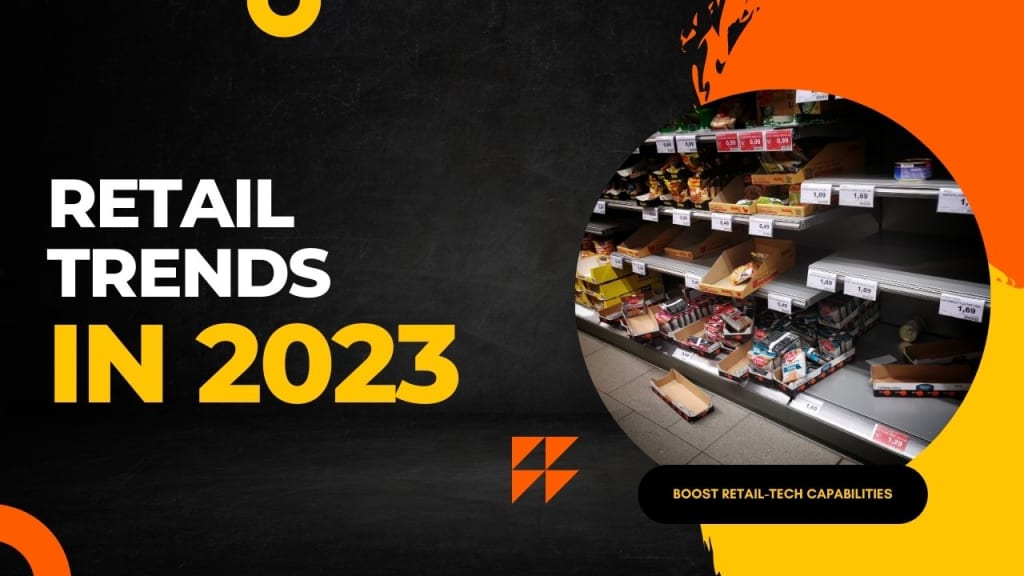
The shoppers' demands are ever-changing. They prefer shopping channels that are easy to access, flexible, and provide memorable experiences. Something online shopping platforms have been continuously providing. This has considerably shifted consumer business away from traditional brick-and-mortar stores.
However, adapting technology can help retailers increase their customer inflow. Therefore, they must follow modern technological trends to strengthen their retail-tech capabilities. This will empower them to provide the needed customer experience and outgun the growing online competition.
Here are the trends in retail technology that the world will see in 2023.
1. Digital Transformation
Retailers must use technology to unlock innovation sources, improving customers' in-store shopping. You can implement cloud computing and include specific technologies to align with the business to drive the retail experience. For example, you can use cloud-based POS software to manage inventory and get real-time stock updates. Analyzing the sales data will give you items that are usually in demand among your customers. You can then pre-stock the necessary stock levels or reshuffle them between your warehouses in real-time. This way, your customers will always have their favorite items available while visiting your store.
Part of this digital transformation will be the incorporation of mobile barcode scanners. Your employees can ring up sales with their mobile devices. Your customers can then easily check out instead of waiting in a long line for a few items. Another part of this strategy will be based on "Go to where your customers are and make it easy for them to purchase." You must incorporate multiple mobile payment systems, such as Google Pay, PayPal, Venmo, Apple Pay, etc.
2. AR and VR for Today's Consumers
Today's customers crave an immersive, memorable buying experience; something Augmented Reality and Virtual Reality can easily provide. According to Nielsen's survey in 2019, 51% of consumers even showed a willingness to use augmented reality to assess products. This shows augmented and virtual reality's immense potential in the retail industry. Retailers can tap into it to bridge the gap between the physical and the digital, as more shoppers are now opting for online shopping.
AR and VR empower customers with an unrivaled level of interactivity. They can explore products in a virtual environment that simulates a physical retail store. You can examine product details closely and compare prices.
This technology is not just for mega-brands like Home Depot, IKEA, or Target. Small businesses can also leverage its impact to reap benefits. An example is a feature introduced by Shopify to help brands build their AR experiences. Shopify reported that products that use AR content have a 94% higher conversion rate than products that do not. As a result, brands must consider making the most of augmented reality to boost their business in 2023.
3. Omnichannel Retail
According to the Harvard Business Review, 73% of consumers use various channels during their purchase journey. The revitalization of brick-and-mortar has prompted retailers to innovate ways to devise more cohesive omnichannel customer journeys. They integrate both digital and in-store experiences. Hybrid shopping combines the best of both worlds—online and offline—to create impeccable customer journeys. This allows them to exhibit greater agility across all channels. To attract more customers, offline retailers build a more substantial online presence via social media, digital ads, email marketing, SEO, and OTT media services.
These technologies are being used to drive customers online and back into brick-and-mortar stores, increasing the overall potential customer purchase even further. Amazon's brick-and-mortar grocery store is a perfect example of omnichannel retail thriving in modern times. Customers can either order online, visit the store to make a purchase, or pick it up the same day. The barcode on the app indicates their purchase for ease of pick up and can be quickly scanned for pickup confirmation.
In 2023 and beyond, implementing the omnichannel approach should be the prime strategy for retailers. This will help them to develop brand awareness, strengthen customer loyalty, and bring in more business.
Conclusion
The world is poised to be more technologically advanced in the coming years. The online shopping trend will continue to grow, making it harder for traditional brick-and-mortar stores. However, adopting these technological trends will enable retailers to keep up and level the playing field. They will be able to streamline their business operations and provide a memorable customer experience. They will have the flexibility that modern shoppers need. This will help retailers sustain themselves and deliver an enjoyable shopping experience.
About the Creator
Eric Parker
Motivated marketing specialist helping businesses reach their goal with effective marketing campaigns. Experience includes creating campaigns for Google, Facebook, Twitter, Linkedin.
Keep reading
More stories from Eric Parker and writers in Lifehack and other communities.
Use Barcodes to Transform your Document Management System
Document management is critical for businesses dealing with a lot of paperwork daily. A robust document management system deploys different technologies to help organize and manage documents in a better way. While every document management solution offers a document scanning module for quick data capture, leading ones use modern-day technologies to provide a seamless experience. Barcode recognition is a technology that can transform how you manage documents. If you haven't implemented it into your workflows, you should do it soon.
By Eric Parker3 years ago in Lifehack
X Account Hacking: Advanced Protection Against Modern Cracking Threats
The Evolving Battle for Your X (Twitter) Account In the rapidly changing landscape of social media, X (formerly Twitter) has become a central hub for communication, news, and business. This significance makes it a prime target for cybercriminals who continuously refine their attack methods. While understanding these threats is crucial for defense, it is vital to recognize that attempting to hack into an account you do not own is illegal, unethical, and can result in severe legal consequences, including criminal prosecution. This guide, informed by cybersecurity experts, details the modern threat landscape and provides a definitive, actionable blueprint to fortify your X presence against sophisticated attacks in 2026.
By Alexander Hoffmann6 days ago in Lifehack




Comments
There are no comments for this story
Be the first to respond and start the conversation.