
The Uninvited Guest: Navigating Life With an Enlarged Prostate (and Finding Your Flow Again)
You’re settling into a great movie, finally relaxing after a long day, or maybe drifting off into much-needed sleep…


Remember that feeling? You’re settling into a great movie, finally relaxing after a long day, or maybe drifting off into much-needed sleep… and then it hits. That insistent, undeniable urge. Again. You shuffle to the bathroom, hoping for a satisfying flow, only to manage a frustrating trickle, or worse, feel like you haven’t quite finished the job. It’s annoying, maybe a little embarrassing, and definitely disrupts the rhythm of your life. If this sounds painfully familiar, you’re far from alone. You’ve likely met the uninvited guest known as an enlarged prostate, or to give it its medical name, Benign Prostatic Hyperplasia (BPH). And trust me, understanding this common companion can make all the difference.
Let’s be clear upfront: Benign Prostatic Hyperplasia (BPH) isn't cancer. That "benign" part is crucial. It simply means your prostate gland – that walnut-sized fellow sitting below your bladder and wrapped around the urethra (the tube urine flows through) – has decided to grow larger than it used to be. It’s a natural part of aging for most men, like getting grey hairs or needing reading glasses. By age 60, more than half of men show signs of BPH. By 85, that number climbs to about 90%. So, if you're dealing with it, you're in incredibly common company. The challenge isn't the growth itself, necessarily, but the traffic jam it can create.
Picture Your Plumbing (Seriously!)
Imagine your urinary system as a well-designed plumbing setup. Your bladder is the holding tank. The urethra is the main pipe leading out. Now, imagine someone slowly inflating a small balloon right where that pipe exits the tank. That’s essentially what an enlarged prostate does. As it grows, it squeezes the urethra, making it harder for urine to flow freely from the bladder out. It’s not malice, just biology – hormones shifting as we age encourage prostate cells to multiply.
The symptoms aren't subtle, and they chip away at daily life:
The Dribble & Delay: You stand there... waiting. The urge is strong, but the flow is weak, hesitant, or just takes forever to start (hesitancy). And when you finish? That feeling like a few drops are stubbornly hanging on (dribbling). Tom, a 68-year-old retired teacher, described it perfectly: "It's like my body forgot how to pee efficiently. I feel like I need to concentrate just to get started!"
The Nightly Marathon: This might be the most universally cursed symptom. Waking up two, three, four times a night (nocturia) just to pee. It fragments sleep, leaving you groggy and irritable. Mike, a 55-year-old project manager, confessed, "My wife started calling me 'Rooster' because I was up before dawn every single night. Not exactly romantic. I was perpetually exhausted."
The Urgency Trap: That sudden, intense, gotta-go-NOW feeling that can strike anywhere – stuck in traffic, mid-conversation, halfway through a grocery aisle. It’s not just inconvenient; it can be genuinely anxiety-inducing. You start mapping out every bathroom location.
The Incomplete Void: You go, but it feels like your bladder hasn't fully emptied. It’s a nagging sensation, leaving you wondering if you'll need to turn right back around in five minutes.
The Stop-Start Surprise: The stream starts strong, then inexplicably weakens or stops entirely mid-flow, only to restart after a moment (intermittency). It’s confusing and frustrating.
More Than Just Inconvenience: The Ripple Effect
Living with untreated BPH isn't just about bathroom breaks. It seeps into everything:
Sleep Stealer: Chronic sleep deprivation from nighttime trips wreaks havoc. Mood dips, concentration fades, energy plummets. It affects your work, your hobbies, your relationships.
Confidence Crusher: That urgency anxiety? It can make you hesitant to leave the house for long periods, avoid road trips, or dread social gatherings. You might decline invitations simply because you're worried about bathroom access. It chips away at your sense of freedom and spontaneity.
Relationship Strain: Constant nighttime disruptions affect partners too. The worry about potential leaks or accidents can create subtle distance. Frank, 62, shared, "I stopped wanting to stay over at my grandkids' place. The thought of not knowing where the bathroom was or having an accident was mortifying. I felt like I was missing out."
Physical Discomfort: A persistently full bladder can cause genuine lower abdominal discomfort or even pain.
Why Me? Unpacking the Causes (Beyond Getting Older)
While age is the biggest risk factor for Benign Prostatic Hyperplasia (BPH), it's not the whole story. Think of it like this: your genetic blueprint loads the gun, and lifestyle and time pull the trigger.
Family Ties: If your dad or brother dealt with significant enlarged prostate issues, your chances are higher. Genetics play a role in how sensitive your prostate is to those aging hormones.
Hormonal Shifts: As men age, testosterone levels naturally dip, while estrogen levels (yes, men have some too!) stay relatively stable or even increase slightly. It's thought this shift in balance might encourage prostate growth.
Metabolic Factors: Conditions like obesity, diabetes, and heart disease seem linked to a higher risk of developing BPH or experiencing worse symptoms. Inflammation might be a common thread.
Lifestyle Links: While not direct causes, lack of exercise and certain dietary patterns might influence inflammation and hormone levels, potentially worsening symptoms.
Facing the Music: When and How to Talk to Your Doctor
So, you recognize the signs. Maybe you’ve been brushing them off as "just getting older." Here’s the crucial part: Don't ignore it. Talking to your doctor is step one, and it’s far less daunting than you might think. Remember Uncle Jim? He avoided the doctor for years, convinced his symptoms were just an annoyance. By the time he went, his bladder was significantly weakened from constantly straining against the blockage, making treatment more complex.
The Conversation Starter: Be honest. "Doc, I'm getting up 3 times a night to pee," or "It feels like I'm never fully emptying my bladder," or "I have this sudden urgency that's getting hard to manage." They've heard it all before. Trust me.
The Basic Check-Up: Expect a chat about your symptoms and their impact. They'll likely ask you to fill out a simple questionnaire (like the IPSS - International Prostate Symptom Score) to quantify how bothersome things are. A physical exam, including a digital rectal exam (DRE), allows the doctor to feel the size and texture of your prostate. It’s quick and crucial.
Beyond the Finger: Simple tests like a urine test (to rule out infection) and a PSA blood test (Prostate-Specific Antigen, which can be elevated in BPH but also in other conditions like infection or cancer – it's a piece of the puzzle, not a diagnosis) are common. Sometimes, a bladder ultrasound to see how much urine is left after you pee (post-void residual) is helpful. Don't panic about the tests; they're information gatherers.
Finding Your Flow Again: The Treatment Landscape
The fantastic news? Benign Prostatic Hyperplasia (BPH) is highly treatable. The best approach depends entirely on how bothersome your symptoms are and your overall health. It's a spectrum, not a one-size-fits-all.
Watchful Waiting (Active Monitoring): If your symptoms are mild and not disrupting your life much, this might be all you need. It doesn't mean doing nothing! It means regular check-ins with your doctor to monitor things, plus implementing healthy lifestyle tweaks that can significantly help:
Fluid Management: Cut back on fluids 2-3 hours before bed. Limit caffeine (a major bladder irritant) and alcohol (a diuretic that makes you produce more urine). Sip water steadily through the day, don't chug.
Double Voiding: After you finish peeing, wait 30 seconds, relax, and try to go again. Helps empty the bladder more fully.
Bladder Training: When you feel urgency, try to wait a few minutes before heading to the bathroom, gradually increasing the delay. Teaches your bladder to hold more.
Pelvic Floor Power: Kegel exercises aren't just for women! Strengthening these muscles (the ones you use to stop urination mid-stream) can help with control and dribbling. Ask your doc how.
Medication Check: Some common meds (like over-the-counter cold remedies with decongestants, or certain prescription drugs) can worsen BPH symptoms. Review everything you take with your doctor.
Medication: Easing the Squeeze: When lifestyle changes aren't enough, meds are often the next step. Two main types target the enlarged prostate:
Alpha-Blockers (e.g., Tamsulosin, Terazosin, Silodosin): Think of these as urethra relaxers. They work fast (often within days) by relaxing the muscles in the prostate and bladder neck, making it easier for urine to flow. Great for improving flow and reducing urgency. Side effects can include dizziness (especially when standing up), stuffy nose, or retrograde ejaculation (semen going back into the bladder – harmless but noticeable). Mike found huge relief with these: "It wasn't perfect, but suddenly I wasn't scanning for bathrooms every 10 minutes. Game changer."
5-Alpha Reductase Inhibitors (e.g., Finasteride, Dutasteride): These tackle the root cause – prostate growth. They block the hormone (DHT) that makes the prostate enlarge. They work slowly (can take 3-6 months to see full effect) but can actually shrink the prostate over time. Best for men with significantly enlarged glands. Potential side effects include decreased libido or erectile dysfunction (though often temporary) and lower PSA levels (which doctors need to account for in screening). Tom opted for this route: "It took patience, but after a few months, my nighttime trips dropped from four to maybe one. Worth the wait."
Sometimes, doctors combine these two types for a more powerful effect.
Procedures & Surgery: When More is Needed: For moderate to severe symptoms that don't respond to meds, or if complications arise (like recurring infections, bladder stones, or significant kidney issues), procedures offer more definitive solutions. The goal is to remove or vaporize the prostate tissue causing the blockage. Techniques have advanced dramatically, becoming less invasive and with faster recovery:
Minimally Invasive Therapies (MITs): These are often outpatient procedures. Examples include Rezūm (uses steam to shrink tissue), UroLift (tiny implants lift and hold the prostate lobes out of the way, like opening a curtain), and various laser therapies (GreenLight, ThuLEP, HoLEP) that vaporize or enucleate prostate tissue. They generally have quicker recovery times and fewer side effects (like retrograde ejaculation) than traditional surgery, though may not be suitable for very large prostates or long-term durability.
Transurethral Resection of the Prostate (TURP): Still considered the "gold standard" surgical treatment for BPH. A scope is passed up the urethra, and an electrified loop shaves away the inner obstructing prostate tissue. Highly effective but carries higher risks of bleeding, retrograde ejaculation (very common), and potential need for a catheter for a short time. Recovery takes a few weeks.
Simple Prostatectomy: For very large prostates, an open or laparoscopic (keyhole) surgery might be needed to remove the inner core of the gland.
Frank, after years of struggle, underwent a laser procedure (HoLEP). "Honestly? I wish I hadn't waited so long. Yeah, there was a catheter for a couple of days, which was no picnic. But within a week? I was peeing like I was 30 again. The sheer relief was incredible. Sleep? Glorious, uninterrupted sleep!"
The Heart of the Matter: It's More Than Physical
Let's not sugarcoat it. Dealing with an enlarged prostate can mess with your head. That constant need to plan around bathrooms, the worry about leaks, the fatigue from broken sleep – it can dent your confidence and make you feel older than you are. There's sometimes an unspoken embarrassment, a reluctance to admit something "down there" isn't working perfectly. That silence is isolating.
Talk About It: You’d be amazed how many friends or colleagues are dealing with the same thing. Sharing experiences (even just with your partner or a close buddy) lifts a weight. You realize you're not weak, you're not broken – you're navigating a common biological shift.
Seek Support: Online forums (like those from reputable organizations such as the Prostate Cancer Foundation or health-focused communities) can be great resources for practical tips and shared stories. Just be mindful of the source.
Address the Anxiety: If the urgency or fear of accidents is causing significant anxiety, talk to your doctor or a therapist. Cognitive-behavioral techniques can help manage that anxious response. It's a valid part of the experience.
Your Takeaway: Reclaiming Your Rhythm
Benign Prostatic Hyperplasia (BPH) might be an uninvited guest, but it doesn't have to take over the house. Understanding it – knowing it's common, benign, and treatable – is half the battle. The other half is action.
Don't Dismiss the Dribble: Those nightly trips, that frustrating hesitation? They're signals. Pay attention to your body.
Break the Silence: Talk to your doctor. Be upfront about how it's affecting your life – your sleep, your outings, your peace of mind. It’s not a sign of weakness; it’s a sign of taking charge.
Start Simple: Lifestyle changes are powerful first steps. Manage fluids, watch irritants, practice double voiding. Small tweaks can yield big improvements.
Explore Your Options: If lifestyle isn't enough, know that safe and effective medications and procedures exist. Have an open conversation with your doctor about the pros and cons of each approach for you.
Prioritize Your Well-being: This isn't just about your prostate; it's about your sleep, your energy, your confidence, your freedom. Addressing BPH is an investment in your overall quality of life.
An enlarged prostate is a fact of life for countless men as they age. But the constant bathroom interruptions, the sleep deprivation, the underlying worry? That doesn't have to be. By understanding Benign Prostatic Hyperplasia (BPH), shedding the embarrassment, and seeking the right help, you can turn down the volume on this uninvited guest. You can reclaim your nights, your outings, your confidence. You can find your flow again. Isn't that worth a conversation? Your future, uninterrupted self will thank you.
About the Creator
John Arthor
seasoned researcher and AI specialist with a proven track record of success in natural language processing & machine learning. With a deep understanding of cutting-edge AI technologies.
Keep reading
More stories from John Arthor and writers in Lifehack and other communities.
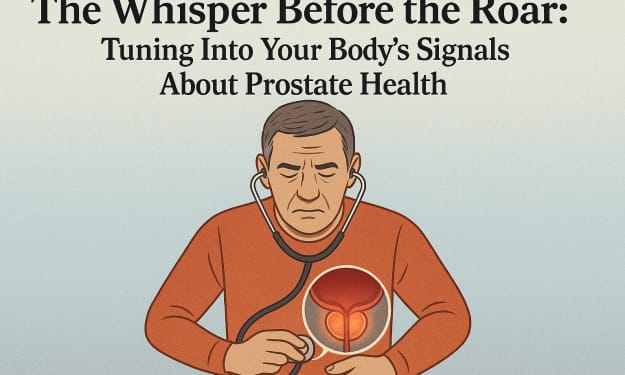
The Whisper Before the Roar: Tuning Into Your Body's Signals About Prostate Health
Let’s talk about something many guys avoid like a tax audit: changes down below. Specifically, the kind of whispers your body might send when something’s not quite right with the prostate. Forget cold, clinical lists. This is about recognizing those subtle shifts that feel… off. Because when it comes to prostate cancer, catching it early often hinges on noticing these quiet signals before they start shouting. Knowing the prostate cancer symptoms isn’t about fear; it’s about empowerment.
By John Arthor7 months ago in Lifehack
5 Simple Lifehacks to Keep Your Teeth Healthy Every Day
Healthy teeth aren’t just about occasional dental visits—they’re shaped by the little choices you make every day. Simple habits, when done consistently, can prevent cavities, gum issues, sensitivity, and other oral concerns while keeping your smile bright and comfortable. These lifehacks are easy to integrate into your routine and don’t require drastic lifestyle changes.
By Smile Sydney2 days ago in Lifehack
Review of 'Man on the Run'
My wife and I saw Man on the Run, a nearly 2-hour documentary on Amazon Prime, about Wings, Paul McCartney's group that flew around the world from shortly after The Beatles broke up in early 1970 to shortly after John Lennon was murdered at the end of 1980, making a Beatles reunion forever impossible.
By Paul Levinson5 days ago in Beat


Comments
There are no comments for this story
Be the first to respond and start the conversation.