
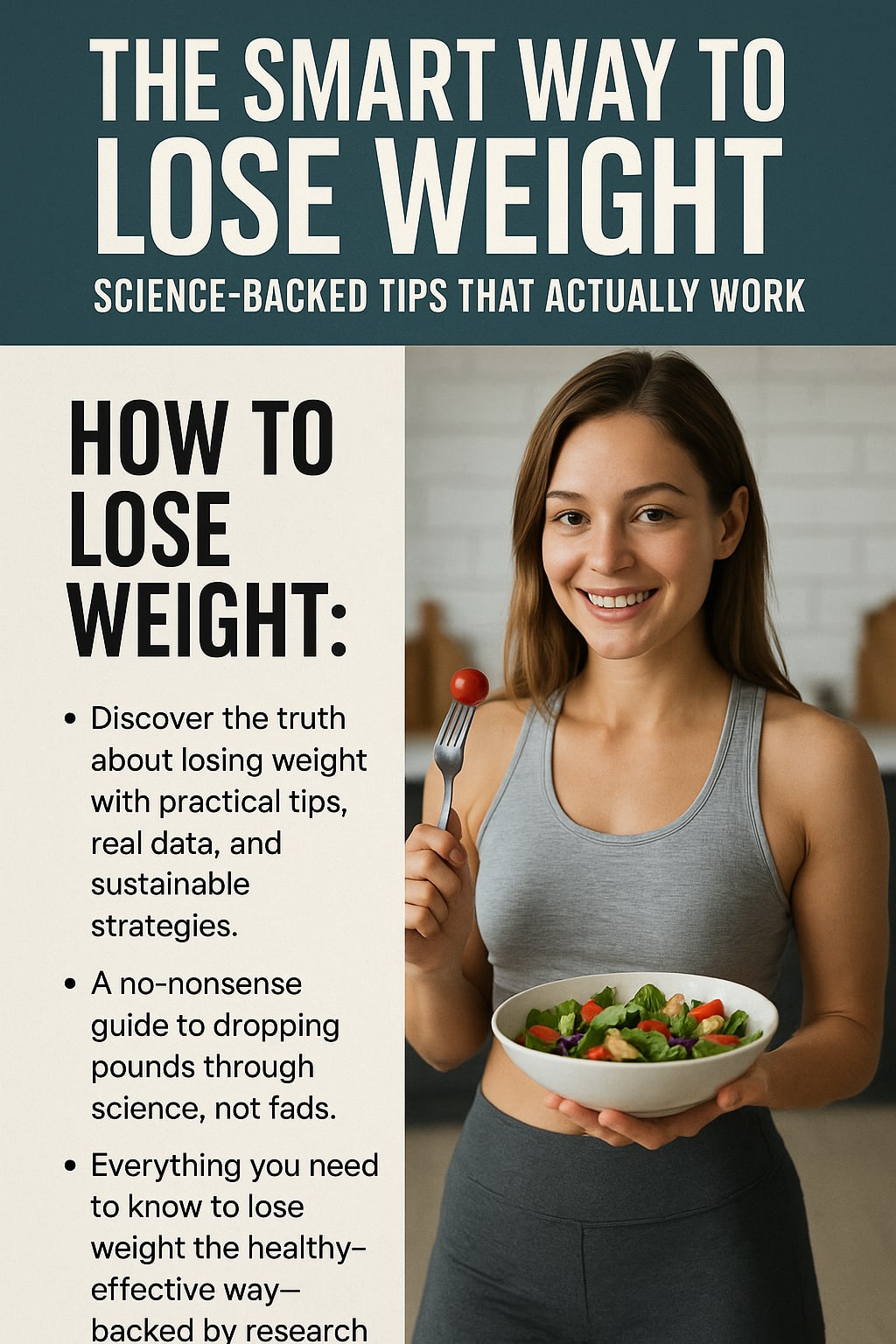
The Smart Way to Lose Weight: Science-Backed Tips That Actually Work
Discover the truth about losing weight with practical tips, real data, and sustainable strategies.
How to Lose Weight: Data-Driven Strategies and Effective Advice
Losing weight is a common goal for millions of people around the world. Weight loss is often pursued, but not always achieved, whether for health reasons, self-confidence, or personal goals. This is because effective and sustainable weight loss requires more than just temporary changes—it demands a strategic, science-based approach. In this article, we’ll explore how to lose weight effectively with supporting data and practical advice.
Understanding the Basics
At its core, weight loss is a matter of energy balance. A caloric deficit occurs when you consume fewer calories than your body burns, resulting in gradual fat loss. According to the Mayo Clinic, about 3,500 calories equals approximately one pound of fat. Therefore, to lose one pound a week, you need to create a deficit of 500 calories per day.
However, it's not just about calories in and out. Factors like metabolism, hormones, physical activity, sleep, and stress also play crucial roles.
Key Statistics on Obesity and Weight Loss
The World Health Organization (WHO) reports that over 1.9 billion adults were overweight in 2022, and more than 650 million were obese.
A study in The New England Journal of Medicine found that only about 20% of overweight individuals successfully lose 10% of their body weight and keep it off for at least one year.
People who combine diet and exercise are 3 times more likely to maintain weight loss than those who rely on dieting alone.
These statistics underscore the need for a comprehensive and realistic plan.
Effective Weight Loss Strategies
1. Adopt a Balanced, Nutrient-Dense Diet
Avoid extreme dieting or cutting out entire food groups. Instead, focus on whole, unprocessed foods:
Lean proteins (chicken, tofu, fish) to support muscle mass
Whole grains (brown rice, oats) for sustained energy
Fruits and vegetables for fiber, vitamins, and minerals
Olive oil, avocados, and other healthy fats to promote satiety Tip: Use the plate method—fill half your plate with vegetables, a quarter with protein, and a quarter with whole grains.
2. Track Your Food Intake
A 2019 study published in Obesity showed that people who tracked their meals consistently lost significantly more weight. Use apps like MyFitnessPal or Cronometer to monitor calories and nutrients.
Tip: Don’t obsess over perfection—consistency is key.
3. Increase Physical Activity
While diet has a greater impact on weight loss, exercise helps preserve lean muscle and supports metabolic health. The CDC recommends:
150 minutes of aerobic activity per week of moderate intensity (such as brisk walking) Exercises for strength training at least twice per week Taking the stairs, biking to work, or standing up more can all have a positive impact. 4. Get Enough Sleep
Lack of sleep disrupts hunger hormones like ghrelin and leptin, increasing cravings and appetite. According to the Sleep Foundation, adults need 7–9 hours of sleep per night. Inadequate sleep is linked to a 55% higher risk of obesity.
5. Manage Stress
Chronic stress leads to emotional eating and hormonal imbalances (especially cortisol), which promote fat storage—particularly around the belly. Stress-reducing activities include:
Mindfulness or meditation Exercises in deep breathing Yoga
Regular physical activity
Avoiding Weight Loss Myths Myth 1: Carbs make you fat – It’s refined carbs and excess calories that are the issue, not carbs in general.
Myth 2: Fat should be avoided – Healthy fats are essential and promote satiety.
Myth 3: Starving yourself is effective – Severely restricting calories can lead to muscle loss and metabolic slowdown.
When to Call for Help If losing weight has been difficult on a regular basis, you might want to talk to: A registered dietitian for personalized nutrition advice
A personal trainer to develop a fitness routine
A psychologist or therapist if emotional eating is involved
Your doctor to rule out medical conditions like hypothyroidism or PCOS
In some cases, medications or surgical interventions may be appropriate, but these should always be considered with professional guidance.
Conclusion
Losing weight is a journey that involves more than just cutting calories. By making gradual, sustainable lifestyle changes—such as improving your diet, staying active, sleeping well, and managing stress—you set yourself up for long-term success. While the path may be challenging, the health benefits of weight loss—improved heart health, reduced risk of diabetes, increased energy, and enhanced quality of life—are well worth the effort.
Remember: it's not about perfection, it's about progress.
About the Creator
Keep reading
More stories from Md Nusaib Ul Islam and writers in Lifehack and other communities.
Crypto Unchained: The Data Behind the Digital Revolution
A Data-Driven Perspective on Cryptocurrency's Rise, Fall, and Resurrection In little over a decade, cryptocurrency has transformed from an obscure concept championed by niche internet forums to a multi-trillion-dollar global market. Digital currencies have redefined modern finance, attracting investors, technologists, and governments alike, with Bitcoin leading the charge. But with great innovation comes great volatility—and the crypto world is no stranger to that.
By Md Nusaib Ul Islam9 months ago in Journal



Comments (1)
very informative