
The Seven Colors: Nature’s Language and the Mirror of Emotions
Every color is more than just a visual experience—it is a language that speaks to the soul, evokes emotion, and paints the canvas of our everyday life.

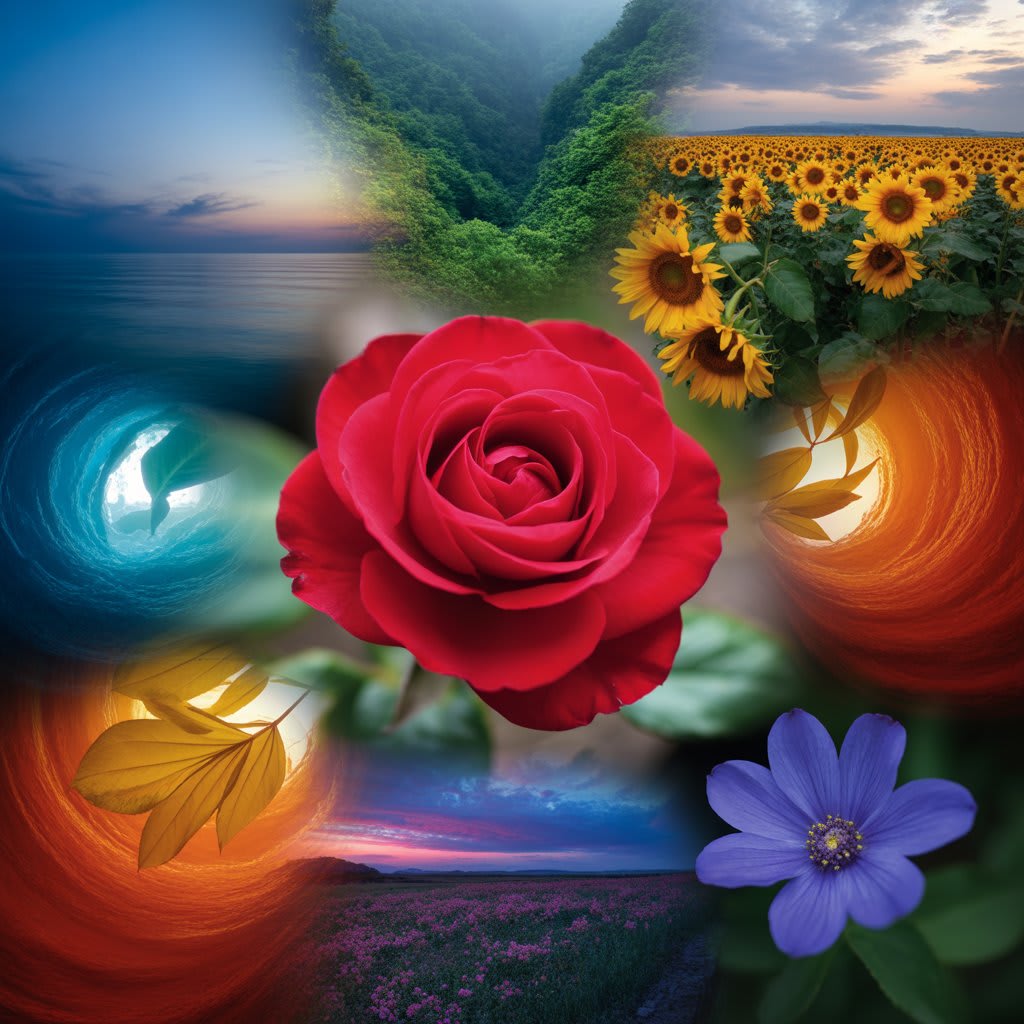
Our world is a vibrant tapestry woven with color. From the deep blue skies to the green fields, from the fiery red sunsets to the gentle purple blooms—colors are everywhere, touching every aspect of our lives. Among them, seven primary colors—Red, Blue, Green, Yellow, Orange, Indigo, and Violet—stand as pillars of nature’s palette.
But what do these colors truly mean? How do they affect our moods, beliefs, and behavior? Why are certain colors sacred, powerful, or feared in various cultures? Let’s explore the emotional, cultural, and psychological significance of these seven colors.
---
1. Red — The Color of Passion, Power, and Sacrifice
Red is the most intense and emotionally charged color in the spectrum. It grabs attention, accelerates the heartbeat, and symbolizes everything from love to danger.
Passion & Romance: Red roses are global symbols of love and deep affection. Valentine’s Day and weddings often feature red to emphasize strong emotional connections.
Power & Strength: In politics and sports, red is often used to show dominance and boldness.
Sacrifice & Warning: Red is also associated with blood, martyrdom, and danger. It's why stop signs and warnings are almost always red.
---
2. Blue — The Shade of Calm, Wisdom, and Trust
Blue is the color of the sky and sea. It brings a sense of calm, order, and stability.
Trust & Loyalty: Banks, corporations, and medical facilities often use blue to create a sense of professionalism and reliability.
Mental Clarity: Light blue promotes peace, while deeper blues reflect intelligence and wisdom.
Spirituality: In many cultures, blue symbolizes the divine. In ancient Egypt, blue was the color of the heavens and gods.
---
3. Green — The Hue of Nature, Hope, and Healing
Green symbolizes growth, fertility, and harmony. It is the color most associated with the natural world.
Healing & Balance: Green has been proven to relax the eyes and reduce stress. It's used in hospitals and therapy spaces.
Faith & Religion: In Islam, green is a sacred color often associated with paradise and renewal.
Environmental Symbol: The "Go Green" movement is synonymous with eco-awareness and sustainability.
---
4. Yellow — The Color of Joy, Intellect, and Energy
Yellow is the color of sunlight—bright, cheerful, and energizing.
Optimism & Happiness: Studies show that yellow stimulates the brain, encourages communication, and enhances memory.
Attention-Grabbing: Used in school buses, caution signs, and advertising for visibility.
Warmth: In some cultures, yellow represents wealth, royalty, or sacred energy.
---
5. Orange — The Shade of Enthusiasm, Change, and Spiritual Awakening
A blend of red and yellow, orange combines the passion of red with the joy of yellow.
Creativity & Adventure: Artists and innovators often surround themselves with orange for its ability to stimulate imagination.
Transformation: In nature, orange is seen in autumn leaves—a symbol of change and letting go.
Spirituality: In Buddhism and Hinduism, monks wear orange robes as a symbol of renunciation and deep meditation.
---
6. Indigo — The Color of Depth, Intuition, and Mystery
Indigo is a deep, rich color that invites inward reflection and spiritual insight.
Intuition: Often linked to the "third eye" in spiritual practices, indigo is said to help open the mind to inner truths.
Mystery & Nobility: Historically, indigo dye was rare and expensive, often reserved for royalty or religious leaders.
Night & Silence: Indigo evokes the feeling of twilight—the moment between light and dark, action and rest.
---
7. Violet (or Purple) — The Symbol of Imagination, Nobility, and Transformation
Purple has long been associated with luxury, creativity, and the mystical.
Royalty & Prestige: In ancient Rome and Persia, purple garments were exclusive to emperors and kings.
Creativity: Artists and dreamers are drawn to violet for its balance of stimulation and serenity.
Spiritual Awakening: In chakra systems, violet represents the crown chakra—the gateway to enlightenment.
---
Why Colors Matter in Everyday Life
Colors aren’t just visual elements—they influence mood, behavior, choices, and even health. Marketers use specific colors to trigger emotions and increase sales. Architects design spaces with colors that calm or energize. Teachers use colored materials to help students focus.
In our personal lives too, we subconsciously use color to express ourselves. From the clothes we wear to the way we decorate our homes, each color reflects an emotional truth.
---
Cultural Variations in Color Perception
Interestingly, the meaning of colors can vary drastically across cultures.
White symbolizes purity in Western weddings but represents mourning in many Asian funerals.
Red is lucky in China, but aggressive in the West.
Black is elegant in fashion but ominous in superstition.
This reveals how color is both universal and culturally shaped—part of the human psyche and collective history.
---
Conclusion: The Silent Language of Color
Color is one of the most powerful, yet often unnoticed forces in our lives. It speaks where words fail. It heals, inspires, warns, and connects. The seven colors of the spectrum are not just physical phenomena—they are spiritual symbols, emotional signals, and reflections of who we are.
So the next time you admire a rainbow, don’t just see light scattered in the sky. See the language of the universe—expressing itself through color.
About the Creator
Muhammad Usama
Welcome 😊
Keep reading
More stories from Muhammad Usama and writers in Lifehack and other communities.
The Smoke That Never Left the Sky
In August 2019, the world watched in horror as flames consumed vast portions of the Amazon Rainforest — often called the “lungs of the planet.” But while headlines trended and hashtags were launched, few outside truly understood the pain, fear, and resilience experienced by the people who lived through it.
By Muhammad Usama8 months ago in Earth
The Forsyth House Fire
Since 1851, Forsyth House has stood on the corner of Union Street and Gordon Street in the heart of Glasgow. Its iconic, or was... because on Sunday 8th of March, 2026, a fire broke out in a small, seemingly un-named shop in the building and tore all that history down. As I write, the rubble is still unsettled and the street is still blocked off. Central Station is quiet on the upper level, and around 30 small businesses have quite literally gone up in smoke.
By S. A. Crawford3 days ago in The Swamp



Comments
There are no comments for this story
Be the first to respond and start the conversation.