
The Real Reason Ultra-Processed Foods Are Ruining Your Health
Why Modern Convenience Foods Are Quietly Wreaking Havoc on Your Body and Mind
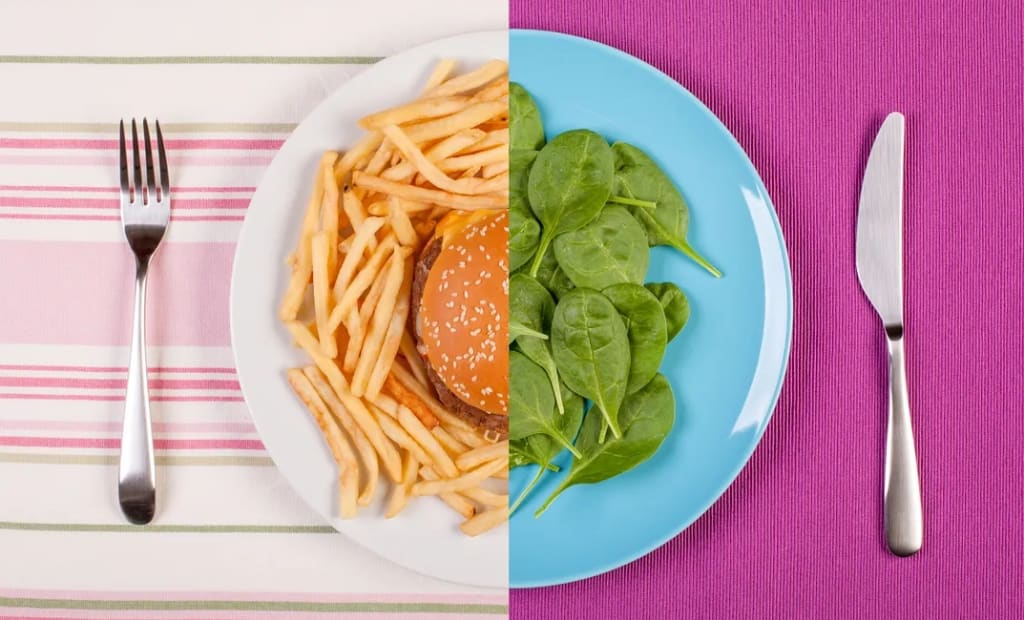
If you have any interest at all in nutrition and have been conscious over the past five years or so, you are no doubt aware of a torrent of literature blaming a lot of health woes on ultra-processed foods.
If I were to show you some foods, for the most part you’d have a pretty good sense whether they were ultra-processed or not. You know what? Let’s try it. The classic Oscar Meyer Weiner? Yup. Ultra-processed. It contains multiple additives like sodium lactate, added dextrose and glucose, and “mechanically separated meat”. How about a handful of almonds? Right again! Not ultra-processed. In fact, on the standard “NOVA” processing scale which goes from a score of 1 for unprocessed or minimally processed foods — to 4 (ultra-processed) a nice handful of almonds is a 1. Good job.
But here’s the thing — it’s not just about whether you can recognize ultra-processed foods. The real problem lies in how they’re silently affecting your health on multiple levels.
Ultra-processed foods are engineered for convenience, taste, and long shelf life. They’re often packed with artificial flavors, sweeteners, emulsifiers, stabilizers, preservatives, and other additives your body doesn’t truly recognize as food. The result? Disruption in your metabolism, inflammation in your gut, and imbalances in your brain’s reward system — leading to overeating and addiction-like cravings.
One of the most striking findings in recent nutrition research came from a 2019 NIH study where participants were split into two groups: one ate a diet of mostly ultra-processed foods, and the other consumed whole, unprocessed foods. Despite having the same calorie and macronutrient targets, the ultra-processed group consumed about 500 more calories per day — without even realizing it. They gained weight, while the whole-food group lost some.
That’s the danger. These foods aren’t just “less healthy” — they actively override your body’s natural hunger signals. And because they’re cheap, accessible, and aggressively marketed, they form the bulk of many people’s diets.
Add to that the growing evidence linking ultra-processed diets to increased risks of heart disease, type 2 diabetes, depression, and even certain cancers, and it becomes clear: this isn’t just a passing nutrition fad. It’s a global health emergency.
So what’s the solution? It doesn’t mean you have to eliminate everything processed. But it does mean being more intentional. Choose whole or minimally processed foods when possible — fruits, vegetables, nuts, whole grains, and proteins that look like what they came from. Read ingredient labels. Learn to cook a few simple meals from scratch.
The goal isn’t perfection — it’s awareness. Because once you start recognizing ultra-processed foods for what they really are, it’s a lot easier to start making choices that actually support your health.
inflammation caused by these artificial additives and poor nutrient quality can interfere with brain function, mood regulation, and memory.
Our gut-brain connection — often called the “second brain” — plays a huge role here. Ultra-processed foods disrupt the balance of good bacteria in the gut, which affects everything from digestion to mental clarity. When your gut microbiome is out of balance, your immune system becomes compromised, your sleep worsens, and your energy levels plummet.
But the good news? Your body is incredibly responsive to change. Within just a few days of switching to a diet rich in whole foods — think leafy greens, berries, legumes, lean meats, and healthy fats — people often report better digestion, more stable energy, improved mood, and even clearer skin. The transformation doesn’t require extreme measures — just consistency and a willingness to break free from convenience culture.
Of course, the real challenge lies in our environment. Ultra-processed foods are everywhere — from school cafeterias and hospital vending machines to ads on your phone and "healthy-looking" options on grocery shelves. Change, therefore, isn’t just personal — it’s also collective. We need better food education, clearer labeling, and public policies that support access to real, nourishing food for everyone.
So, the next time you reach for a snack or plan a meal, pause for a moment. Ask yourself: Is this really food, or just a product of the food industry? That one question can lead to better choices, better health, and ultimately, a better life.
About the Creator
Canada Election 2025. In the Shadow of Trump.
Just a few months ago, the outcome of the upcoming Canadian elections seemed already decided. Only two questions remained open: when would the federal elections occur, and would the Conservatives achieve a majority government? Things were looking dire within the Liberal Party. Rumors swirled about Justin Trudeau stepping down as Prime Minister, and internal conflict tore the Liberal Party apart. Nothing, it seemed, could halt the Conservatives’ triumphant march forward. The Conservatives capitalized on the Liberal government’s incompetence, unpopular decisions, and repeated mistakes. Moreover, Justin Trudeau’s negative popularity ratings played right into their hands. Only a miracle could save the Liberals. David Colettp shared on his Twitter the poll results in March 2024 And then the miracle happened — in a move as graceful as a bull in a china shop, Donald Trump again burst onto the international stage as the newly elected President of the United States. Donald Trump is the black swan of Canadian politics in 2025. Trump has never been one to mince words — particularly when handing out insulting and biting remarks aimed at political opponents, personal enemies, or unfortunate individuals who catch his attention. And Justin Trudeau was especially prominent in Trump’s hierarchy of “favourite targets.” We won’t delve into all the reasons here — that isn’t the purpose of this article — but the fact remains: when Trump unleashed the full force of his rhetoric against Trudeau and the Liberal Party he led, he struck a nerve with all Canadians. Despite their Prime Minister’s high negative ratings, Canadians were not prepared to forgive the President of the neighbouring country for either the unfair accusations blaming Canada for imagined economic and other troubles faced by the United States or the direct threat to Canada’s sovereignty. To make matters worse, this threat was delivered in the most offensive way possible for Canadians — Trump called Canada the “51st state” and referred to Justin Trudeau as its “Governor-General.” Have you ever seen Canadians enraged? I have. And the reason behind their fury was Trump and his MAGA entourage. Could any reasonable person who loves their country and maintains even a shred of self-respect react differently? Donald J.Trump post in https://truthsocial.com/@realDonaldTrump Donald Trump has always had a talent for making friends — that much can’t be denied. He’s equally skilled at doing a significant disservice to his existing friends. Justin Trudeau’s opponents and the Liberal Party — which was just about to gain a new leader with equally dismal popularity ratings (though perhaps somewhat lower negative ratings) — were content to remain idle, awaiting the political corpse of their rivals to float by as they sat comfortably in the front row along the riverside. That’s why the sudden artillery barrage coming from south of the border caught the Conservative Party and its leaders entirely off guard — they simply didn’t know how to respond. Counting on their limited but existent contacts within the Republican Party and the American President’s inner circle, they had hoped for at least Trump’s sympathy in the electoral race or perhaps even some indirect assistance in the form of criticism toward Canada’s Liberal government. Indeed, Conservatives had anticipated negotiating a decent trade deal with Trump and his administration. But appetite comes with eating: Trump no longer wanted a new deal or trade concessions — he wanted Canada itself. Entirely. As the 51st state. And Greenland. And Panama. And that was just the beginning. The aggressive tone and assertiveness with which he began confronting his European allies quickly erased any lingering doubts about the seriousness of his intentions. The Conservatives were left utterly dumbfounded. They simply had nothing to say, and their well-prepared arguments suddenly felt empty and inadequate. Competition of the incompetent. Voters unexpectedly realized that the Conservatives — who had consistently (and justifiably!) criticized the Liberal government — appeared even less competent than their opponents on a range of critical issues. These issues suddenly rose to prominence due to Trump’s aggressive policies. Canadian voters typically have little interest in foreign policy unless it directly affects Canada’s interests or involves a significant diaspora within the country. As a result, foreign policy has never been a strong suit for the Conservative leadership. Nor did their leaders have the personal political experience that could be quickly leveraged in such a crisis. Both Pierre Poilievre and Andrew Scheer built their political careers primarily within the corridors of the party office and Parliament, with minimal exposure to foreign policy. In recent months, their criticism had been centred on Canada’s funding cuts to numerous humanitarian aid programs in troubled regions around the globe. “Not a penny of Canadian taxpayer money should be spent abroad” had become their slogan — even when those funds supported essential humanitarian initiatives. The only significant foreign policy stances the Conservative Party consistently maintained were supporting Israel’s military actions in Palestine and the Middle East and offering routine, mostly symbolic condemnations of Russia’s aggression in Ukraine. The former position was due to the strong Jewish lobby within Conservative ranks, while the latter was motivated by the need to secure votes from the large and predominantly conservative Ukrainian community in Canada. The current Conservative leadership did not — and still does not — fully grasp the foundations of successful foreign policy or understand how to build the nation’s influence and political clout on the international stage. In contrast, the Liberals were prepared for this challenge. Indeed, they had strategies left over from the previous trade conflict during Trump’s first presidency. Moreover, Mark Carney brought substantial personal expertise to the table. Thus, the Liberals acted immediately, without hesitation or uncertainty, initiating measures that potentially spelled significant trouble for the United States. Despite severely mismanaging immigration, social policy, and economic issues during their tenure, the Liberal Party remained strong in foreign policy matters. And their effective foreign policy actions were precisely what voters now expected, having found themselves suddenly trapped in a cage with an unpredictable, aggressive neighbour. Canada had always counted on the U.S. as its primary guarantor of security. If you Google information about the size and condition of the Canadian Armed Forces, you’ll quickly see the problem. Reduced nearly to ceremonial status, Canada’s military was chronically underfunded and understaffed. It’s probably better not to mention the state of its technical equipment and armaments. This neglect had persisted for decades, with both Conservatives and Liberals contributing to the deterioration — a fact well understood by Canadians. At this critical moment, Justin Trudeau was succeeded by Mark Carney, who brought his extensive experience, connections, and sharp political instincts to the fore. The fact that Carney was often behind the Liberals’ unpopular decisions no longer concerned voters. They saw a leader who knew exactly what must be done — a leader whose judgments and actions appeared mature and professional. Next to him, Conservative leader Pierre Poilievre looked like an intern, focused on petty nitpicking and personal criticism. Everything else faded into the background. Emotional Factors. As a rational politician and individual, Pierre Poilievre underestimated the power of emotion and shifting public sentiment. He criticized everyone and everything associated with the Liberal Party, paying particular attention to his primary opponent, Mark Carney. But voters weren’t interested in Mark Carney’s effectiveness as Governor of the Bank of England, where and how he made his money, or any other “dirty laundry” from his biography. What mattered to voters was that Carney saw the bigger picture and adequately prioritized the country’s risks. Canada’s number one problem had become its southern neighbour — not the illegal immigrants who entered the country through deception. The illegal immigrant was a distant issue, but Trump was right next door, continuously reminding Canadians of his presence with increasingly threatening rhetoric. First and foremost, the country had to survive — maintain its independence and protect its economy. Immigration and budgetary matters could be addressed afterward. Mark Carney understood this perfectly well and did not even stop responding directly to personal attacks. Pierre Poilievre, however, did the opposite. Moreover, the Liberals blatantly “stole” numerous Conservative ideas and immediately implemented them, drawing away a segment of voters dissatisfied with high immigration rates, the housing crisis, and carbon taxes. While I don’t have the latest statistics on politicians’ negative ratings, it seems clear that Pierre Poilievre experienced a significant rise in his anti-rating and declining popularity. Even among those who consistently and loyally voted Conservative, comparisons between Poilievre and Andrew Scheer became increasingly common — specifically regarding their penchant for trivial criticism of opponents rather than seriously working to craft their platform. It was disappointing as the Conservative Party had developed several intelligent and necessary programs to revitalize Canada’s economy. But who had even heard of them, aside from the plan to abolish the Carbon Tax? Instead of promoting their agenda at every opportunity, the Conservatives criticized their opponents, often resorting to personal attacks against individual representatives. Meanwhile, Mark Carney skillfully found time to appropriate many aspects of the Conservative platform and confidently implemented them. Bravo. Simply brilliant. The poll results in April 2025. Source: https://abacusdata.ca/ The enemy of my enemy is my friend. But the friend of my enemy can never be our friend. Polarization of society and unity around legitimate authority when facing an external threat is the cornerstone of political literacy. It’s a principle known for thousands of years. However, Canada — a country whose political intensity could rival only the lushness of vegetation in Antarctica — had somehow forgotten this rule. Rushing to aid the Conservative Party were countless hordes of bloggers, YouTubers, influencers, and ordinary users of every major social media platform — especially the X network (formerly known as Twitter), where its owner and tech-mogul Elon Musk created an exceptionally comfortable environment for them. Numerous free-thinking bloggers and social media users who had recently supported Trump suddenly shifted their allegiance to the Conservatives in Canada, doing so with the same gracefulness as their idol. Hundreds of bots, formerly “proud Texans,” instantly transformed into “proud Albertans” without even bothering to erase their old posts from a year ago, making it easy to spot the deception. The unmistakable MAGA vibe and tone thus became yet another apparent mistake by the Conservatives, and voters took notice. Even familiar rhetoric about deporting millions of illegal immigrants gained ominous new shades against the backdrop of lawlessness perpetrated by ICE agents in the United States. Very soon, many voters began to fear that, should the Conservative Party win the federal elections, Canada might experience all those horrors currently visible just across the border. All these factors significantly impacted public opinion. I know several families for whom this fear became the deciding factor in their voting choices. A Choice without a Choice. So, where does this leave us? Many Conservatives are prepared to vote Liberal, driven by fear of losing their country or inadvertently ushering in a Canadian version of MAGA. As for the dedicated or undecided Liberals, there’s hardly any question — the current crisis has only reinforced their convictions and mobilized them further. The NDP has long since degenerated into a political weathervane, holding on to its niche electorate. The Green Party — when was the last time you even saw or heard from them? The Bloc Québécois remains stable, holding onto its dedicated electorate. However, its overly transactional approach to numerous issues prevents it from securing top-tier federal support. Last year, it briefly attracted some disillusioned Liberal voters, but after Mark Carney’s arrival, those voters quickly returned home. Thus, we find ourselves in a situation where voters are polarized, and their traditionally pragmatic choices have become deeply emotional. Fear is now the primary driver. Despite consistently voting Conservative in recent elections, I still haven’t made my final decision — even though I am fully aware of everything I’ve described above. The choice at stake is this: minimize national risks in the current conflict by voting for the Liberals (yes, the very people who brought us immigration and economic crises!), or take a gamble and vote Conservative — a party offering a sound action plan, but one also carrying the baggage of MAGA-style politics and an unsettling presence of Trumpists within Canadian politics. It’s a difficult choice. Until recently, I often repeated a mantra to friends asking for advice: “Politicians, like underwear, should be changed frequently.” But today, the situation has shifted dramatically. “Continue — we can’t replace,” or “We can’t continue — replace”? What do you think?
By Md Arafat 9 months ago in Confessions
The 2026 Complete Guide to Legitimate Wi-Fi Password Recovery: Methods, Tools & Protection
Disclaimer: This article is for educational purposes and legitimate password recovery only. Always obtain proper authorization before accessing any network. Unauthorized network access violates laws in most jurisdictions.
By Alexander Hoffmann7 days ago in Lifehack
The Calm Within the Chaos: How Grounding Yourself Can Change Your Life
I know what it feels like to wake up already overwhelmed, as if the day is asking more from you than you have to give. Your phone lights up, your thoughts speed up, and your body tightens before anything has actually gone wrong.
By Anie Liban5 days ago in Lifehack
🅼🅸🅳🅽🅸🅶🅷🆃 🆂🅽🅰🅲🅺🆂
"It's 10 in Tuscon! We all know what that means... It's Time for Midnight Snacks with your man, Gerald Gee! Ready to spend the night together? Me too! I'm full of snacks and can't wait to regurgitate them all back into your hungry ears. Crack a brew! Pop some corn! Anything to get ready for one hell of a show where the talk maybe cheap but the words cut deep...
By Lamar Wiggins3 days ago in Fiction


Comments
There are no comments for this story
Be the first to respond and start the conversation.