
The Ghost in the Machine Google Finally Wakes Up to the Pixel’s Pocket-Dial Nightmare
A victory for the perpetually frustrated, but a fix that took far, far too long to address a critical flaw in flagship phones.

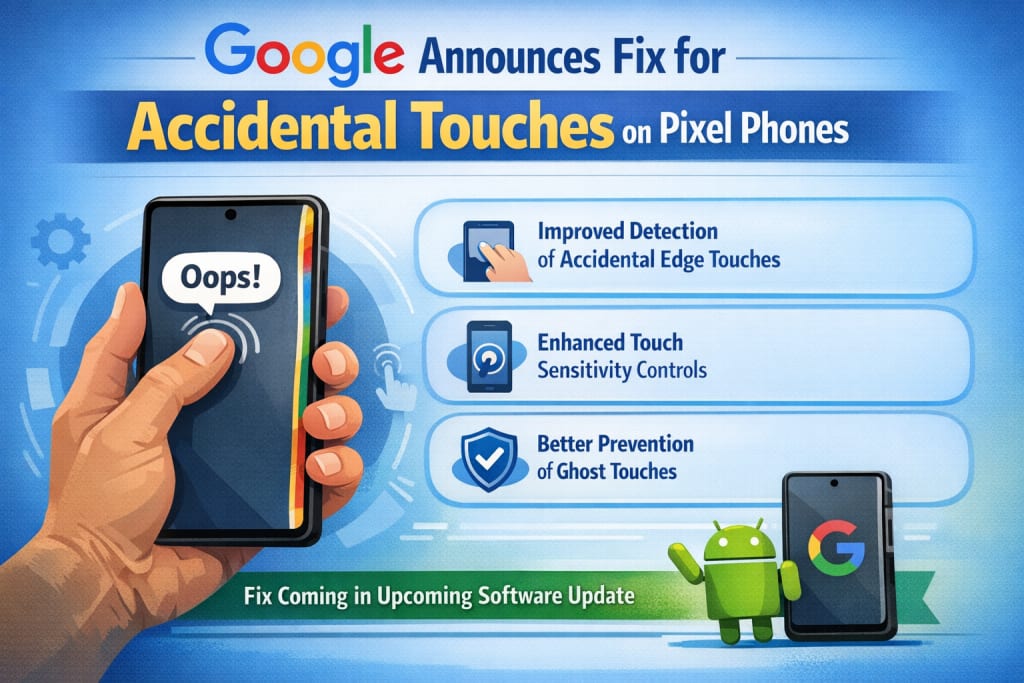
The Ghost in the Machine: Google Finally Wakes Up to the Pixel’s Pocket-Dial Nightmare
A victory for those who are always frustrated, but a remedy that took far too long.
Let’s be honest. If you possess a Google Pixel phone—especially one of the post-Pixel 5 devices—you’ve been there.
You’ve experienced the panic-inducing moment of taking your phone out of your pocket or bag only to discover your flashlight blazing, your Wi-Fi switched off, or, worse, a call made to your emergency contact.
Maybe you’ve even sent a series of incomprehensible text messages that read like a drunken fever dream to your employer.
It’s an experience that’s been labeled ‘pocket dialing’ since the advent of telephones, but on the otherwise excellent Pixel lineup, it seemed less like an archaic oddity and more like a nasty, software-driven joke.
It was the maddening, continual reminder that the firm renowned for its cutting-edge AI could not, for the life of it, figure out when a bit of thigh flesh or a coat lining was not a conscious human tap.
Well, after what seems like a geological epoch of complaints, we finally have the news:
Google has officially confirmed that a cure for the accidental touch issue is on its way, manifesting as a dedicated, much-requested “Pocket Mode” alternative.
The developers have tagged the long-standing Issue Tracker report as ‘Fixed’—a little, two-word change that signals a huge shift for the everyday quality of life of millions of Pixel users.
This isn't simply a bug update; it's the remedy of a fundamental design issue that has plagued the Pixel series for years.
The Anatomy of an Accidental Touch
To understand why this remedy is such a significant issue, you have to understand the underlying technological strain that caused the problem in the first place.
Modern smartphones, especially those like the Pixel with its minimum bezels and edge-to-edge screens, are engaged in a continual, delicate balancing act.
On one hand, the touchscreen has to be very sensitive to record light, fast touches and sophisticated movements. On the other side, it requires an impenetrable protection against unintended input.
This protection is handled by a mix of software algorithms, known as palm rejection, and physical sensors.
For years, several rival Android manufacturers—Samsung, OnePlus, and Xiaomi—have incorporated a strong, built-in feature frequently named "Accidental touch protection" or "Pocket mode."
This feature leverages the phone’s proximity sensor (which detects if the phone is near an object, like your face during a call, or your pocket lining) and the ambient light sensor (to confirm it’s in darkness) to essentially tell the phone:
"Hey, the screen is on, but the phone is completely covered. Disable all touch input."
The Pixel, oddly, either lacked this entire reasoning or depended on a startlingly weak approximation of it.
The problem became notably noticeable beginning with the Pixel 6 series and remained through the Pixel 7 and Pixel 8 lines.
Why? Because of other ingenious, but excessively pushy, software features like "Tap to check phone" or the Always-On Display (AOD). Even a tiny touch on the screen when it’s in your exercise shorts or the interior lining of a coat pocket is enough to wake the gadget.
Once awake, the mix of fabric, warmth, and motion would resemble finger taps, leading to:
Emergency SOS Triggers: A five-press sequence on the power button, frequently activated by pocket friction, calling 911/999/112.
Flashlight On: The quick toggle in the notification shade is too readily reached. Suddenly, your leg is emitting heat and you’re depleting your battery.
Settings Changes: Silent mode toggled off, Bluetooth switched on, or screen brightness increased to 100%.
The sheer annoyance of having a premium, cutting-edge smartphone act like a cheap, early-2000s gadget in your pocket has been the single most popular and most strongly felt criticism in the Pixel community. Users weren't clamoring for a dazzling new feature; they were screaming for fundamental stability.
The Long, Unnecessary Wait for Validation
The fact that this update is just now being announced is what really rubs salt into the wound for longtime Pixel enthusiasts.
The community’s desires weren't hushed recommendations; they were a collective shout, extending back years.
A critical issue tracker thread—which Google has recently updated—was posted as early as January 2024, explaining the situation in agonizing detail and offering a wishlist for precisely the type of security other businesses have supplied for a decade.
The answer from Google at the time was the corporate equivalent of a shrug: "We're considering it."
For nearly 18 months, customers were left to their own devices, having to adopt laborious workarounds that undermined the point of a smart device:
Disabling "Tap to Check Phone": Giving up a favorite feature merely to avoid accidental wakes.
Turning the Screen Outward: Exposing the phone’s glass display to the rough interior of a jeans pocket—a move that risks scratches and breaks.
Manually Power-Locking: Pressing the power button twice every time you put the phone aside, adding a friction point to an otherwise flawless experience.
The delay wasn't simply an inconvenience; it chipped away at the faith people had in the brand. When your phone frequently contacts an emergency number, it ceases being a phone and begins becoming a liability. This extended wait implied that Google either neglected to prioritize user quality of life or, more disturbingly, didn't fully appreciate the seriousness of the situation its hardware/software combo had caused.
A Glimmer of Hope and the Tensor Advantage
The good news is that the patch is coming, slated for a
"future release,"
most likely appearing in a forthcoming quarterly Pixel Feature Drop in early 2026. While the actual technical details of Google’s solution are still under wraps, the industry consensus believes it will be a real "Pocket Mode" that uses the full capabilities of the Pixel’s integrated CPU.
Unlike simple solutions, Google's approach is believed to be more advanced, leveraging the device's Tensor processor and its machine learning capabilities. Instead of a simple
"Is the proximity sensor blocked?"
binary check, the system might assess many data points simultaneously:
Proximity/Ambient Light: Is the phone covered and in darkness?
Accelerometer Data: Is the phone being jostled or in motion (i.e., walking or running)?
Capacitive Input Analysis: Are the touches big, amorphous, and consistent with cloth or flesh, rather than the acute, tiny inputs of a fingertip?
By evaluating this data locally on the Tensor chip—the same technology that enables miracles like Magic Eraser and Call Screen—the phone can make an astonishingly confident determination:
“This is not a user. Ignore the input.” This on-device processing guarantees the function works fast and doesn't deplete the battery by depending on cloud services.
This is the strength of the unique silicon Google has built: the capacity to tackle a chronic, irritating issue with an elegant, AI-driven software solution that simply wasn't feasible on previous, more generic technology. It transforms a liability into a showpiece for the Pixel’s unique talents.
The Lasting Lesson for Google
The release of the Pocket Mode counterpart is not only a win; it’s an important, long-overdue lesson in software maturity for the tech giant.
Google’s strength has always been innovation—the bold, often quirky features that push the limits of what a phone can accomplish.
But a premium flagship gadget is based on a foundation of unbreakable dependability, and the accidental contact issue was a persistent, wavering fault in that foundation.
The user base—the committed group that selects Pixel over the default Samsung or the popular iPhone—didn’t simply want amazing photographic techniques.
They wanted a phone that wouldn't betray them with an unintentional action in their pocket. They wanted peace of mind.
The correction for the unintentional touch problem is a hint that Google is now focusing its technical effort not just on the next great innovation but also on the ordinary, daily friction points that define a user’s long-term connection with their gadget.
It's an indication that the corporation is listening, even if it took far too long to legitimize the experience of the chronically disgruntled.
When the update finally hits, the collective sigh of relief from the Pixel community will be audible.
It will be the end of the Pocket Dial Nightmare and, perhaps, the beginning of a more mature, stable period for the Pixel brand. It's about time.
About the Creator
abualyaanart
I write thoughtful, experience-driven stories about technology, digital life, and how modern tools quietly shape the way we think, work, and live.
I believe good technology should support life
Abualyaanart
Keep reading
More stories from abualyaanart and writers in Lifehack and other communities.
Samsung’s Exynos 2600 Marks a Big Step Forward With 2nm Technology
Samsung’s Exynos 2600 Marks a Big Step Forward With 2nm Technology For years, Samsung’s Exynos CPUs have existed in a tricky environment. They were strong on paper, bold in design, and typically ahead of the curve in manufacturing—but real-world perception didn’t always match the promise. Comparisons with rival processors became commonplace, and expectations became cautious.
By abualyaanart27 days ago in Lifehack
Do You have a Support Network?
Life is harder when you’re on your own. Human beings are social creatures, and we usually feel better when we have support from a strong social network around us. For most people, it’s our families that hold us together like glue.
By Elizabeth Woodsabout 21 hours ago in Psyche


Comments
There are no comments for this story
Be the first to respond and start the conversation.