
The Eco Dilemma: Are the Cleaning Products Used in Childcare Safe for Kids and the Planet?
Small choices in cleaning products can make a big impact on children's health and the planet.
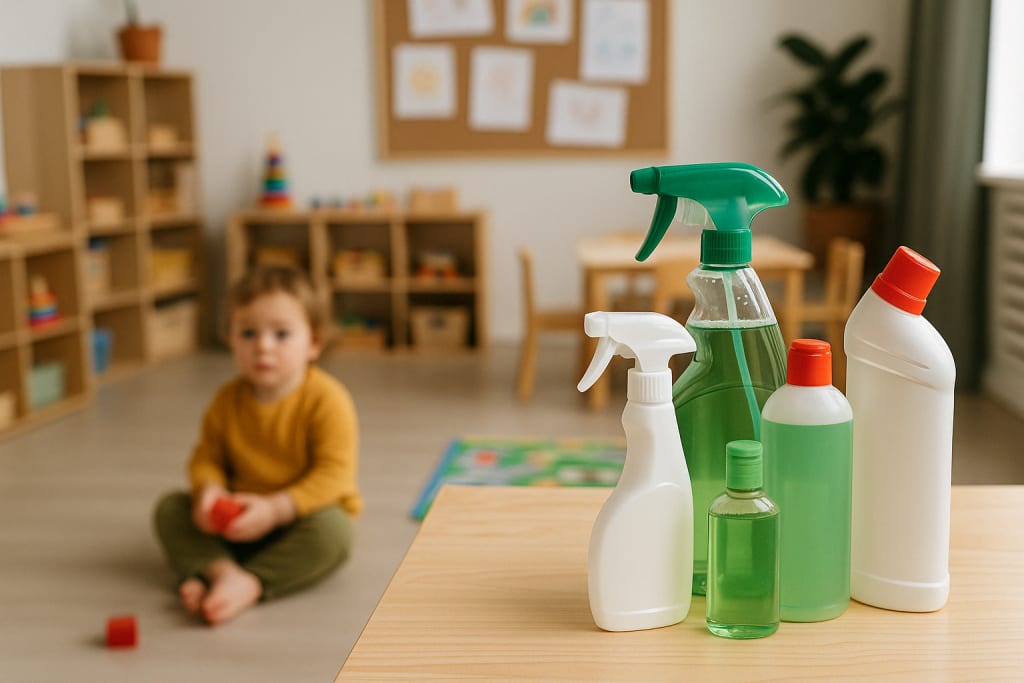
As childcare providers strive to meet growing hygiene expectations, an important question arises—how safe are the cleaning products we’re using around our children?
Tiny Hands, Big Questions
Imagine a toddler crawling across a freshly mopped floor, then popping a thumb straight into their mouth. It’s a scenario that plays out daily in childcare settings—and while we trust the environment is clean, what’s in those cleaning agents might deserve a second look. In the push for sanitised playrooms, highchairs, and nappy change areas, we may be introducing young children to chemicals that do more harm than good.
This article explores the long-overdue conversation around cleaning products used in childcare—examining their impact on both children’s health and the environment.
What’s Actually in the Cleaning Products Used in Childcare?
Many cleaning products used in childcare environments contain powerful disinfectants—great for killing germs, but not always gentle on growing bodies. Ingredients such as bleach, quaternary ammonium compounds (quats), and strong synthetic fragrances are common. While effective at surface-level sanitation, these substances may pose risks to respiratory health, cause skin irritation, and even disrupt endocrine function in some cases.
Children, with their developing immune and neurological systems, are particularly vulnerable. Unlike adults, they spend more time on the ground, put objects in their mouths, and breathe closer to the floor—all of which increase their exposure. As highlighted in this Vocal article on everyday toxins, many common cleaning agents contain compounds linked to long-term health concerns.
It’s not just about immediate cleanliness—it’s about long-term safety.
The Rise of Eco-Friendly Alternatives in Childcare Centres
In response to growing awareness, many childcare centres are shifting to “green” or eco-labelled cleaning products. These often feature plant-based surfactants, biodegradable formulas, and low-to-no VOCs (volatile organic compounds). Their appeal lies not only in reduced toxicity but also in their alignment with sustainability goals—a value many parents hold dear.
However, not all eco-friendly products are created equal. Some may lack the sanitising power needed in high-touch environments like playrooms and bathrooms. Others might still include allergens or misleading “greenwashed” labels.
A well-balanced approach involves selecting products that are certified safe for use in childcare, effective at disinfection, and mindful of environmental impact. As explored in this eco-parenting article on Vocal, conscious product choices in early years settings can have ripple effects on children’s health and eco-awareness.
Regulations and Hygiene Standards in Australian Childcare Centres
In Australia, childcare cleaning standards fall under the National Quality Framework (NQF), which includes health and hygiene practices as a key assessment area. Childcare services are expected to uphold standards set out by Safe Work Australia and state-based health authorities.
However, these guidelines often outline the need for cleanliness rather than specify how it should be achieved. As a result, cleaning product selection is left largely to providers, many of whom rely on suppliers or centre managers to make informed decisions.
This grey area highlights the need for reliable product suppliers who understand the intersection of child safety, hygiene, and environmental responsibility.
Choosing the Right Cleaning Products: A Quick Checklist
Whether you manage a childcare centre or are a concerned parent, here are some important factors to consider when reviewing cleaning products used in childcare:
- Ingredient Transparency – Are all components listed clearly?
- Non-Toxic Certification – Does it meet standards for use in environments with young children?
- Effectiveness – Is it proven to eliminate bacteria, viruses, and fungi?
- Fragrance-Free or Low Scent – Strong smells can trigger respiratory issues or allergic reactions.
- Environmental Sustainability – Is it biodegradable, septic-safe, and free from harsh pollutants?
- Ease of Use – Does the product require dilution? Is staff trained in its correct application?
It's not about choosing the cheapest or the most "natural-sounding" option—it’s about striking a balance between health, safety, and sustainability.
Why Reliable Suppliers Matter
The responsibility of sourcing suitable products should not fall solely on educators or parents. Trusted suppliers play a critical role in guiding childcare centres toward appropriate solutions.
For instance, many centres rely on suppliers like the team behind the cleaning products used in childcare by Ramsey Agencies. Their range is curated to meet the real-world needs of childcare environments—providing options that are effective, safe for young children, and environmentally sound.
Choosing the right supplier means choosing peace of mind—for educators, for parents, and most importantly, for the children.
A Clean Start for a Safer Tomorrow
As conversations around childhood health, eco-consciousness, and sustainability continue to grow, the cleaning products we use in childcare should not be left out. Whether you're a centre director, early childhood educator, or environmentally aware parent, it's worth investigating what’s really in your spray bottles and mop buckets.
After all, creating safe spaces for our little ones means more than just tidy surfaces—it means safer air, cleaner hands, and healthier futures.
About the Creator
Keep reading
More stories from Rochelle Martinez and writers in Lifehack and other communities.
Osteopathy for Migraines: A Drug-Free Path to Chronic Pain Relief
Living with the Weight of Chronic Migraines For anyone who’s dealt with migraines, the pain goes far beyond a standard headache. Throbbing pain, visual disturbances, nausea, and heightened sensitivity to light or sound can derail even the most routine activities. In Australia, it’s estimated that one in five women and one in fifteen men are affected by migraines, and for many, finding sustainable relief becomes a years-long journey.
By Rochelle Martinez5 months ago in Lifehack
“I Forgot How to Be Bored (And It Was Ruining My Focus)”
Let’s be real—my phone was low-key ruining my life. I’m gonna be 100% honest: it got pretty embarrassing. I reached a point where I couldn’t even wait for the coffee to brew without my hand "magically" grabbing my phone. It wasn’t even a choice anymore; it was just this mindless, zombie-like reflex. I’d spend an hour scrolling through absolute junk and then realize I didn't remember a single thing I saw. My focus? Completely trashed.
By Demiana Louis Boshraa day ago in Lifehack
The AI Ecosystem in 2026
By 2026, the ecosystem of artificial intelligence will have matured beyond experimentation and early adoption. It is now a complex, interconnected infrastructure shaping industries, markets, institutions, and everyday life. AI is no longer a niche technology: it is a foundational layer of the digital economy, much like the internet itself. Understanding this ecosystem requires looking beyond models and algorithms to the roles, relationships, and platforms that make AI an essential and sustainable force.
By Sathish Kumar 4 days ago in Lifehack


Comments
There are no comments for this story
Be the first to respond and start the conversation.