
The Blue Whale Heart: A Marvel of Nature’s Engineering
The Blue Whale Heart: A Marvel of Nature’s Engineering

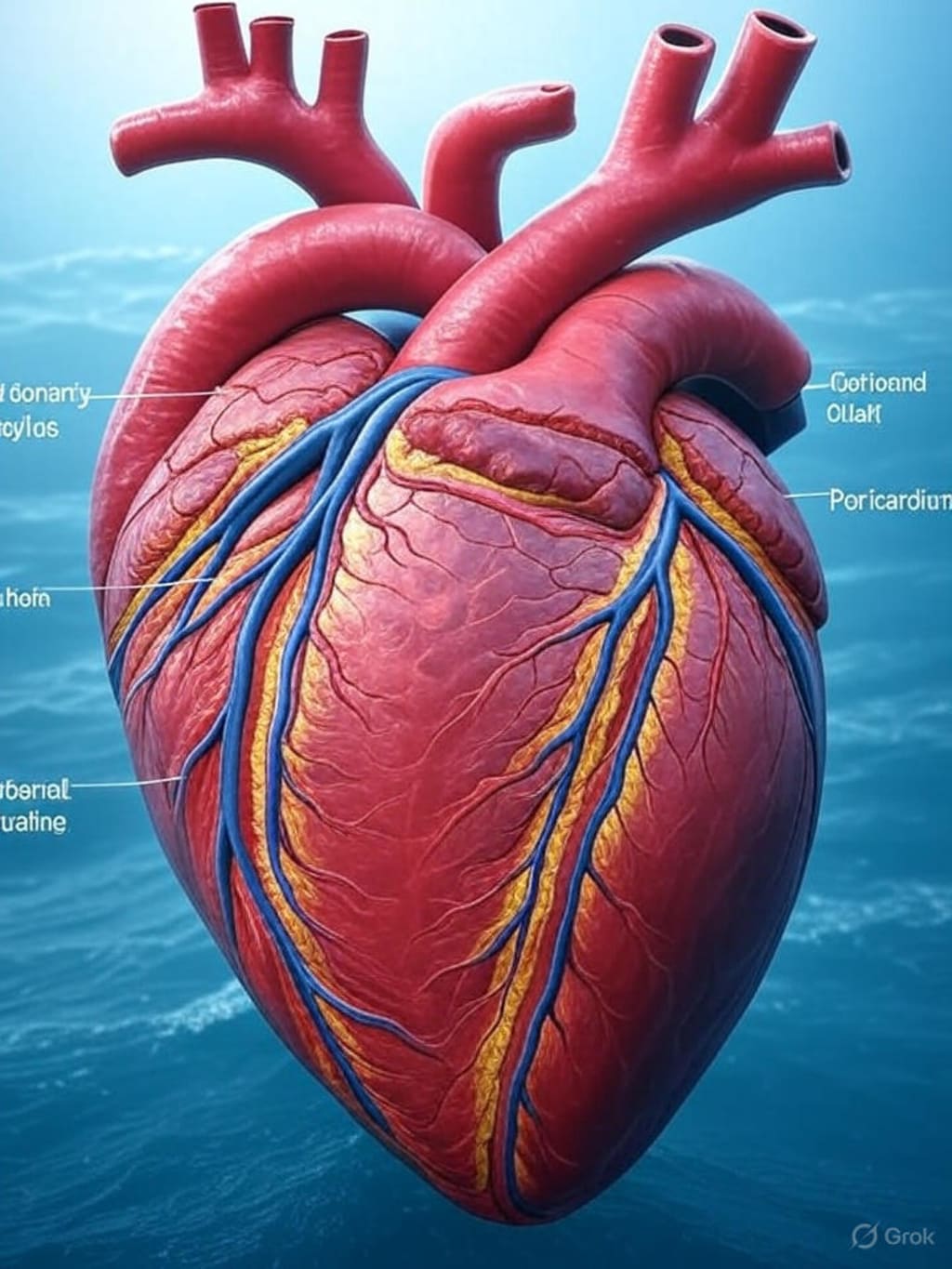
**The Blue Whale Heart: A Marvel of Nature’s Engineering**
The blue whale (*Balaenoptera musculus*), the largest animal ever to live on Earth, is a creature of superlatives. Among its many awe-inspiring features, its heart stands out as a symbol of biological magnificence. Weighing as much as a small car and capable of pumping blood through a body the length of a basketball court, the blue whale’s heart is a testament to the extremes of evolutionary adaptation. This article explores the anatomy, function, and significance of this extraordinary organ, shedding light on why it captivates scientists and nature enthusiasts alike.
### A Heart of Monumental Proportions
The heart of a blue whale is a behemoth in its own right. Estimates suggest it weighs between 400 to 1,500 pounds (180 to 680 kilograms), with some sources citing up to 2,000 pounds for the largest specimens. To put this in perspective, that’s roughly the weight of a grand piano or a compact car. The heart measures approximately 5 feet long, 4 feet wide, and 4 feet tall (1.5 x 1.2 x 1.2 meters), large enough for a small child to crawl through its major arteries, such as the aorta, which can have a diameter of up to 9 inches (23 centimeters).
This massive organ is necessary to sustain a creature that can grow up to 110 feet (33.5 meters) long and weigh as much as 200 tons. The heart’s size and power enable it to circulate blood through an estimated 8,000 to 10,000 pounds (3,600 to 4,500 kilograms) of blood volume, servicing a body that requires immense energy to move, dive, and survive in the ocean’s depths.
### Anatomy and Function
The blue whale’s heart is a four-chambered structure, like that of other mammals, consisting of two atria and two ventricles. However, its scale and efficiency are unparalleled. The heart beats at a remarkably slow rate—only 4 to 8 times per minute at rest, increasing to 25 to 35 beats per minute during a dive. This slow, powerful rhythm is optimized for the whale’s lifestyle, which involves prolonged dives of 10 to 20 minutes to depths of up to 1,000 feet (300 meters) while foraging for krill.
Each heartbeat pumps approximately 60 gallons (227 liters) of blood, delivering oxygen and nutrients to the whale’s massive muscles and organs. The heart’s thick muscular walls, particularly in the ventricles, generate the force needed to push blood through a vascular system that spans the length of the body. The aorta, the largest artery, is so robust that its walls are reinforced with elastic tissue to withstand the high-pressure surges of blood.
The heart’s efficiency is critical during dives, when the whale’s oxygen stores are conserved through a process called bradycardia, or dive reflex. This reflex slows the heart rate to reduce oxygen consumption, allowing the whale to remain submerged longer. The heart’s ability to adapt to these extreme conditions highlights its role as a finely tuned engine of survival.
### Evolutionary Significance
The blue whale’s heart is a product of millions of years of evolution, tailored to the demands of life in the open ocean. Blue whales belong to the family Balaenopteridae, which includes other large whales like the humpback and fin whale. Their ancestors transitioned from land to sea around 50 million years ago, and over time, their cardiovascular systems adapted to support enormous body sizes and deep-diving behaviors.
The heart’s massive size is a direct response to the scaling laws of biology. As body size increases, metabolic demands rise, requiring a proportionally larger heart to supply oxygen-rich blood. However, the heart’s size is constrained by the need to fit within the thoracic cavity and maintain efficiency. The blue whale’s heart strikes a balance, providing enough power to sustain its colossal frame while minimizing energy waste.
### Scientific Study and Challenges
Studying the blue whale’s heart is no small feat. Blue whales are difficult to observe in the wild due to their oceanic habitat and protected status, which limits invasive research. Much of what we know comes from stranded specimens or historical whaling records. In 2015, a rare opportunity arose when scientists at the Royal Ontario Museum dissected a blue whale that washed ashore in Newfoundland, Canada. The heart, weighing around 400 pounds, was preserved and studied, providing valuable insights into its structure. The dissection revealed the heart’s thick pericardium (protective sac) and intricate network of coronary arteries, which supply the heart muscle itself.
Advanced imaging techniques, such as MRI and CT scans, have also been used to study preserved hearts, offering a glimpse into their internal architecture. However, live studies are nearly impossible, as capturing or restraining a living blue whale is both impractical and unethical. Researchers rely on technologies like satellite tags and dive recorders to infer cardiovascular performance indirectly, tracking heart rate and dive patterns.
### Cultural and Symbolic Impact
Beyond its biological significance, the blue whale’s heart has captured the human imagination. Its sheer size evokes wonder, symbolizing the grandeur of nature. Exhibits like the preserved heart at the Royal Ontario Museum draw crowds, offering a tangible connection to a creature that is otherwise elusive. In popular media, the heart is often cited as a benchmark of scale—phrases like “a heart the size of a car” resonate with audiences, emphasizing the whale’s otherworldly proportions.
The heart also serves as a reminder of the blue whale’s vulnerability. Once hunted to near extinction, blue whale populations have partially recovered due to global conservation efforts, but they still face threats from ship strikes, noise pollution, and climate change. Protecting these giants ensures that their remarkable hearts continue to beat in the wild.
### Conclusion
The blue whale’s heart is more than a biological marvel; it is a window into the extremes of life on Earth. Its size, power, and adaptability reflect the evolutionary ingenuity required to thrive in the ocean’s vast and challenging environment. As scientists continue to unravel its mysteries, the blue whale’s heart remains a symbol of nature’s capacity for awe-inspiring feats. By safeguarding these majestic creatures, we preserve not only their hearts but also the pulse of the planet’s most extraordinary ecosystems.
---
*Note*: For further details on blue whale conservation or related research, resources like the National Oceanic and Atmospheric Administration (NOAA) or the World Wildlife Fund (WWF) provide up-to-date information. If you’d like to explore specific studies or media about the blue whale’s heart, let me know, and I can search for relevant content!
About the Creator
Is Bone Marrow Breathing Qigong Safe for Beginners? What You Should Know
Bone Marrow Breathing Qigong often sounds intense, especially to beginners. The name alone makes many people assume it involves deep breath control, forceful techniques, or something risky if done incorrectly.
By nimesh tandel7 days ago in Lifehack
The Check-In Revolution: Moving From Constant Tracking to Scheduled Family Updates
There’s a low-grade hum of anxiety that comes with modern parenting. You can, at any moment, open an app and see exactly where your child is. So you do. Again. And again. What starts as a tool for peace of mind can quietly become a source of obsession for you and a point of resentment for them.
By Olivia Martinez2 days ago in Lifehack



Comments
There are no comments for this story
Be the first to respond and start the conversation.