
TET festival comes to town
HCM City's annual Vietnamese Tết (Lunar New Year) Festival offers unique cultural activities to residents, locals and international tourists.

HCM CITY – HCM City's annual Vietnamese Tết (Lunar New Year) Festival offers unique cultural activities to residents, locals and international tourists.
The festival at the Youth Cultural House welcomes visitors with a huge gate of 5,000 red-painted bamboo trees, representing the Vietnamese people’s resilience and the nation’s aspirations for advancement in this new era.
As usual, hundreds of yellow apricot trees are arranged inside the cultural house and along Phạm Ngọc Thạch Street to create the best photo backdrop.
The festival also sets up cultural spaces to honour traditional crafts, including Lái Thiêu pottery in Bình Dương Province, Định Yên mat weaving in Đồng Tháp Province, and Mỹ An bamboo weaving in An Giang Province.
This year’s calligraphy market attracts more than 50 calligraphers, who are members of calligraphy clubs from the city and neighbouring provinces.
The calligraphers, dressed in áo dài (Vietnamese traditional dress), receive requests from visitors for words to write on red paper, paper fans or red lucky money envelopes in hopes of achieving happiness, success, wealth and health in the new year.Visitors can also request tò he (toy figures made from rice dough) artisans to make different figures from the twelve zodiac animals to favourite cartoon characters.
Phạm Trần Gia Hân, a student of the HCM City University of Economics, said, “I visit the festival every year with my family and friends to participate in Tết activities. I have a chance to learn more about traditional Tết customs in different regions of Việt Nam.”
Nguyễn Hồng Phúc, director of the cultural house, said, “In the past 18 years, the Vietnamese Tết festival has been a popular destination for visitors before and during the Tết holiday. The festival offers a cultural space with a nostalgic atmosphere where family and friends can gather and have fun during the transition period between the old year and the new lunar year.”
He added, “The event is also one of the city’s unique cultural activities when spring comes. It provides an opportunity to promote the city’s culture, lifestyle, and people to local and international visitors.”
This year, the festival also offers several performances of traditional art such as ca trù (ceremonial singing), nhã nhạc (Vietnamese court music), tài tử music, and Kylin – Lion – Dragon dance every night.
Lunar New Year festival or Tết is the largest Vietnamese traditional celebration and has been since ancient times. It is not only a spiritual event that marks the change from one year to the next, but it also embodies the national culture of the country by reflecting the values and beliefs of the Vietnamese people.
While Western countries celebrate the start of the new year on January 1, countries in the east use the lunar calendar, with the new year beginning later, in late January or early February.
Vietnamese people believe that Tết marks the beginning of a new year, a day of hope and belief in new and good things and a farewell to the old.
From the 23rd to the 30th day of the last month of the lunar year, family members get together to visit the graves of ancestors, inviting them to celebrate Tết with the family.
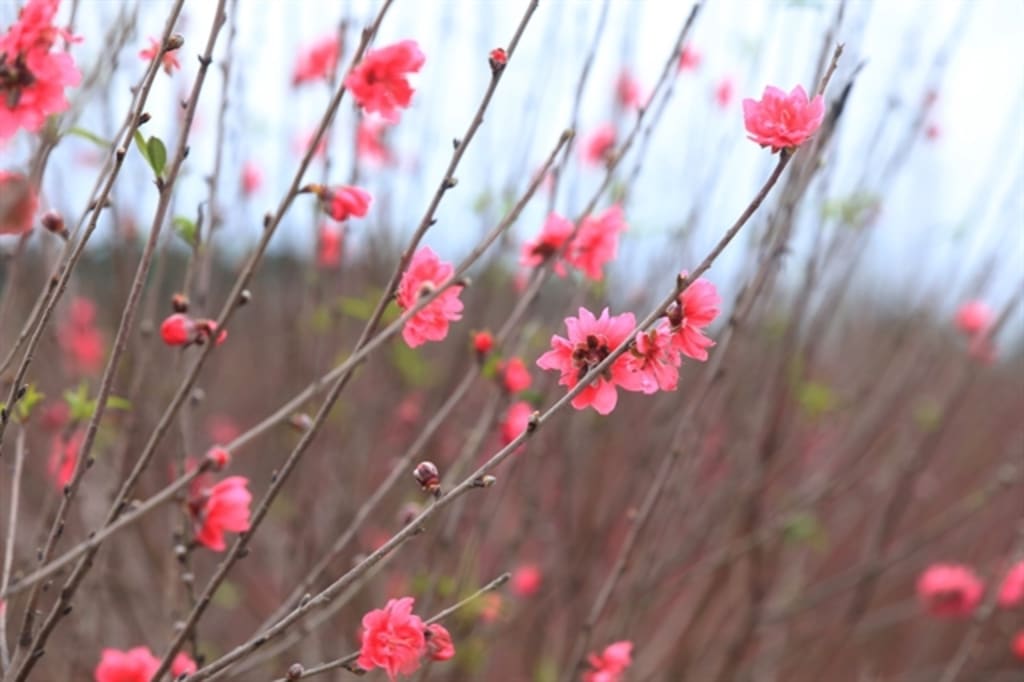
In addition to two types of flowers typical for Tết - peach and ochna blossoms - people also buy other flowers for worshipping rituals and decoration.
The significance of Tết meals has diminished as people's daily lives have improved. In spite of the fact that bánh chưng (a square sticky rice cake) is no longer considered a rare luxury dish, many households nevertheless make them in order to celebrate the holiday in style.
On the afternoon of the last day of the lunar year, which falls on January 21 this year, after completing all of the work around the home, the family prepares a tray of dishes for offering to the ancestors and grandparents, called the “year-end” tray. It requires a lot of work to cook the different dishes, which include soup, stir-fried vegetables, and meat, especially boiled chicken.
In the first days of the new year, people visit family and friends. Adults give lucky money to children and the elderly, and wish for a prosperous and lucky year.
People also practice the custom of visiting pagodas to pray for good fortune. Students often begin a new year writing in the early spring, for a new year of study and successful exams.
Each ethnic minority group or country has its own customs and practices. Tết in Việt Nam is a significant and unique cultural event that has been passed down for centuries.
Through the ups and downs of history, many customs have more or less fallen into oblivion or been significantly changed. But no matter where they are, Vietnamese people are always aware of their roots and practice traditional customs.
About the Creator
1love - Hẹn hò kết bạn
1Love - App hẹn hò, kết bạn sẽ giúp mọi người tìm kiếm những mối quan hệ chân thành và bền vững.
Website: https://1love.com.vn/
Keep reading
More stories from 1love - Hẹn hò kết bạn and writers in Lifehack and other communities.
Simple secret to living a long life
Eat a little less each meal Don't go hungry, but don't overeat either. Experts recommend "eating 8 servings". Some studies show that just by eating less each meal, over time cardiovascular indicators will change significantly. Research by Yale University (USA) in Science magazine showed that compared to the group eating normally, the group eating 14% less had changes in the expression of the Pla2g7 gene related to metabolism and immunity. inflammation. This may help reduce inflammation and prolong life through its impact on immune metabolism.
By 1love - Hẹn hò kết bạnabout a year ago in Lifehack
Black Hands
Farwa and Nida were in eighth grade and had been studying in the same school together since the first grade. Their homes were also in the same neighborhood, so they always went to school together. Over the years, they had become very close friends. Farwa’s father worked as a clerk in an office, while Nida’s father worked in a workshop, repairing vehicles.
By Sudais Zakwan7 days ago in Lifehack




Comments
There are no comments for this story
Be the first to respond and start the conversation.