
Singapore has set up its first poo bank, where people can deposit their faeces when they are healthy and take them out when they are sick
Did you hear? There is a bank in Singapore that does not deposit money but deposits feces!!
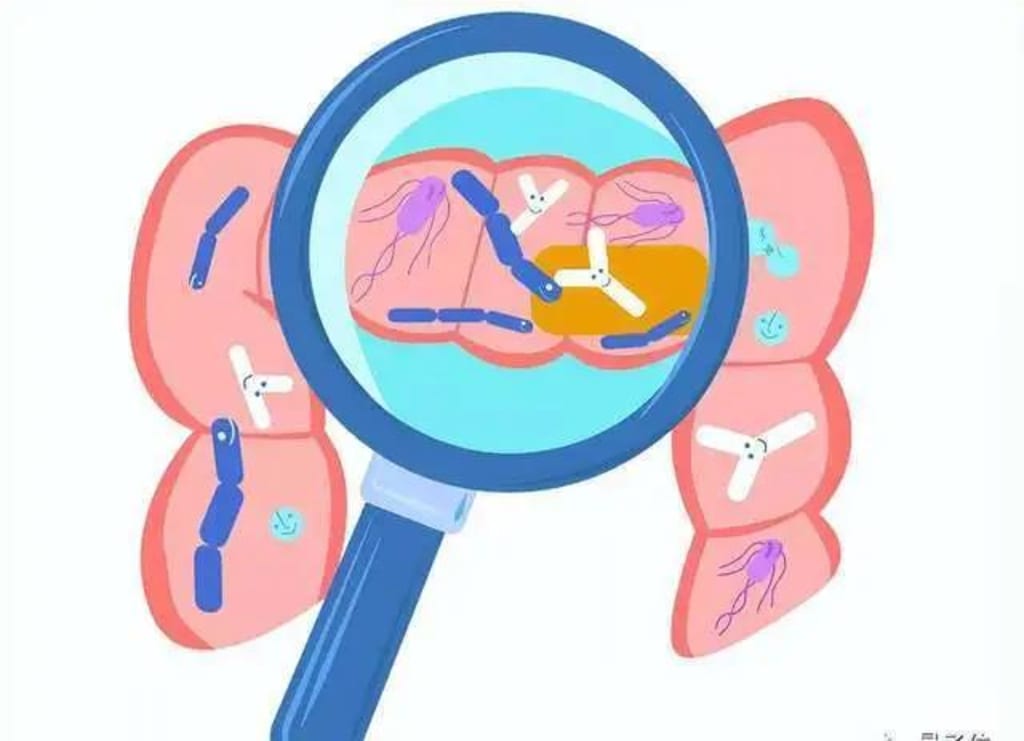
Shit... Then... Silver... Line?
Yeah, it's the shit you thought it was, and it's the bank you thought it was.
For them, excrement is not simply excrement, but a "medicine".
But don't feel sick or sick just yet.
After understanding the details of the netizens, can be in the cheers oh:
So what's going on here?
Because feces can be used to treat diseases
Originally, this bank regards excrement as "circulating currency", the purpose is to use cure.
In fact, the idea that excrement can cure diseases is not just some in recent years.
Back in 2012, OpenBiome, a "poop bank", was launched in the US.
They collect, test, and provide fecal samples for fecal microbiota transplantation to 122 hospitals in the United States.
Poop can cure diseases What's in play here?
Take a look at OpenBiome's poop treatment process to find out
It's a nonprofit fecal donation organization that also receives $40 for successful donations.
First, the donor must be in good health and must not take antibiotics for three months before the donation.
Secondly, feces and blood should be tested and analyzed to ensure that the intestinal mucosa has the required conditions;
Finally, the stool sample is transferred to a plastic filter bag, homogenized with cryopreservation and saline/glycerine solution, and packaged in dry ice to prevent leakage during shipment.
What you end up with is an opaque, filamentous liquid in a bottle that's the brown color of coffee.
But how is donated feces used on patients?
Generally, fecal transplants are performed by enema, stomach and throat, or oral capsules.
In 2013, a randomized controlled clinical study found that fecal transplants were highly effective in treating patients with recurrent C. difficile infections, with an 80 to 90 percent response rate, and were more effective than vancomycin alone.
Fecal transplant therapy can also be used to treat inflammatory bowel disease (IBD), and fecal bacteria transplantation can improve the disease status of patients with IBD by reconstructing intestinal microbiome diversity.
Prof. Stallmach's team at University Hospital Jena, Germany, reports a clinical study of 8 patients with active UC who took multiple donor fecal bacteria transplantation capsules orally for a long time.
The results showed that the patient's clinical symptoms improved after 12 weeks of treatment, and the intestinal flora was effectively regulated. In particular, the researchers noted that the symptom improvement of the multi-donor fecal bacteria transplantation was not evident until 12 weeks of treatment had been completed.
In addition, studies have shown that fecal transplants have potential value in treating Crowe's disease.
See so much, you are not a little tempted to donate feces, but this is not you can donate oh.
OpenBiome s donation acceptance rate was 2.8 percent, lower than Harvard s 3.19 percent.
But to be more precise, it's not the poop itself that cures, it's the microbiome it contains that does.
Because of the traditional use of antibiotics to treat diseases, people can become dependent on them and relapse when they stop using antibiotics.
And in human feces, there are a lot of beneficial bacteria, so fecal transplantation has become a new treatment option.
For the digestive and immune systems to function properly, the gut needs a balance of natural bacteria.
And studies show that fecal transplants save an average of $17,000 per patient.
You can't just take feces
OpenBiome's faecal donation requirements are stringent and it is difficult to match suitable donors.
The cost of finding suitable stool donors is too high for many people to afford. There is one best way to solve this problem:
The idea is to store it when you're healthy and then transplant it back when things go wrong.
It is done by developing an autologous faecal transplant system (FMT) in which the donor and recipient are the same person.
Harvard Systems biologist Yang-Yu Liu puts it this way:
Autologous FMT stools are stored in much the same way that parents store cord blood from newborns, and are even more likely to use stool samples than cord blood.
This avoids problems that may arise in xenotransplantation involving two people due to incompatibility issues between donor and recipient.
Speaking about the efficacy of autologous FMT, Scott T. Weiss, an epidemiologist at Harvard University, said:
Autologous FMT has the potential to treat autoimmune diseases such as asthma, multiple sclerosis, inflammatory bowel disease, diabetes, obesity, and even heart disease and aging.
In June Amili, a faecal transplant bank founded by David Ong, a Gastroenterologist in Singapore, announced the establishment of a separate bank for patients who wish to store their samples for future treatment.
But the cost of storing manure isn't small at the moment. Amiri plans to freeze samples at Cordlife's plant, costing the owner $5,500 for the first 10 years of storage.
This is expensive for ordinary people and has discouraged many.
But research into fecal transplants is essential for treating some diseases, Says Ong:
Stool samples are not only needed for clinical trials and treatments, they can also tell us more about the elusive gut microbiome: how healthy ones differ from unbalanced or diseased ones, and how bacteria differ by environment and geography.
Do you have an itch to go to the bank and store your poop?
One More Thing
Excrement banks are not the only exotic operations in Singapore.
Due to the lack of natural water sources, a long period of drought would lead to water shortage in Singapore. Therefore, we used membrane technology to recycle toilet water and turn it into beer.
Clean is clean, but it depends on how you feel.
About the Creator
Health keeper
Help you complete the healthy life plan, give you the comprehensive healthy life advice, share the life in the story, teach you the lifehack
Keep reading
More stories from Health keeper and writers in Lifehack and other communities.
Does running for 40 minutes a day slow down aging or speed it up? It may not be too late to know
In the era of health preservation, running is the simplest and most effective way of health preservation. Running every day can effectively improve cardiopulmonary function, burn excess fat, maintain a good figure, keep people young and energetic, and look better and better.
By Health keeper4 years ago in Lifehack
What Your Grandmother Knew about Gold that Wall Street Forgot
My grandmother kept her gold bangles in a faded velvet pouch at the back of her wardrobe. Not in a safe, not in a bank vault, just tucked between old shawls and photographs. When I asked her once why she bothered keeping them, she looked at me like I'd asked why the sky was blue.
By Marcus Briggs7 days ago in Lifehack
Center Stage with Paul Stewart
*** I'm keen to republish the interviews I did for my series with Vocal creators. It's been a few years and I thought it might be nice to revisit these wonderful conversations. I'll be releasing them one at a time for a few weeks/months.
By Heather Hubler5 days ago in Interview


Comments
There are no comments for this story
Be the first to respond and start the conversation.