
Septic Tank Bacteria: Guide to a Healthy System
Septic Tank Bacteria — An Essential Guide

Are Bacteria Essential in Septic Tanks?
Septic tanks depend on bacteria which break down organic waste by transforming it into simpler compounds that can be easily absorbed into the ground. There are two main types of bacteria in the septic tanks namely aerobic, anaerobic bacteria, and a third type — harmful bacteria a subset of anaerobic bacteria.
- Aerobic Bacteria: These bacteria need oxygen to survive and can detoxify oxygen with the help of enzymes. No foul odors are released during the breakdown of the waste by this type of bacteria. Aerobic degradation is significantly faster than anaerobic degradation.
- Anaerobic Bacteria: These bacteria can grow even in the absence of oxygen and cannot detoxify oxygen. Too much anaerobic bacteria can reduce the amount of oxygen available and the breakdown process by these bacteria releases gases that contribute to unpleasant odors.
- Anaerobic bacteria can also carry harmful pathogens like E. coli which are dangerous to humans.
Maintaining an elevated level of aerobic bacteria in the septic tanks of single residence units or a small group of homes helps ensure efficient waste breakdown, odor reduction, and overall system health.
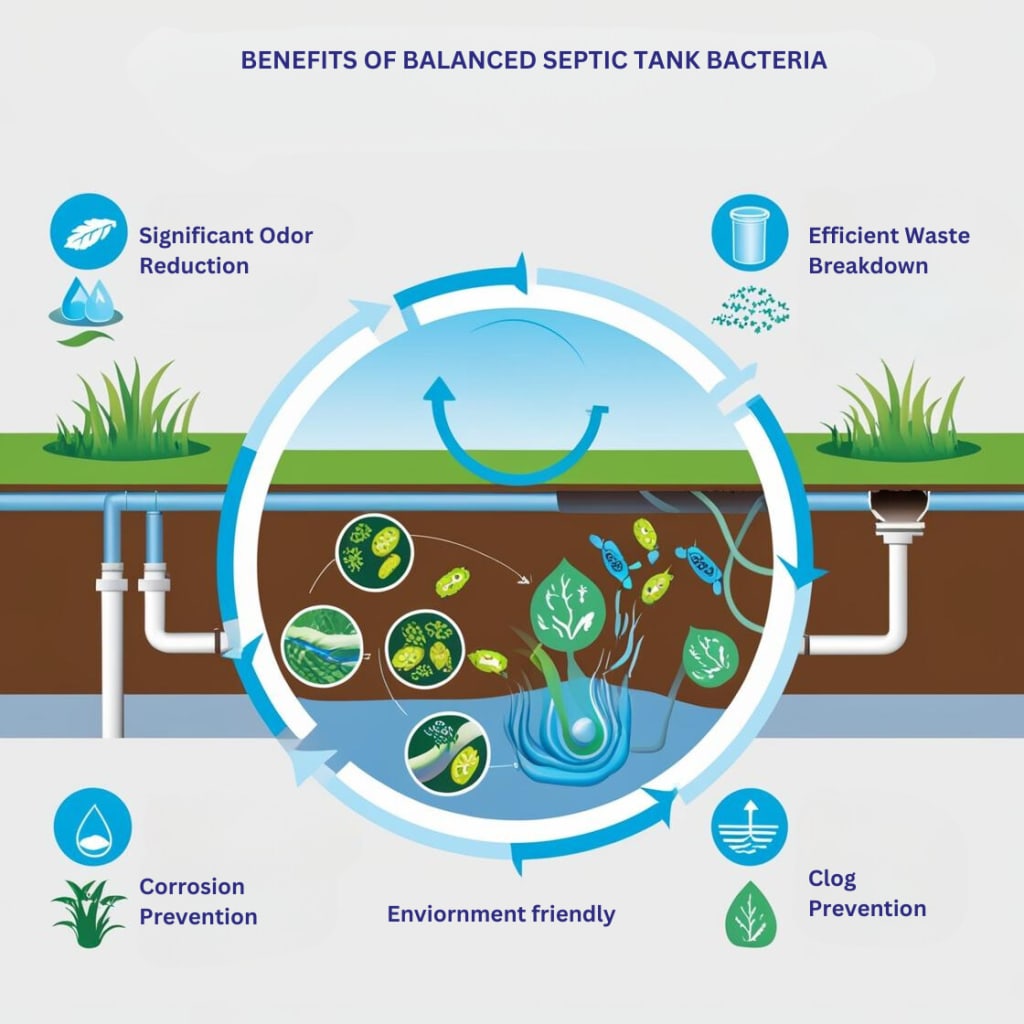
Advantages of a Healthy Bacterial Balance in your Septic Tank
1. Odor Reduction
A well-functioning septic tank should be odor-free. A foul odor does not necessarily mean the septic tank needs to be pumped but is a sign of the presence of gases in high concentrations. As mentioned above the presence of beneficial aerobic bacteria prevents the formation of gases that emit foul odors.
2. Breaking Down Waste and Sludge
In septic tanks, the impurities settle at the bottom of the tank. These organic waste and sludges collected at the bottom of the tanks are broken down by aerobic bacteria preventing the accumulation of gases.
3. Preventing Clogs and Backups
Just as in our digestive system, healthy bacteria in the septic tanks prevent the clogs by continuously breaking down waste into smaller, manageable particles. If the waste is not broken down properly it leads to blockages in the pipes and backups in your home. An efficient septic tank with enough beneficial bacteria saves you from potential inconveniences and costly repairs.
4. Corrosion prevention
Septic tank’s components potentially may corrode due to the presence of acidic byproducts from the waste breakdown. These acids can be neutralized by a balanced bacterial environment and thus protect the entire septic tank system.
5. Environmental Safety
A well-maintained septic system guarantees your family’s well-being and helps protect the environment. It discharges cleaner water into the ground, free from harmful pathogens and thus protecting the groundwater and surrounding environment.
Tips for Supporting Bacteria in Your Septic Tank
a. Avoid using harsh chemical
Chemicals like bleach, antibacterial cleaners, and harsh drain cleaners that kill bacteria are not going to be safe for your septic tanks as they will also kill healthy bacteria. Avoid flushing the antibiotic medicines, fat, grease, etc. through the septic system.
b. Constantly add Bacteria Treatments
Some treatments are available that introduce helpful bacteria into your tank which will support the existing bacterial population. Such treatments are typically safe and easy to use, as they are designed to dissolve after flushing.
c. Provide Oxygen to the System
Oxygen is essential for bacterial regulation in your septic system. Aeration is a mechanical method for introducing more oxygen into the system. However, septic treatments release oxygen into the tank, allowing these beneficial bacteria to work more effectively.
Maintaining the right balance in septic tank bacteria can be challenging because of various factors. Low oxygen levels will lead to the domination of anaerobic bacteria, which will cause foul odor and health risks. Chemical overload and infrequent use may also lead to the decline of the bacterial population.
How to Know if Your Septic Tank Needs a Bacterial Boost?
• Persistent odors near the tank and surroundings
• Slow-draining toilets
• Frequent backups
If you notice any of the above issues, a well-formulated septic tank treatment may help to restore the bacterial balance and end foul odors.
Investing a little time and effort into supporting the septic tank bacteria balance can save you from costly repairs and keep your home’s plumbing running smoothly.
Looking for a simple and cost-effective way to keep your septic tank efficient? Try this proven Treatment Today!
About the Creator
solveurself
Creator of solveurself.com. Sharing DIY, eco-friendly home solutions, and wellness tips. Inspiring others to live sustainably and solve challenges creatively.
Keep reading
More stories from writers in Lifehack and other communities.


Comments
There are no comments for this story
Be the first to respond and start the conversation.