
Reimagining Workplace Safety With Vision AI
Explore the future of workplace safety with AI vision technology, enhancing protection and productivity
Overview
A safe work environment is critical to ensure the health and well-being of employees. However, in pursuing higher productivity and profitability, businesses have become complacent about workplace safety. Ignoring employee health and safety at the cost of business gains can have devastating consequences, especially if an organization is met with a tragic workplace accident.
The consequences of such accidents are dire, leaving workers incapacitated or facing life-threatening perils. In the aftermath of such incidents, companies face numerous challenges. They may confront legal ramifications due to noncompliance with safety regulations, shoulder heavy insurance costs, and need to replace or retrain staff, renew equipment, or modify processes and organizational structures that were affected by the workplace hazards. This not only intensifies the financial burden but can also disrupt the operational efficiency of the organization.
To mitigate the risk and impact of such accidents, companies must prioritize the health and safety of their employees, and the environments they work in. This entails providing them with safe working conditions, adopting sound safety procedures, and diligently monitoring the work environment and employees in real time.
Advanced technology such as Vision AI is a game changer in making workplaces safe and risk-free. Vision-AI-powered solutions can detect hazards early, automate operations, and allow real-time workplace and employee tracking, ensuring a secure, proactive, and productive workplace.
Introducing Vision AI for Workplace Safety

Vision AI is a rapidly evolving field that has the potential to revolutionize workplace safety. By using computer vision and machine learning, Vision AI models can identify and prevent hazards, monitor worker behavior, and provide real-time feedback.
Today Vision AI Workplace Safety solutions are used in many industries, such as construction sites to monitor worker behavior and identify unsafe practices, manufacturing plants to identify potential hazards such as spills and leaks, and healthcare facilities to improve patient safety and reduce the risk of medication errors.
The Essentials of Vision AI: Its Working Process and Key Components
Vision AI models analyze real-time footage of cameras installed within the premises and identify risks and noncompliance. It does that with the help of ML-powered models that are trained with thousands of images and videos in different lighting and environmental conditions.
To further understand how Vision AI works, it's important to understand the key components of it:
Cameras: Vision AI solutions typically use cameras to capture images or videos of the workplace. The cameras can be fixed and placed in various locations, such as on ceilings, walls, or on workers' gear..
Computer vision software: The computer vision software analyzes the images or videos captured by the cameras. The software uses algorithms to identify objects, people, and activities in the images or videos.
Machine learning: Machine learning is used to train computer vision models. The software is trained on a dataset of images or videos labeled with the objects, people, and activities they contain.
Dashboard: The dashboard is a user interface that allows users to view the results of the computer vision analysis. The dashboard can monitor the workplace for hazards, track worker behavior, and provide real-time feedback to workers.
Besides these essential components, Vision AI solutions may also include sensors to collect additional data about the workplace, such as temperature, humidity, and noise levels, data analytics to identify trends and patterns, and reporting tools to track the progress of safety initiatives.
How is Vision AI Making Workplaces Safer?
By adopting Vision AI Workplace Safety solutions, organizations can proactively identify Employee Health and Safety (EHS) risks. Here are some areas where these solutions can be helpful:
1. Hazard detection and prevention
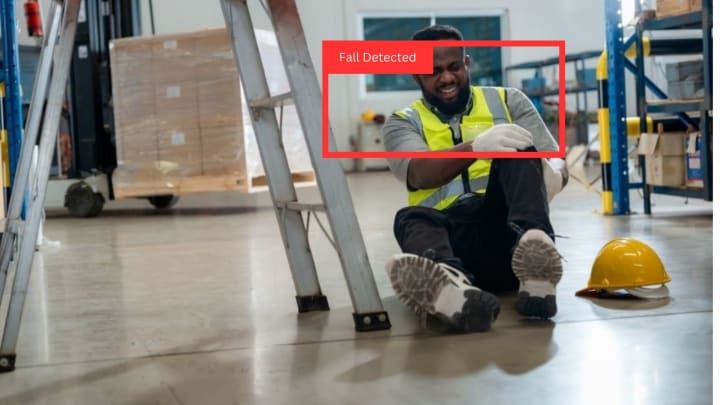
Proactive hazard detection is crucial to detect risks and noncompliance before it turns fatal. While traditional ways of hazard identification rely on manual inspection, which is susceptible to overheads and errors, Vision AI Workplace Safety Solutions can identify potential workplace hazards early.
It compares real-time images and videos with the vast dataset it is trained while also being able to learn continuously after implementation. For example, computer vision algorithms can analyze real-time video feeds in construction sites or warehouses to identify potential fall hazards, such as unsecured ladders or cluttered walkways. The information can then be used to take corrective action.
2. Machine and equipment safety
Machines and equipment are crucial assets of any workplace and must be kept in optimal condition to evade significant financial losses and critical dangers due to accidents. Factories can monitor machines and device KPIs in real-time with sensor-based Vision AI solutions.
For instance, computer vision algorithms can analyze real-time camera video feeds to detect abnormal machine behavior, such as overheating or malfunctioning. As soon as any sensor detects an abnormality, it will trigger warnings about potential equipment failures that could lead to accidents or injury.
3. Monitoring employee well-being
Employee well-being is crucial for workplace safety as it directly affects their ability to perform tasks effectively and stay alert. Employers need to prioritize employee well-being as it not only prevents accidents and injuries but also enhances overall productivity and morale in the workplace.
With the use of Vision AI, workplaces can analyze employee behavior patterns to assess their well-being and ensure their safety. These solutions can detect signs of fatigue or distraction, such as drooping eyelids or unusual body movements, and alert employees or supervisors to take necessary breaks or interventions to prevent accidents.
4. Crowded spaces monitoring
Several industries have areas with a high traffic flow, from factories to construction sites. Monitoring crowds in those areas is crucial to maintain social distance, mine insights through occupancy metrics, limit occupants and entry access, prevent collisions and curb work disruptions. With the Vision AI models, businesses can monitor crowded spaces more effectively and identify activities that may pose risks to employees or visitors.
Vision AI solutions powered with ML algorithms can detect when a crowd becomes too dense, or individuals engage in unsafe behavior, such as blocking an emergency exit. Based on this information, workplace managers can take proactive safety measures, such as clearing the area or redirecting people to ensure minimum disruption and movement.
5. Emergency response and evacuation
Emergency response and evacuation are critical components of workplace safety. A quick and efficient response can save lives and minimize property damage in a fire, explosion, or any other emergency. Employers must have well-developed emergency response plans and procedures to ensure their employees' safety and well-being.
Vision AI solutions can greatly enhance emergency response capabilities in the workplace. With them, organizations can rapidly identify and recognize emergencies like fires or unauthorized intruders. Today computer vision models are used to recognize emergencies, such as fires or unauthorized intruders, and automatically alert employees while providing real-time video feeds to emergency responders for better situational assessment and coordination.
The Bottomline
Prioritizing workplace safety is not just a moral imperative but also a strategic investment for businesses. Neglecting employee health and safety can be devastating, leading to accidents, legal charges, and financial burdens. However, with the advent of Vision AI technology, organizations now have a powerful tool to create secure and proactive workplaces.
Vision AI solutions can detect hazards early, monitor worker behavior, and provide real-time feedback, ensuring the well-being of employees and the organization's overall productivity. By embracing Vision AI for workplace safety, businesses can foster a safety culture, mitigate risks, and create a positive and thriving work environment for their employees.
About the Creator
Keep reading
More stories from Bryon Taylor and writers in Lifehack and other communities.
Vision AI: Redefining Industrial Safety Against Slip and Fall Incidents.
In the bustling hubs of industry, where machines hum and workers navigate their tasks, ensuring safety is paramount. priority. However, despite advancements in technology and safety protocols, slip and fall accidents remain a concern. These seemingly minor incidents can result in grave consequences for the well-being of the workforce and the bottom line of businesses. In this article, we delve into industrial safety, spotlighting the transformative power of Vision AI technology in preventing slip and fall accidents.
By Bryon Taylor2 years ago in Humans
The Mediterranean Glow Spain Personal Care Revolution in 2026
Spain has always been a country where self-care and aesthetic presentation are deeply woven into the social fabric. However, as we move through 2026, the Spanish personal care and beauty market has transcended traditional boundaries to become a global powerhouse of innovation and sustainability. Currently valued at approximately $2.8 billion and projected to reach $4.5 billion by 2034, the industry is expanding at a steady 5.23% CAGR. This growth is not merely about selling more soap or lotions; it is a fundamental shift in how Spanish consumers perceive health, environment, and aging. In 2026, the "Spanish Glow" is powered by a unique blend of ancient Mediterranean ingredients like olive oil and citrus fused with cutting-edge biotechnology and a fierce commitment to eco-conscious consumption.
By Neeraj kumarabout 5 hours ago in Lifehack
Villa Moving Costs in Sharjah: Complete Breakdown
Moving your villa in Sharjah involves several cost factors that can quickly add up if you're not prepared. This guide is for villa owners, tenants, and families planning a move within or to Sharjah who want to understand exactly what they'll pay and how to budget effectively.
By Libin Ceazera day ago in Lifehack




Comments