
Navigating the Future: The Fusion of AI Agents and Design Innovations
When Machines Dream in Color: The Future of Creative AI

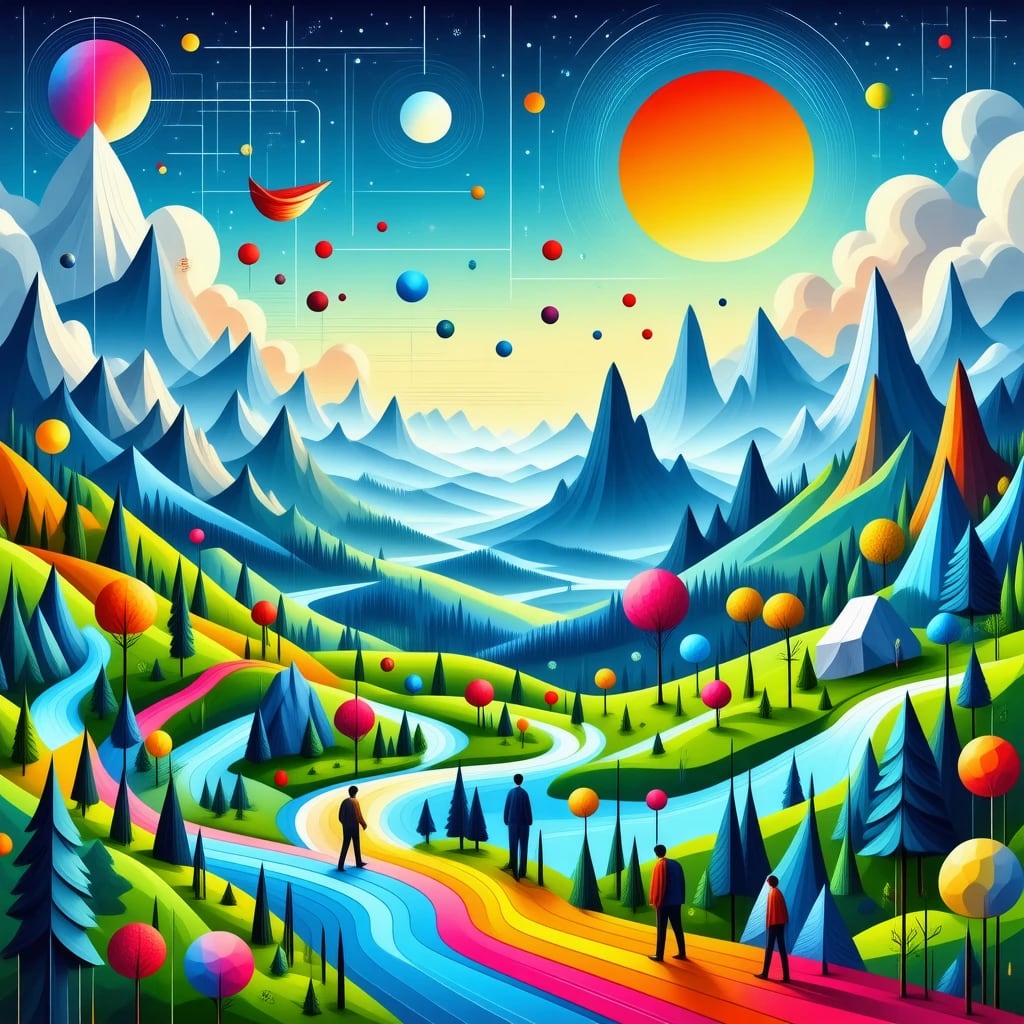
The clock ticks towards the critical pitch. Your lead strategist sends a last-minute data update – a seismic shift in market demographics requires a complete overhaul of the presentation's visual narrative, specifically the section detailing target audience engagement. Manually generating complex diagrams, tailored infographics, and resonant header images for 30+ slides, each needing specific data points and a consistent, emotionally intelligent visual tone, would take days. But then, your integrated system kicks in. An intelligent AI agent, monitoring incoming data streams and presentation deadlines, identifies the change. It instantly analyzes the new demographic profile, cross-references it with brand guidelines and strategic objectives, and interacts directly with a suite of generative design tools. In moments, not days, it proposes ten variations of the target audience slide visual – not just charts, but evocative, abstract representations of the new consumer base, each accompanied by data-driven annotations. It generates variations for the entire affected section, ensuring visual consistency and strategic alignment. You, the human, step in, refine the best options with subtle tweaks, add the final narrative polish, and deploy. This isn't just efficiency; it's a real-time creative and strategic agility previously unimaginable, unlocked by a powerful, dynamic interplay.
We are witnessing a truly fascinating convergence: the rise of sophisticated AI agents designed to understand context, manage complex workflows, and make informed decisions, meeting the groundbreaking capabilities of generative design tools that can conjure unique, contextually relevant visuals on demand. This is far more than the simple combination of two technologies; it's a synergistic fusion that gives birth to entirely new creative processes and strategic possibilities. It represents a future where efficiency, profound creativity, and an almost intuitive user experience are deeply interwoven. This exploration delves into this transformative intersection, highlighting the unique value created by their union and offering insights on thriving within this rapidly evolving landscape.
AI agents have swiftly become indispensable across numerous sectors. They excel at automating tedious tasks, sharpening insights through data analysis, and even helping to surface novel concepts. Armed with advanced algorithms and machine learning, these digital partners can digest vast quantities of information, orchestrate intricate sequences of actions, and generate varied outputs with impressive speed. Picture AI-driven project managers that not only track progress but proactively optimize resource allocation based on shifting priorities, or personalized marketing agents that craft dynamic, hyper-targeted content streams and corresponding visuals for individual users in real time.
Concurrently, design platforms are continually expanding the frontiers of visual creation. We're seeing an explosion in generative design features – from remarkably capable text-to-image models that translate abstract concepts into visuals, to tools that allow for the rapid exploration of countless stylistic variations or the intelligent application of complex design principles based on simple inputs. Recent innovations like Freepik's 'Mystic' mode exemplify this trend, offering creators an almost magical pathway to generating distinctive graphics with astonishing ease. These tools are powerful democratizers, lowering the barrier to producing professional-quality visuals that once demanded highly specialized skills or substantial time investments.
The true, potent alchemy, however, occurs when these two forces don't just coexist but actively collaborate. It's here that the "more than the sum of its parts" synergy truly shines. Imagine an AI agent tasked not just with scheduling social media posts, but with creating all the necessary assets for a new product launch campaign. Instead of a human designer spending hours sifting through stock options or building from scratch, the agent, having analyzed the product's market data, target audience profile, and brand style guide, could directly orchestrate the generative process. It could interact with a visual AI via API or integrated interface, feeding it precise, data-informed prompts: "Generate five abstract, vibrant backgrounds with a high-tech feel, optimized for Instagram Stories, using the brand's primary blue and accent green." The generative tool rapidly produces diverse options. The agent could then, based on pre-set criteria or human feedback, refine the request ("Make these lighter, less geometric") or automatically process the generated images for different platforms, resizing and formatting them for Twitter banners, Facebook ads, and blog headers. The human designer, freed from this intricate, repetitive generation and formatting work, focuses on higher-level conceptualization, strategic alignment, and infusing the final output with essential human creativity and brand nuance.
Think about Sarah, a freelance graphic designer whose AI assistant monitors her project deadlines and client brand guidelines. When a brief for a local bakery's seasonal campaign arrives, her assistant analyzes the campaign goals ('promote new pumpkin spice special') and target demographics, then uses generative design tools to pre-generate initial visual concepts – perhaps prompting for 'warm, inviting illustrations of baked goods with a touch of autumnal whimsical flair'. This isn't just generating images; it's the agent interpreting the *strategic need* and translating it into a creative prompt, accelerating the ideation phase dramatically.
Beyond traditional asset creation, this convergence unlocks potential in more complex domains. Consider a business strategist preparing a high-stakes investor pitch. An AI agent could analyze vast amounts of market trends, financial data, and competitor strategies. But instead of just summarizing this data, it could use generative design to propose and create complex, visually compelling strategic roadmaps or scenario illustrations that go beyond standard charts. The agent might prompt: "Generate a dynamic visual metaphor for market disruption in the fintech sector, illustrating speed and transformation, incorporating key data points [provides data]." Or: "Create a conceptual illustration showing the potential future state of industry adoption, visually differentiating early adopters vs. mainstream integration, tailored for an executive audience." This level of sophisticated, data-informed visual *ideation* and creation for strategic planning sessions is a powerful example of the convergence moving beyond simple asset generation into complex visual communication tailored dynamically to strategic needs and data inputs.
These scenarios paint a compelling picture of dramatically enhanced capability, speed, and strategic agility. Yet, while the potential feels vast and exhilarating, integrating such powerful toolkits is complex; it introduces significant responsibilities and challenges requiring thoughtful engagement. Mastering effective prompting, for instance, is not a simple command but an iterative dance requiring precise language, deep context, and a developing intuition for how these models interpret requests – a skill that itself evolves with the technology. Maintaining authentic creative control becomes paramount; while AI can conjure incredible visuals, wrestling with unexpected, off-brand, or even surreal outputs necessitates constant human curation and refinement, demanding a designer's discerning eye to shape raw generation into polished, on-brand creative that resonates.
Furthermore, navigating the ethical and practical landscape surrounding AI-generated content is a complex, ongoing debate with tangible consequences. Issues like establishing clear copyright ownership and usage rights for visuals synthesized by machines from massive datasets pose significant legal and creative hurdles – industries are actively exploring new licensing models and provenance tracking to address this. Identifying and mitigating inherent biases present in training data is crucial; without intervention, these biases can inadvertently perpetuate harmful stereotypes within the generated visuals, prompting efforts towards more curated datasets and bias detection tools. Fundamentally redefining what 'authorship' and 'originality' mean when humans and AI collaborate remains a profound philosophical and practical challenge that legal and societal frameworks are working to address. These are not abstract concerns but real, "thorny" aspects that creators and companies are actively grappling with as they integrate these powerful, convergent technologies.
So, with these transformative forces reshaping our creative and strategic workflows, how do we effectively harness this newfound potential? It's less about simply *having* access and more about *knowing how* to wield these tools skillfully, thoughtfully, and ethically to amplify, rather than diminish, our unique human ingenuity. Navigating this exciting new landscape effectively involves:
1. **Embrace Continuous Learning:** Innovation in this space is breathtakingly fast. Cultivate genuine curiosity and commit to ongoing learning about advancements in both AI agent capabilities and generative design tools. Engage with tutorials, courses, community forums, and hands-on experimentation. Understanding the nuances empowers you to make strategic choices about integration and anticipate potential challenges.
2. **Experiment Fearlessly, Play Strategically:** Dive in and explore! Generative tools, especially, are built for experimentation. Spend time playing with prompts, styles, and parameters. See what surprising results emerge. But also, approach experimentation strategically, thinking about how the *agent* could leverage these tools for specific workflow improvements or new outcomes beyond simple visual generation.
3. **Foster Collaboration and Ethical Dialogue:** The power of this convergence is magnified through shared knowledge. Encourage your team to share their experiences, challenges, and successful integrations of AI agents and generative design. Critically, maintain open and honest conversations about the ethical implications, potential biases, and challenges of authorship and control. A culture of shared learning and critical thinking is essential for responsible and innovative adoption.
In conclusion, the convergence of intelligent AI agents and pioneering generative design tools marks the dawn of a profoundly transformative era for creativity, strategy, and productivity. By actively embracing these advancements, engaging thoughtfully and critically with their multifaceted implications, and applying practical strategies for integration, experimentation, and collaboration, individuals and teams can dramatically enhance their workflows, unlock unprecedented creative and strategic potential, and navigate the future of work with confidence. This dynamic synergy between AI's analytical and workflow power and generative design's visual creativity isn't just shaping the future; it is actively inviting us to participate in its creation, freeing creators from tedious, repetitive tasks and allowing them to dedicate their irreplaceable human energy to higher-level strategic thinking, deep conceptualization, complex problem-solving, and injecting the essential emotional depth, cultural nuance, and narrative flair that only a human can provide. It is an exceptionally exciting and challenging time to be a creator across any industry, standing at the fascinating intersection of intelligence and imagination.
About the Creator
Maxim Dudko
My perspective is Maximism: ensuring complexity's long-term survival vs. cosmic threats like Heat Death. It's about persistence against entropy, leveraging knowledge, energy, consciousness to unlock potential & overcome challenges. Join me.
Keep reading
More stories from Maxim Dudko and writers in Lifehack and other communities.
Navigating the Landscape of AI Agent Frameworks: A Comparative Analysis
Let's face it, the promise of AI can feel a million miles away when you're wrestling with brittle automation, cobbling together complex processes from disparate models and data sources, or watching developers drown in the minutiae of managing state and coordinating communication between agents. The AI landscape *is* evolving breathtakingly fast, and right at the heart of this chaotic progress are AI agent frameworks. These aren't just tools; they're the architects offering a way out of the tangled mess, enabling us to build truly intelligent systems capable of handling intricate tasks and turning that vision of seamless AI efficiency into tangible reality. Understanding what these frameworks bring to the table isn't just smart – it's becoming utterly essential for navigating this new frontier. So, let's pull back the curtain and take a closer look at five significant players shaping this space: LangGraph, CrewAI, OpenAI Swarm, AutoGen, and LlamaIndex Workflow. We'll dig into what makes each tick, where they truly shine, and where they might present a bit of a puzzle. By dissecting their core capabilities, the aim is to equip developers and teams with practical insights to wield these cutting-edge technologies and finally untangle those frustrating bottlenecks.
By Maxim Dudko6 months ago in Lifehack



Comments
There are no comments for this story
Be the first to respond and start the conversation.