
Nasi Lemak 101: Why I Love This Popular Dish (And What You Should Know)
The Fascinating Story of Nasi Lemak

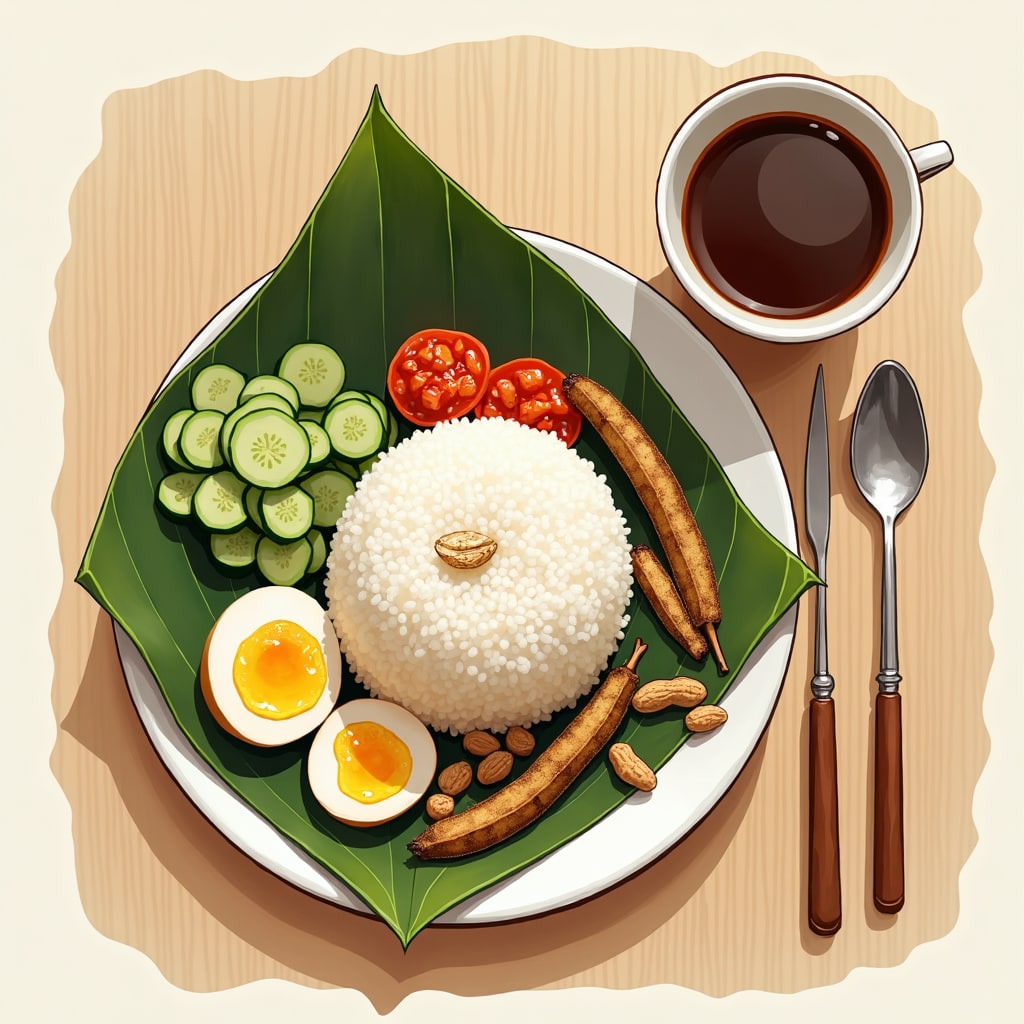
Have you ever tried nasi lemak?
I have.
And as a Filipino living in Malaysia, nasi lemak has become synanymous to my daily staple food.
Not only does it is tasty, it is delicious and healthy too.
But somehow, it makes me wonder, "What nasi lemak really is? Where does it comes from? And is it safe?".
So I compile my not-so-academic research here.
Read on to know more about this Malaysia popular food.
What is nasi lemak?
Nasi lemak is Malaysia’s iconic coconut rice dish.
And somehow it's quite popular amongst Malaysians.
I like it very much.
Especially the crunchiness of the fried anchovies.
But I have to warn you though.
Somethimes I was sneezing non-stop because of the spicy sambal.
It somehow triggers some allergies in me.
So when eating nasi lemak, just be cautious of this tasty delicacy.
Many people add fried chicken, rendang or sambal sotong, but the soul of nasi lemak is always the fragrant coconut rice and the sambal.
I'll dive deep into its ingredients below.
How Nasi Lemak Is Made: Essential Ingredients and Components
At the heart of nasi lemak is soft, fluffy rice cooked in rich coconut milk, often scented with pandan leaves and a pinch of salt for that unmistakable fragrance.
The rice is then paired with a colourful ensemble: spicy sambal, crispy fried anchovies, roasted peanuts, fresh cucumber and a hard‑boiled or fried egg that complete the plate.
Many modern versions add extras like fried chicken, ayam berempah, rendang or sambal sotong, turning a simple breakfast into a full, satisfying meal.
Some even offer nasi lemak pandan or green coconut rice.
But no matter how “upgraded” it becomes, the essential components are still the coconut rice and sambal, which remain the soul of any nasi lemak.
Nasi Lemak Origins: Where This Iconic Dish Comes From
Nasi lemak believed to have originated from Malay coastal and rural communities who relied on coconuts, anchovies and rice as everyday staples.
Over time, this humble farmer’s breakfast evolved into a national favourite enjoyed in homes, school canteens and roadside stalls across Malaysia.
Today, nasi lemak crosses ethnic and geographical boundaries and is also popular in places like Singapore and Brunei, but its strongest identity remains rooted in Malaysian food culture.
I'm lucky enough to be able to taste this tasty dish.
Its long history and everyday presence are why many proudly regard it as Malaysia’s unofficial national dish.
When Was Nasi Lemak Born, Really?
I used to think someone, somewhere, had written the exact birthday of nasi lemak in a neat little history book.
They have not.
What I found out is this: one of the earliest recorded mentions of “nasi lemak” appears in Richard Olaf Winstedt’s book The Circumstances of Malay Life, published in 1909, where he describes rice cooked with coconut milk as part of everyday Malay food.
But here is the honest truth I hold onto: this dish was living in Malay homes and kampungs long before anyone thought it was important enough to write down.
Is Nasi Lemak Healthy? What You Need to Know
Now you might wonder, "Is nasi lemak healthy?"
And to be honest, most dishes are healthy.
The secret of their "healthiness" lies in their portion sizes and extra toppings.
So does nasi lemak.
And to make nasi lemak, you need coconut milk, fried anchovies, peanuts and oily sambal, which can make your plate high in calories and saturated fat.
Especially if you eat them in large amounts.
So the key here is to eat in moderation.
So, if you eat nasi lemak in small portions, with only boiled eggs or tempeh and tauhu (which are proven to be nutritious food), and added vegetables, you won't have any problem and might be healthier and make for you full longer.
Since nasi lemak provides energy from rice, protein from egg and ikan bilis, and some fiber and vitamins from cucumber and any added vegetables.
So if you want a lighter version, pt for a smaller serving of rice, extra vegetables, less sambal and grilled or boiled proteins instead of deep‑fried sides.
Enjoyed in moderation and balanced with other meals in the day, nasi lemak can still fit into an overall sensible eating pattern.
How to Eat Nasi Lemak for Maximum Enjoyment
Part of the magic of nasi lemak is how all the elements come together in one perfect bite.
Most people scoop a little rice, sambal, anchovy, peanut and cucumber together so every mouthful is a mix of creamy, spicy, crunchy and refreshing.
Adjusting the amount of sambal lets you control the heat, from gentle warmth to fiery kick.
In coffee shops and mamak stalls, nasi lemak is often eaten with a spoon and fork, but many still enjoy it with clean hands, especially when it is wrapped in banana leaf—adding a rustic, traditional feel.
Whether you are at a roadside stall or a trendy café, the “right” way to eat it is the way that makes you happiest.
Why Nasi Lemak Is So Famous in Malaysia
Nasi lemak is just coconut rice, right?
Wrong.
Nasi lemak somehow brings that nostalgic feeling inside.
It feels like home on a plate.
It is affordable, widely available, and eaten at almost any hour—breakfast, a hearty lunch, or a comforting late‑night supper.
Some nasi lemak packets even sold for as low as rm2 for easy on-the-go meal.
From simple packets in school canteens to elevated versions in upscale restaurants, the dish has a place in almost every Malaysian’s life.
Its combination of creamy coconut rice and spicy sambal creates a flavour profile that is both nostalgic and addictive, making it a natural favourite.
On top of that, it represents Malaysian diversity: sold by Malays, Chinese, Indians and others, yet loved by all, it symbolises the shared food identity of the country.
How Long Nasi Lemak Can Safely Last at Room Temperature?
Because nasi lemak contains cooked rice, coconut milk, and often egg and fish, it is considered a high‑risk food if left out too long.
And in warm climate country like Malaysia, you are recommended to eat it within a few hours for both freshness and food safety.
Many food‑safety guidelines like the World Health Organization (WHO) also advise limiting the time cooked dishes stay at room temperature to reduce the risk of bacterial growth.
So practically, if you buy a packet in the morning, you should ideally eat it by late morning or lunch time.
And if you plan to keep it longer, refrigerating it as soon as possible is a much safer choice than leaving it outside
Can You Freeze Nasi Lemak? Storage Tips and Tricks
Since you risk foodborne illness by leaving nasi lemak on the counter at room temperature, and you don't feel like refrigerating it and wants to keep it longer, you might wonder, "Can I actually freeze nasi lemak?"
Luckily, I found that you can freeze nasi lemak, how you do it matters for both safety and texture.
Now let's look at the safety basics.
Firstly, for cooked rice and coconit dishes, you should freeze it quickly once it's cooled withing 2 hours to limit bacterial growth such as Bacillus cereus.
Food safety guidance for cooked rice shows it can be safely frozen for several months if cooled promptly and stored airtight at about 0°C or below.
Many home cooks and recipes suggest freezing the coconut rice separately, in airtight containers or freezer bag.
Which can last for up to about 1 month for best quality, then adding fresh sambal and sides when serving.
General rice-freezing guides recommend cooling the rice completely, portioning, sealing well to avoid freezer burn, and reheating thoroughly until steaming hot.
Final Thoughts
At the end of the day, nasi lemak is more than just coconut rice and sambal to me—it is comfort, history and everyday joy wrapped in a simple packet.
Knowing what goes into it, how to enjoy it mindfully, and how to store it safely lets you appreciate this iconic dish without worrying too much about your health.
Have you tried nasi lemak? What is your most memorable nasi lemak experience?
Was it a favourite stall, a homemade version, or your first ever bite?
Share your story in the comments, I’d genuinely love to read it.
About the Creator
Anie Liban
Hi, nice to meet you. I'm Anie Liban. The anonymous writer trying to make sense of the complicated world sharing Longevity tips, Health tips, Life Hacks, Natural remedies, Life lessons, etc.
Keep reading
More stories from Anie Liban and writers in Lifehack and other communities.
The 2026 Complete Guide to Legitimate Wi-Fi Password Recovery: Methods, Tools & Protection
Disclaimer: This article is for educational purposes and legitimate password recovery only. Always obtain proper authorization before accessing any network. Unauthorized network access violates laws in most jurisdictions.
By Alexander Hoffmann4 days ago in Lifehack
Affection and Healing for Yourself
During the night of the last quarter moon, I gathered my ritual supplies. I carefully handled the chunk of black tourmaline that would protect me from your overall negative and narcissistic energy. I carefully walked the house with my stick of selenite in hand, asking the universe to cleanse our working space.
By Alisha Wilkins ✒️🦋🖋️2 days ago in Fiction




Comments
There are no comments for this story
Be the first to respond and start the conversation.