
Mastering Solar Charge Controller Sizing: A Comprehensive Guide for Optimal Off-Grid Performance
Unlock the Full Potential of Your Solar System with Proper Charge Controller Selection


In the realm of renewable energy, solar power stands out as a sustainable and efficient source. However, to harness its full potential, understanding the intricacies of solar system components is crucial. One such component is the solar charge controller, a device that regulates the voltage and current coming from the solar panels to the batteries. Proper sizing of this controller is essential to ensure the longevity and efficiency of your solar power system. This guide delves into the importance of correctly sizing a solar charge controller, the factors influencing its selection, and how advancements in technology have enhanced their performance.
Understanding Solar Charge Controllers
A solar charge controller serves as the intermediary between the solar panels and the battery bank. Its primary functions include:
Regulating Voltage and Current: Ensures that the battery is charged at the correct voltage and current levels, preventing overcharging or deep discharging.
Preventing Reverse Current Flow: Stops current from flowing back into the solar panels during the night or when the panels are not producing electricity.
Enhancing Battery Life: By maintaining optimal charging conditions, it extends the lifespan of the battery bank.
There are two main types of solar charge controllers:
PWM (Pulse Width Modulation): A simpler and more cost-effective option, suitable for smaller systems.
MPPT (Maximum Power Point Tracking): A more advanced controller that maximizes energy harvest by adjusting the input voltage to find the optimal power point.
Factors Influencing Charge Controller Sizing
Correctly sizing a solar charge controller involves considering several key factors:
Solar Panel Wattage: The total wattage of your solar panel array determines the amount of power generated. For instance, a 1000W solar array produces approximately 1000W under ideal conditions.
Battery Voltage: The voltage of your battery bank (12V, 24V, or 48V) affects the current output. The formula to calculate the required current is:
Current (Amps)=Total Wattage/Battery Voltage
For a 1000W system with a 24V battery bank:
Current=1000𝑊/24𝑉≈41.6𝐴
Safety Margin: To account for unforeseen conditions and to ensure the controller operates efficiently, it's recommended to add a safety margin. A common practice is to size the controller at 1.25 times the calculated current. Using the previous example:
Sized Current=41.6𝐴×1.25=52𝐴
Temperature Considerations: Cold temperatures can cause the open-circuit voltage (Voc) of solar panels to increase, potentially exceeding the voltage rating of the charge controller. It's essential to consider the lowest expected temperature and adjust the number of panels in series accordingly.
Choosing Between PWM and MPPT Controllers
The choice between PWM and MPPT controllers depends on the specific needs of your solar system:
PWM Controllers: Best suited for smaller systems where the solar panel voltage is close to the battery voltage. They are less expensive but less efficient.
MPPT Controllers: Ideal for larger systems or when the solar panel voltage significantly exceeds the battery voltage. They are more expensive but offer higher efficiency, especially in varying sunlight conditions.
For example, with a 1000W solar array and a 24V battery bank, an MPPT controller would efficiently convert the higher voltage from the panels to the optimal charging voltage for the battery, maximizing energy harvest.
Technological Advancements in Charge Controllers
Recent advancements in solar charge controller technology have led to significant improvements in efficiency and functionality:
Enhanced MPPT Algorithms: Modern MPPT controllers employ advanced algorithms that continuously track the maximum power point, adjusting to changing sunlight conditions and improving energy capture.
Integrated Monitoring Systems: Many controllers now come with built-in monitoring systems that allow users to track performance metrics in real-time, facilitating maintenance and optimization.
Improved Temperature Compensation: Advanced controllers offer better temperature compensation features, ensuring safe operation even in extreme weather conditions.
Conclusion
Properly sizing a solar charge controller is pivotal to the efficiency and longevity of your solar power system. By considering factors such as solar panel wattage, battery voltage, safety margins, and temperature conditions, you can select a controller that meets your system's needs. Embracing advancements in technology, such as MPPT controllers with enhanced algorithms and integrated monitoring, can further optimize performance. Whether you're setting up a small off-grid cabin or a large-scale solar installation, understanding and implementing correct charge controller sizing is a fundamental step toward achieving reliable and sustainable solar energy use.
About the Creator
Richye Power
Discover RICHYE Battery, a leading lithium battery manufacturer renowned for excellence in performance and quality. Experience superior reliability and innovative solutions tailored to meet your specific needs.
Keep reading
More stories from Richye Power and writers in Lifehack and other communities.
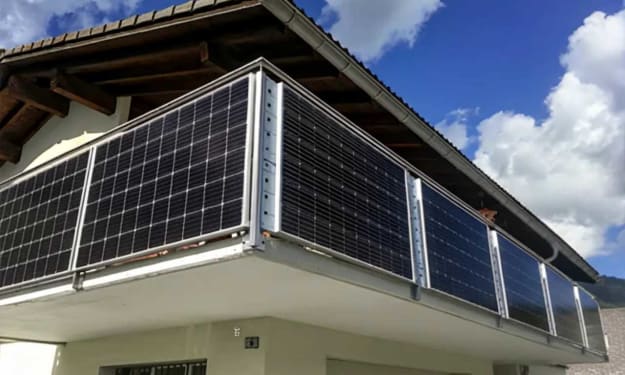
Sunlight on the Rail: How Balcony Solar + LiFePO₄ Storage Lets City Dwellers Cut Bills and Keep the Lights On
Apartment life doesn’t have to mean surrendering all control of your electricity. In recent years, compact “balcony solar” systems paired with small battery storage have matured into a practical option for renters and condo owners who want meaningful bill savings, basic outage resilience, and a lower carbon footprint — without a full rooftop installation. This article walks through how these systems work, why LiFePO₄ (lithium iron phosphate) is the sensible battery chemistry for urban setups, how to size a system realistically, and the safety and code considerations you must mind to make a compliant, long-lived installation.
By Richye Power5 months ago in Lifehack



Comments
There are no comments for this story
Be the first to respond and start the conversation.