
⚔️ Kharkiv Under Siege: Russia Launches New Offensive in Eastern Ukraine
As Russian forces push toward Ukraine’s second-largest city, global attention turns to mounting humanitarian and military consequences By International Affairs Desk Published: May 14, 2025

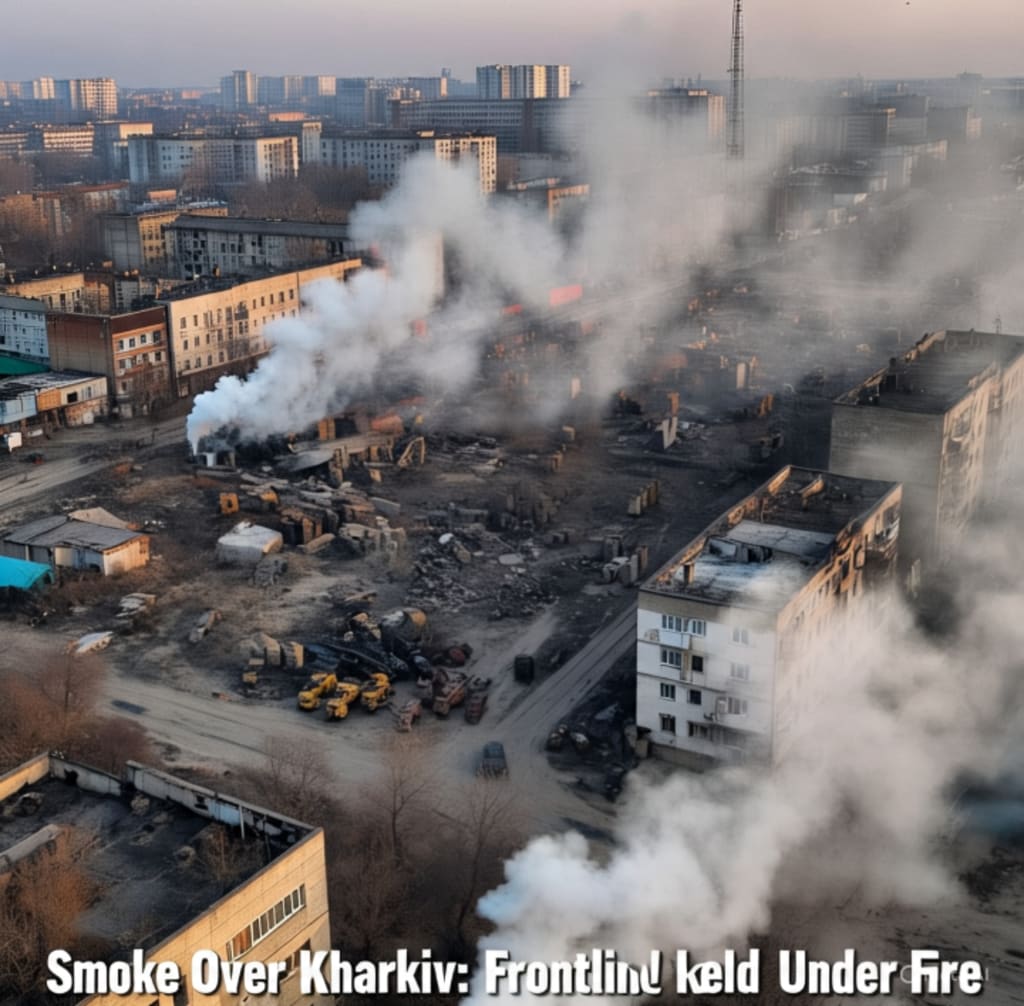
The war in Ukraine has entered a perilous new phase as Russian forces intensify their assault near Kharkiv, Ukraine’s second-largest city. The renewed offensive, launched in early May 2025, marks one of the most significant escalations since the start of the full-scale invasion in February 2022.
Located just 30 kilometers from the Russian border, Kharkiv has long been a focal point of the conflict. But now, after months of relative quiet on the northeastern front, the city and its surrounding region are once again under heavy bombardment, prompting urgent international responses and fears of further destabilization in Eastern Europe.
❗ A Renewed Push for Territory
The Russian Ministry of Defense has confirmed that a "limited but strategic" operation is underway in the Kharkiv region, with the goal of securing buffer zones and "neutralizing Ukrainian artillery threats" near the border.
However, Ukrainian military officials view the offensive as an attempt to stretch Ukrainian forces thin and possibly lay the groundwork for a larger encirclement operation.
> “This is not just a distraction; it’s a serious threat,” said Colonel Oleksiy Danylov of Ukraine’s Eastern Command. “Russia is testing our lines while trying to force us to divide our reserves.”
Russian troops, backed by artillery and aerial support, have reportedly taken control of several small border settlements in the north of Kharkiv Oblast. Clashes are ongoing in key areas such as Vovchansk, a strategic town near the Pechenihy Reservoir.
🛡️ Ukraine Reinforces Defenses
In response to the growing threat, Ukraine has begun moving additional brigades toward Kharkiv, bolstering both defensive fortifications and logistics infrastructure. Trenches and anti-tank obstacles are being expanded, while drone reconnaissance operations have intensified across the northern frontier.
President Volodymyr Zelensky, in a national address, reassured the public that Kharkiv will not fall:
> “We understand the danger, and we are responding with strength and unity. Kharkiv is Ukraine, and it will remain Ukraine.”
Kyiv has also called on Western partners to expedite military aid deliveries, particularly air defense systems, precision-guided munitions, and long-range artillery.
🌍 Global Reactions and Aid Talks
The renewed offensive has sparked urgent meetings among NATO and EU leaders. In Brussels, discussions are underway about increasing shipments of air defense missiles, drones, and armored vehicles to Ukraine.
U.S. Secretary of State Antony Blinken visited Warsaw on Monday and reaffirmed Washington’s commitment to supporting Ukraine “for as long as it takes.” However, U.S. military analysts caution that delays in congressional approval of new aid packages could hinder Ukraine’s ability to hold the line.
Meanwhile, Germany and the United Kingdom are pushing for a Europe-wide initiative to supply Ukraine with more Patriot missile systems, which have proven critical in intercepting Russian ballistic missiles and drones.
🧍 Civilian Impact and Humanitarian Concerns
Kharkiv, a city of nearly 1.5 million people before the war, is once again seeing a surge in civilian evacuations. Local officials estimate that over 40,000 residents have already fled frontline districts, while hundreds of families have taken shelter in subway stations and underground facilities.
> “We are trying to maintain essential services, but the situation is becoming more difficult every day,” said Kharkiv Mayor Ihor Terekhov.
The United Nations has warned that renewed fighting near Kharkiv could trigger another wave of displacement across eastern Ukraine. Aid organizations are ramping up food and medical supply efforts, but many areas remain inaccessible due to shelling.
🔍 Tactical Analysis: Russia’s Objectives
Military analysts suggest that the renewed Russian assault in Kharkiv may serve several objectives:
1. Diversion of Ukrainian Forces: By opening a new front, Russia could force Ukraine to shift troops away from other key areas like Donetsk and Zaporizhzhia.
2. Territorial Buffer: Capturing border towns may give Russia a defensive cushion for Belgorod and other border regions.
3. Psychological Impact: Renewing pressure on a major city may undermine Ukrainian morale and strain domestic resources.
However, analysts also point out that Russia risks overextending its forces, especially as Ukrainian resistance remains strong and Western surveillance systems track movements in real-time.
🚁 The Role of Technology in Modern Warfare
The fighting near Kharkiv has once again demonstrated the importance of modern warfare technologies. Both sides are deploying drones, electronic warfare tools, and satellite intelligence to monitor enemy activity.
Ukraine has increased its use of FPV (First-Person View) kamikaze drones, which are proving effective in urban and forested terrain. Russia, meanwhile, continues to rely heavily on Shahed drones supplied by Iran and new iterations of its Lancet drone program.
> “Technology is now central to how battles are fought and won,” said Dr. Inna Bondarenko, a defense analyst at the Kyiv Institute of War Studies. “Even smaller towns are now digital battlefields.”
🏛️ Political Ramifications and the Road Ahead
As the war drags into its fourth year, pressure is mounting on both sides to find an endgame. But with neither Ukraine nor Russia willing to compromise on territorial integrity or political sovereignty, peace talks remain distant.
The Kharkiv offensive serves as a stark reminder that the war is far from over—and that it still has the potential to expand.
> “We are witnessing a test of endurance and commitment on both sides,” noted NATO military advisor General Lars Andersen. “This year may be a turning point—or it may be a prelude to something much worse.”
🧭 Conclusion: A City Caught Between History and Survival
Kharkiv stands at the crossroads of history, resilience, and resistance. Once a thriving academic and industrial hub, it is now a symbol of Ukraine’s struggle to survive and maintain its independence.
As the world watches with growing concern, the question remains: Will the international community act swiftly enough to prevent Kharkiv from falling again into chaos—or worse, occupation?
One thing is certain: the outcome of this battle will reverberate far beyond the streets of Kharkiv. It will shape the next chapter of a war that has already rewritten the geopolitics of Europe and beyond.
About the Creator
Top 10 Questions to Ask Every Perth NDIS Service Before You Engage Them
Choosing the right National Disability Insurance Scheme (NDIS) provider shapes the quality of care, independence, and outcomes a participant experiences. In Perth, families and participants face a growing number of service options, which makes informed decision-making essential.
By Anshul Vijay4 days ago in Lifehack




Comments
There are no comments for this story
Be the first to respond and start the conversation.