
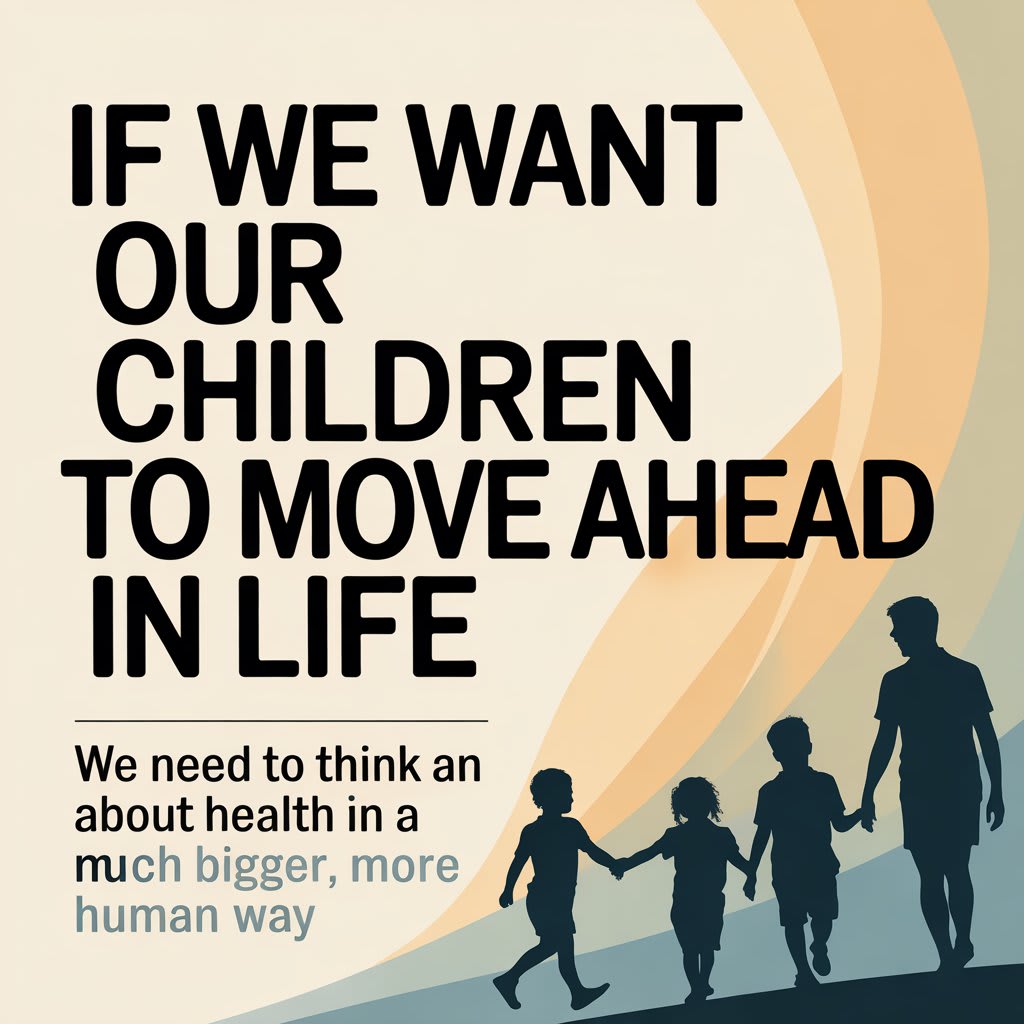
If We Want Our Children to Move Ahead in Life
We need to think about health in a much bigger, more human way

1. The Day Everything Changed
The issue of health of children did not bother me before I had a little one of my own. I used to think health was just about food, school, and keeping them away from screens. It seemed so simple.
But then, reality hit. I remember one evening seeing a child surrounded by toys, yet he was irritable and miserable. Everything was fine on paper, but something deep was missing.
2. Redefining What "Health" Means
That night, I realized health isn't just a checklist. It’s not just about what they eat or how much they sleep. True health is the environment and the internal strength we provide to them.
If we want our children to succeed, we have to look beyond the surface. We have to look at the "Internal Health" that shapes their entire future.
3. Food: Balance Over Perfection
Yes, a good diet is important, but it doesn't need to be an "Instagram-perfect" diet. I’ve seen parents turn every meal into a battleground—no sugar, no joy, just rules.
The result? A healthy body but a tormented soul. I chose balance: homemade food, veggies, and the occasional ice cream with zero guilt. When kids understand why food helps them grow, they start making better choices themselves.
4. The Power of Physical Movement
Movement is the second pillar. We don't need expensive sports or hysterical coaching. Children just need to run, jump, and play.
An active body is like a release valve. It discharges the tension and stress that children don't know how to put into words. Just letting them be "wild" for an hour does wonders for their brain.
5. Mental Health: The Hidden Foundation
Physical health is just the tip of the iceberg. The real base is mental health. I grew up in an era where kids were told to "be tough" and "stop crying for no reason."
Today, I see the damage that causes. It creates adults who can’t process emotions. Children need to know it’s okay to say, "I am scared" or "I am sad" without being judged.
6. Respecting Their Inner World
I once made the mistake of telling a child "it’s not a big deal" when he was crying over something small. I saw his face freeze. To me, it was small; to him, it was his whole world.
That day, I learned a lesson: you must respect your child’s feelings, even if you don't fully understand them. If we teach them to hide their feelings, those feelings don't go away—they just wait to explode later.
7. The Art of Doing Nothing
In our busy world, children are overworked. School, tutoring, activities—their minds never get a break. I used to think rest was just sleep, but now I know rest is also "Boredom."
Silence and unplanned time are where creative ideas are born. Some of my best moments with my kids happened when we were just sitting on the floor, doing absolutely nothing.
8. Social Health and Boundaries
We often teach kids to be "nice," but we forget to teach them how to build healthy relationships. It’s important to teach them how to say "No" and set boundaries.
They need to learn how to choose friends who make them feel safe, not people who walk all over them. These social skills are the tools they will carry for the rest of their lives.
9. We Are Their Living Textbook
This part is painful: children learn more from our actions than our lectures. If we shout when we are stressed, they learn that’s how you handle stress. If we never apologize, they won't either.
One day, I heard a child repeat an angry phrase I often use. Hearing my own words from that little mouth was a wake-up call. Their health is, in many ways, a reflection of our own.
10. Courage Over Grades
Finally, we must give them a "Health of Purpose." They are more than just their grades or trophies. We need to praise their effort, not just the result.
A child who isn't afraid to fail is a courageous child. And courageous kids become successful adults because they see mistakes as lessons, not endings. We can't protect them from all pain, but we can give them the strength to keep going.
About the Creator
Hazrat Umer
“Life taught me lessons early, and I share them here. Stories of struggle, growth, and resilience to inspire readers around the world.”
Keep reading
More stories from Hazrat Umer and writers in Lifehack and other communities.
I Spent 30 Days Without Social Media and This Is What Happened to My Brain
I remember the exact moment I realized I had a problem. It was 2:00 AM, and I was scrolling through a stranger’s vacation photos from 2018. My eyes were burning, my neck ached, and I felt a strange emptiness in my chest. That night, I decided to do something radical: I deleted every social media app on my phone for 30 days.
By Hazrat Umera day ago in Lifehack
If I don't laugh… I'll go crazy
First paragraph: A morning unfit for human use Saeed woke up feeling like someone had restarted him while he was asleep but forgot to reset the settings. The alarm rang, wouldn't stop, and turned into a war cry. Saeed got up and slapped it. The alarm fell, the battery flew out, and his phone said, "Yes, sir, I'm turning off completely."
By Mohamed Hamdy6 days ago in Lifehack




Comments
There are no comments for this story
Be the first to respond and start the conversation.