
I’m a Professional Editor and These Phrases Tell Me You Used ChatGPT
AI chatbots were trained on novice writing, and it shows

Once upon a time, I was the editor-in-chief of a corrupt publication.
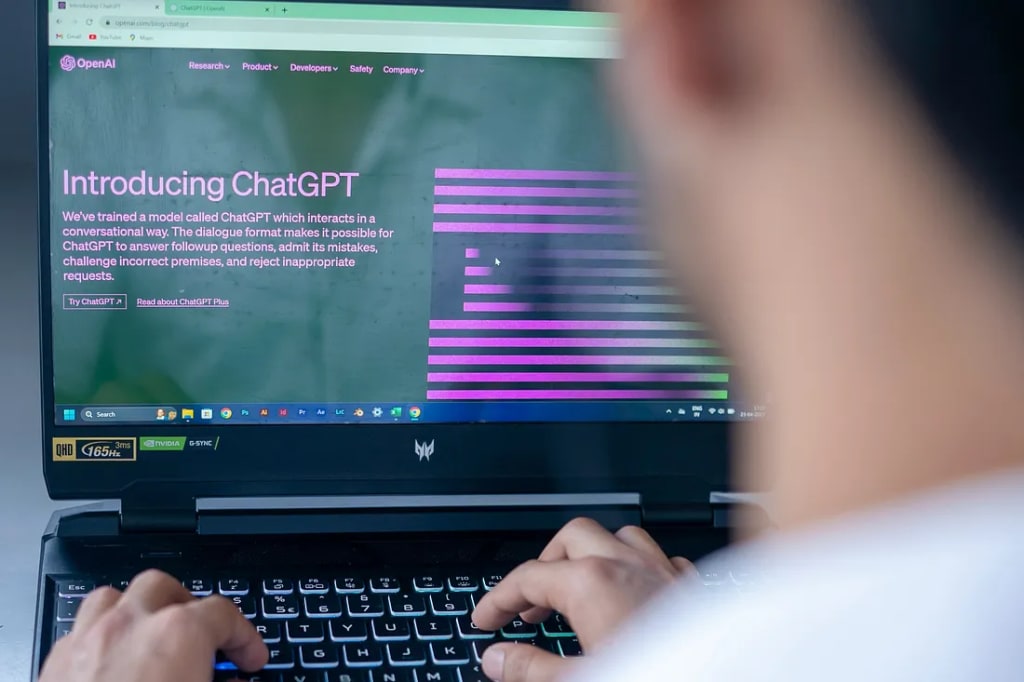
I didn’t know it when I took the job, but within days of starting my new role, the secrets began pouring out: The product review articles were fake, the CEO didn’t care that his business practices were illegal, and the writers were all using ChatGPT.
In my opinion, large language models like ChatGPT are not inherently evil. They can be a powerful tool for generating content quickly and efficiently. However, when used unethically to deceive readers or manipulate information, they can contribute to the spread of misinformation and harm the integrity of journalism.
AI can be an incredible tool for writers.
I use it myself to brainstorm ideas, enhance clarity, streamline formatting, and polish my writing. It’s also a sanity-saver when I can’t think of a particular word. (Pro tip: Write your sentence, use an underscore as a placeholder, and ask ChatGPT to fill in the blank with the correct term.)
That said, there’s a huge difference between using AI as a supplement and abusing it to churn out content. The former boosts quality and efficiency. The latter insults the intelligence of your reader and causes your reputation to plummet.
The writers on my newly acquired team were using AI to generate entire articles, and it was painfully obvious.
Their content was repetitive, boring, and poorly written, not to mention factually incorrect.
Because AI wants to answer your prompt but may not have the necessary data to do so, chatbots often produce “hallucinations,” or information that’s nonsensical and inaccurate. They may pull quotes, stats, or ideas out of thin air, and unless you fact-check your work, you’ll never know it.
Misinformation was the first red flag, but AI-generated content also contains the same phrases over and over again.
These phrases make it extremely obvious that you used ChatGPT.
- “Treasure trove”
- “Intricate tapestry”
- “It’s important to note that”
- “It’s essential to consider.”
- “While navigating the complexities of”
- “A testament to”
- “Furthermore”
- “Consequently”
- “In the world of”
- “Let’s delve into”
- “Look no further than”
- “Whether you’re… or…”
- “A plethora of”
- “In conclusion”
What do most of these phrases have in common?
They’re low-effort transition phrases that don’t mean much of anything. They’re fluff. Placeholders. Wasted word count. Bad writing.
But why would ChatGPT spit out bad writing if language is supposed to be its specialty?
Large language models like ChatGPT are primarily trained on publicly available text from the internet. Yes, that includes some good writing—but for every high-quality piece, you’ll find hundreds of generic listicles, crappy blog posts, spammy articles, keyword-stuffed nonsense, and amateur essays with no views.
In other words, ChatGPT learned how to write by studying content from novice writers.
Real writers do use the above phrases.
But that doesn’t mean they make for good writing.
In fact, if you removed those phrases entirely, most of your sentences wouldn’t lose any meaning. But it would result in a clearer, more concise, and more confident article.
Beginners believe that fancy, wordy language impresses readers. Professionals know that writing is a form of communication, and communication should be as straightforward as possible.
A few of these phrases won’t make or break your work, but when most of them are present in the same article, it tells your editor two things: You used ChatGPT as a shortcut (not a springboard), and you have no interest in mastering your craft as a writer.
As for me?
I got fired from that corrupt publication because I refused to let AI replace passionate, competent writers, and I wear that job termination like a badge of honor.
About the Creator
Keep reading
More stories from Souad Cheraif and writers in Lifehack and other communities.
X Account Hacking: Advanced Protection Against Modern Cracking Threats
The Evolving Battle for Your X (Twitter) Account In the rapidly changing landscape of social media, X (formerly Twitter) has become a central hub for communication, news, and business. This significance makes it a prime target for cybercriminals who continuously refine their attack methods. While understanding these threats is crucial for defense, it is vital to recognize that attempting to hack into an account you do not own is illegal, unethical, and can result in severe legal consequences, including criminal prosecution. This guide, informed by cybersecurity experts, details the modern threat landscape and provides a definitive, actionable blueprint to fortify your X presence against sophisticated attacks in 2026.
By Alexander Hoffmann2 days ago in Lifehack
Wild Card Weekend Recap: What Happens Now?
I think I figured out why I love Wild Card Weekend so much. It's because it's the first playoff anything of the calendar year. The NFL season starts in the fall, and once upon a time, the champion was crowned either on or slightly before New Year's. The evolution of the NFL schedule has resulted in the playoffs starting just into the New Year, and currently, the final week of the season falls on the first weekend of the New Year, with Wild Card Weekend coming a week after that. So yes, chronologically, the NFL's Wild Card Weekend serves as the first playoff anything of the calendar year.
By Clyde E. Dawkins6 days ago in Unbalanced



Comments
There are no comments for this story
Be the first to respond and start the conversation.