
How LabGenius AI Discovers Cancer Antibodies Faster Than Human Scientists
AI vs. Cancer: LabGenius Robots Design Breakthrough Antibodies—No Human Limits

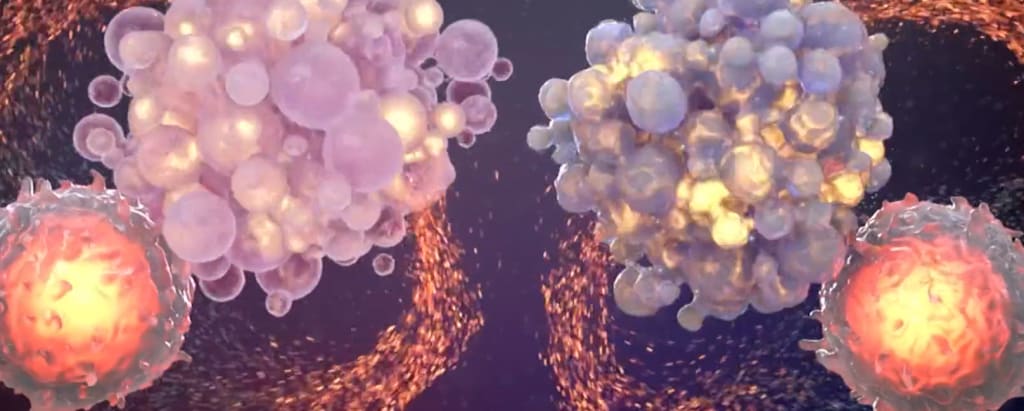
The hunt for cancer-combatting antibodies has long been a painstaking process, requiring human scientists to manually analyze vast datasets, run experiments, and test hypotheses. But with the rise of artificial intelligence (AI) and machine learning (ML), companies like LabGenius are revolutionizing drug discovery by automating antibody design. Their AI-driven robotic system accelerates the process, surpassing human cognitive limitations and unlocking new possibilities in cancer treatment.
This article explores how LabGenius’ AI works, where it is being applied, why it outperforms traditional methods, when it was developed, and a practical example of its success. We’ll also discuss future goals, include expert quotes, and conclude with an FAQ section.
How LabGenius AI Works
LabGenius’ platform combines machine learning, robotics, and synthetic biology to automate antibody discovery. Here’s how it works:
AI-Driven Design – The system generates thousands of potential antibody structures using deep learning algorithms, predicting which ones are most likely to bind to cancer cells.
Robotic Experimentation – Custom lab robots physically test these antibodies, conducting high-throughput screening without human intervention.
Continuous Learning – The AI analyzes experimental results, refines its models, and iterates on designs—improving with each cycle.
Unlike traditional methods, which rely on human intuition and trial-and-error, LabGenius’ AI learns from its own experiments, drastically reducing development time.
Where LabGenius AI Is Being Applied
The technology is primarily focused on oncology, particularly:
Solid tumors (e.g., breast, lung, prostate cancer)
Blood cancers (e.g., leukemia, lymphoma)
Immune-evading cancers (where traditional therapies fail)
Beyond cancer, the platform could be adapted for autoimmune diseases, infectious diseases, and rare genetic disorders.
Why AI Outperforms Human Scientists
Speed – AI can analyze millions of data points in hours, while humans take months.
Precision – Machine learning reduces bias, optimizing for efficacy rather than human assumptions.
Cost Efficiency – Fewer failed experiments mean lower R&D costs.
Scalability – The system can run 24/7 without fatigue.
Dr. James Field, CEO of LabGenius, explains:
“Humans are brilliant at creativity, but AI is better at exploring vast chemical spaces. Our system finds solutions no human would even think to try.”
When LabGenius AI Was Developed
2012 – LabGenius founded, combining AI and synthetic biology.
2018 – First proof-of-concept showing AI-designed antibodies outperforming human-designed ones.
2022 – Partnership with major pharma companies to accelerate clinical trials.
2024 – AI-optimized antibodies enter preclinical testing.
Practical Example: AI vs. Traditional Antibody Discovery
Traditional Method (Human-Led)
Time: 5+ years
Cost: $200M+
Process:
Scientists manually hypothesize antibody candidates.
Lab teams test them one by one.
Most candidates fail, requiring repeated cycles.
LabGenius AI Method
Time: Months instead of years
Cost: Fraction of traditional R&D
Process:
AI generates 10,000+ antibody variants.
Robots test top candidates in parallel.
AI refines the best-performing antibodies automatically.
Result: LabGenius identified a novel antibody for a hard-to-treat breast cancer subtype in under 6 months—a process that typically takes 5+ years with conventional methods.
Future Goals of LabGenius AI
Clinical Trials – Moving AI-designed antibodies into human testing by 2026.
Broader Disease Applications – Expanding beyond cancer to autoimmune and infectious diseases.
Fully Autonomous Labs – Reducing human involvement further with self-optimizing robotic systems.
Global Collaborations – Partnering with hospitals and research institutions worldwide.
Dr. Sarah Chen, Chief Scientific Officer at LabGenius, states:
“Our vision is a future where AI not only discovers treatments but personalizes them in real-time for each patient.”
Conclusion
LabGenius’ AI represents a paradigm shift in drug discovery. By automating antibody design and experimentation, it overcomes human limitations, delivering faster, cheaper, and more effective cancer treatments. As the technology evolves, we may see AI-designed therapies becoming the gold standard in medicine.
The implications are profound: What if the next breakthrough cancer drug wasn’t discovered by a human, but by a machine? With LabGenius, that future is already here.
FAQ
1. How accurate is LabGenius’ AI in predicting effective antibodies?
The AI achieves >90% prediction accuracy after multiple learning cycles, far exceeding manual methods.
2. Will AI replace human scientists in drug discovery?
No—AI augments human work by handling repetitive tasks, allowing scientists to focus on high-level innovation.
3. Are AI-designed antibodies safe for humans?
They undergo rigorous preclinical and clinical testing, just like traditional drugs.
4. When will AI-designed cancer treatments be available?
The first candidates could reach clinical trials by 2026, with approvals possible by the early 2030s.
5. Can this technology be used for other diseases?
Yes—the same approach applies to autoimmune disorders, infectious diseases, and neurodegenerative conditions.
Final Thought
LabGenius is proving that AI isn’t just a tool—it’s a revolutionary partner in science. As this technology matures, we may look back at traditional drug discovery the way we now view handwritten ledgers before Excel.
About the Creator
Jacky Kapadia
Driven by a passion for digital innovation, I am a social media influencer & digital marketer with a talent for simplifying the complexities of the digital world. Let’s connect & explore the future together—follow me on LinkedIn And Medium
Keep reading
More stories from Jacky Kapadia and writers in Lifehack and other communities.
Happy 232nd Birthday, NYSE! Celebrating the Legacy of Wall Streets Icon
On May 17, 1792, 24 stockbrokers gathered under a buttonwood tree on Wall Street and signed the Buttonwood Agreement, laying the foundation for what would become the New York Stock Exchange (NYSE). Today, as the NYSE celebrates its 232nd birthday, we reflect on its incredible journey—from a modest trading post to the world’s largest stock exchange, shaping global finance through bull markets, bear markets, and historic milestones.
By Jacky Kapadia10 months ago in Lifehack
Building Influence in a Remote Team
In traditional office environments, influence often developed naturally through proximity. People who spoke confidently in meetings, participated in hallway discussions, or regularly interacted with leadership often gained recognition and influence simply because they were visible.
By Bahati Mulishi4 days ago in Lifehack
How to Hire a Quality Painting Team in Sydney Without the Job Dragging On
A repaint is meant to be a tidy upgrade: cleaner lines, brighter rooms, a place that feels looked-after again. Yet plenty of paint projects in Sydney turn into a slow-motion inconvenience—rooms half usable, dates sliding, and that lingering sense the finish isn’t quite right.
By Evelyn Heard7 days ago in Lifehack




Comments (1)
Well done