
How AI is Revolutionizing Healthcare: Real-World Examples
AI Revolution in Healthcare
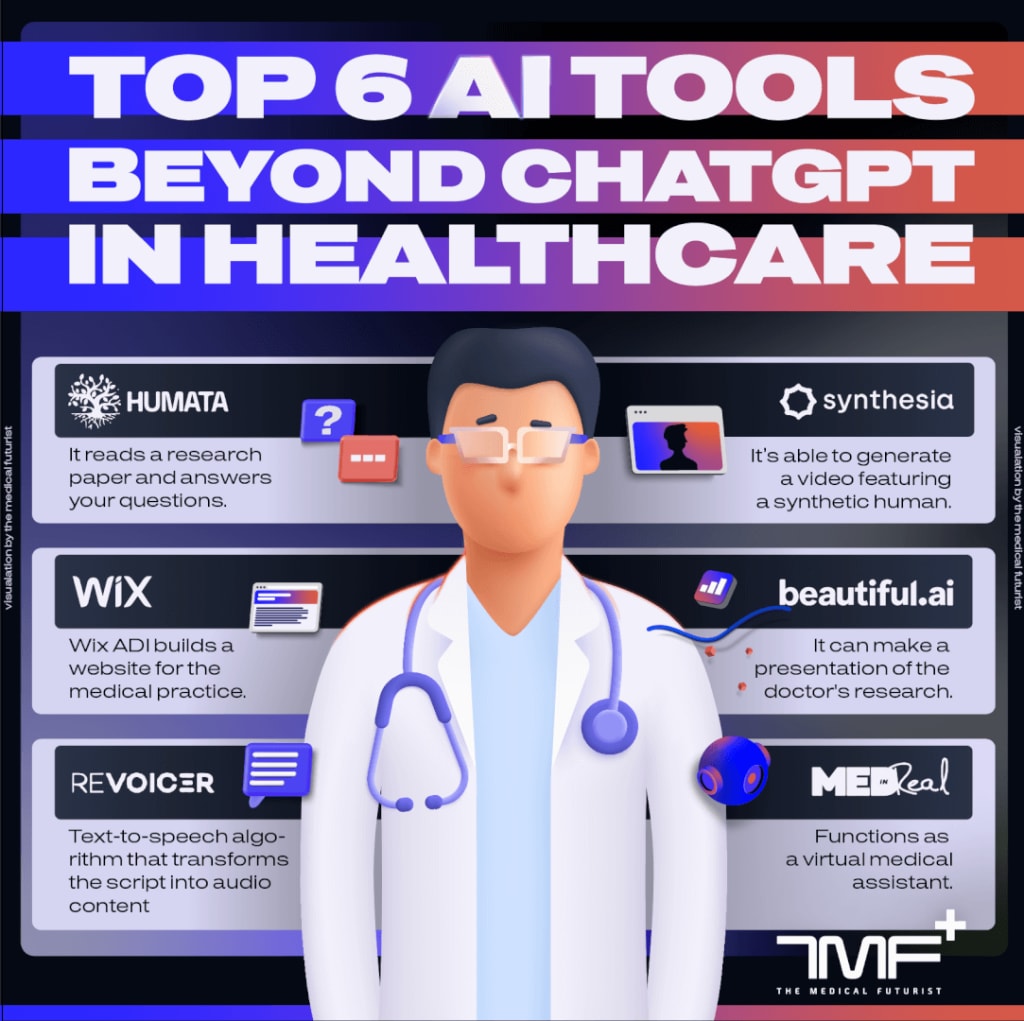
Artificial Intelligence (AI) is rapidly transforming healthcare, offering unprecedented opportunities to improve patient outcomes, enhance efficiency, and reduce costs. From diagnosing diseases to personalizing treatment plans, AI is becoming an indispensable tool for healthcare professionals. This article explores how AI is revolutionizing healthcare, with inspiring real-world examples that demonstrate its impact.
Early and Accurate Diagnosis
One of the most significant contributions of AI in healthcare is its ability to diagnose diseases early and accurately. AI algorithms can analyze medical images, genetic data, and patient records to detect abnormalities that might be missed by human eyes.
Real-Life Example: Google’s AI for Diabetic Retinopathy
Diabetic retinopathy, a leading cause of blindness, can be detected early through regular eye exams. Google’s AI system, developed in collaboration with ophthalmologists, can analyze retinal images and detect diabetic retinopathy with over 90% accuracy. This AI system is being deployed in clinics in India, where there is a shortage of ophthalmologists, ensuring early diagnosis and treatment for thousands of patients. This initiative not only saves sight but also highlights the potential of AI to address healthcare disparities.
Personalized Treatment Plans
AI is also making strides in personalized medicine, where treatments are tailored to individual patients based on their genetic makeup, lifestyle, and other factors. This approach can improve the effectiveness of treatments and reduce adverse effects.
Real-Life Example: IBM Watson for Oncology
IBM Watson for Oncology is a groundbreaking AI system that helps oncologists create personalized cancer treatment plans. By analyzing vast amounts of medical literature, clinical trial data, and patient records, Watson provides evidence-based treatment recommendations. In a notable case, Watson identified a rare genetic mutation in a cancer patient that traditional methods had missed, leading to a targeted treatment that significantly improved the patient’s prognosis. Watson’s ability to process and synthesize enormous amounts of data allows for more precise and effective treatments, revolutionizing cancer care.
Predictive Analytics for Preventive Care
AI’s predictive analytics capabilities are being harnessed to anticipate and prevent health issues before they become critical. By analyzing patterns in patient data, AI can identify individuals at high risk for certain conditions and suggest preventive measures.
Real-Life Example: Sepsis Prediction with AI
Sepsis, a life-threatening response to infection, requires prompt treatment. AI systems developed by hospitals like Johns Hopkins and Stanford University can predict the onset of sepsis hours before symptoms appear. These systems analyze electronic health records to detect subtle changes in vital signs and lab results. Early detection allows for timely interventions, significantly reducing mortality rates and improving patient outcomes. This predictive capability exemplifies how AI can save lives by enabling proactive healthcare.
Enhancing Surgical Precision
AI is also enhancing surgical precision, reducing complications, and improving recovery times. Robotic surgical systems, guided by AI, can perform complex procedures with greater accuracy than human hands alone.
Real-Life Example: The da Vinci Surgical System
The da Vinci Surgical System is a state-of-the-art robotic platform that uses AI to assist surgeons during operations. It provides enhanced visualization, precision, and control, allowing for minimally invasive procedures. Surgeons can perform delicate tasks through small incisions, resulting in less pain and faster recovery for patients. The da Vinci system has been used in over six million procedures worldwide, demonstrating how AI can elevate surgical care to new heights.
Streamlining Administrative Tasks
AI is not only transforming clinical aspects of healthcare but also streamlining administrative tasks, reducing the burden on healthcare providers, and allowing them to focus more on patient care.
Real-Life Example: Olive AI in Revenue Cycle Management
Olive AI is an AI-driven platform that automates repetitive administrative tasks such as insurance verification, billing, and claims processing. Hospitals like Ohio State University Wexner Medical Center have adopted Olive to handle their revenue cycle management. By automating these tasks, Olive reduces errors, speeds up processing times, and frees up staff to focus on patient care. This efficiency translates into better resource allocation and improved patient experiences.
AI in Drug Discovery
AI is accelerating the drug discovery process by analyzing vast datasets to identify potential drug candidates more quickly and accurately than traditional methods.
Real-Life Example: BenevolentAI and COVID-19
During the COVID-19 pandemic, BenevolentAI used its AI platform to identify existing drugs that could be repurposed to treat the virus. The AI analyzed scientific literature and clinical data, identifying baricitinib, a drug originally used for rheumatoid arthritis, as a potential treatment. Subsequent clinical trials confirmed its efficacy in reducing mortality among severe COVID-19 patients. This example underscores how AI can expedite the development of treatments for emerging health threats.
Conclusion: Embracing the AI Revolution in Healthcare
AI is undeniably revolutionizing healthcare, offering solutions that enhance diagnosis, personalize treatment, predict health issues, and streamline operations. The real-world examples highlighted in this article illustrate the profound impact AI is already having on patient care and medical practice.
As AI continues to evolve, its integration into healthcare will likely deepen, unlocking new possibilities for improving health outcomes and making healthcare more accessible and efficient. Embracing AI in healthcare is not just about adopting new technologies; it’s about transforming the entire healthcare ecosystem to better serve patients and meet the challenges of the future. The AI revolution in healthcare is here, and its potential to save lives and improve health is boundless.
About the Creator
You're alone, because you're lost
Being alone is a fear that one in three adults face WORLDWIDE. Why? Are we scared to be alone because we are faced with all of our thoughts we once tried to suppress? Or are we scared because we feel uncomfortable? Uncomfortable with the idea of being in a room with just you. You and your nasty thoughts. Thoughts like “Damn I should've apologized”, or “Why hasn't he texted me back?” or “I am a failure”. Yea. those thoughts. The forbidden thoughts that come sneak by the midnight hour, ...if you're lucky. You see loneliness doesn't have to be this way. It all starts with you.
By C⃣ h⃣ a⃣ n⃣ e⃣ l⃣7 days ago in Lifehack
Top tipple tricks
Been thinking a lot about drinking, lately. Not least because of a recent episode of over-indulgence and the inevitable after effects. Some readers may recall the earlier articles I wrote about beating the booze. Here I set out an experiment in techniques for cutting down on my alcohol intake. The experiment was successful, the techniques worked, and I have armed myself with an arsenal of weapons in the war against the demon drink. I have yet to fire the first round however. It's all a question of timing (perhaps procrastination).
By Raymond G. Taylor5 days ago in Psyche


Comments
There are no comments for this story
Be the first to respond and start the conversation.