
How Accurate ADAS Calibration Helps Maintain Vehicle Safety?
Discover how proper ADAS calibration improves safety by aligning sensors and cameras for reliable driver assistance features.

What Is ADAS and Why It Matters
Advanced Driver Assistance Systems (ADAS) have become a standard part of modern vehicles. These systems support drivers by using cameras, sensors, radar, and software to improve on-road awareness and reaction times. Features like lane departure warnings, blind-spot monitoring, and automatic emergency braking depend on precise calibration to work properly. In the middle of a busy city like Los Angeles, where traffic is constant and unpredictable, ADAS calibration Los Angeles services are more critical than ever. Inaccurate calibration can lead to delays in reaction time, misread distances, or missed obstacles—putting everyone on the road at risk.
The Role of Calibration in Safety
Calibration is what keeps the entire ADAS system accurate. Every sensor and camera must align perfectly with the vehicle’s geometry. This means after repairs, windshield replacements, or suspension adjustments, a recalibration is often necessary. If a single camera is off by even a fraction of an inch, your lane-keeping assist might nudge the wheel at the wrong time or the forward collision warning may trigger late—or not at all.
What Causes Misalignment in ADAS
Even a minor bump to the front or rear of your car can disturb sensor alignment. New tires or wheel alignments can throw off ADAS readings too. Environmental elements such as snow, dust, and mud also block sensors, but mechanical shifts usually require recalibration. Because these systems are highly sensitive, any change in your car’s structure—even a lifted suspension—can trigger inaccurate behavior in your safety systems.
Front and Rear Sensors Need Precision
Front-facing cameras and radar units are essential for adaptive cruise control and emergency braking. If they're misaligned, your car may misjudge how fast the car ahead is stopping. Rear sensors help with parking and detecting cross-traffic. A minor misreading could mean backing into a pole or missing an oncoming vehicle. Both ends of your vehicle must be perfectly synced with the system’s software to maintain safety.
Windshield Replacements Affect ADAS Function
A surprising number of drivers don’t realize that replacing a windshield can impact ADAS. The front camera, usually mounted on or near the windshield, must be recalibrated every time the glass is replaced. A clear line of vision isn’t enough; the angle and distance of the camera in relation to the road must be precise. Skipping recalibration here can turn safety features into hazards.
Why Shops Use Special Calibration Equipment
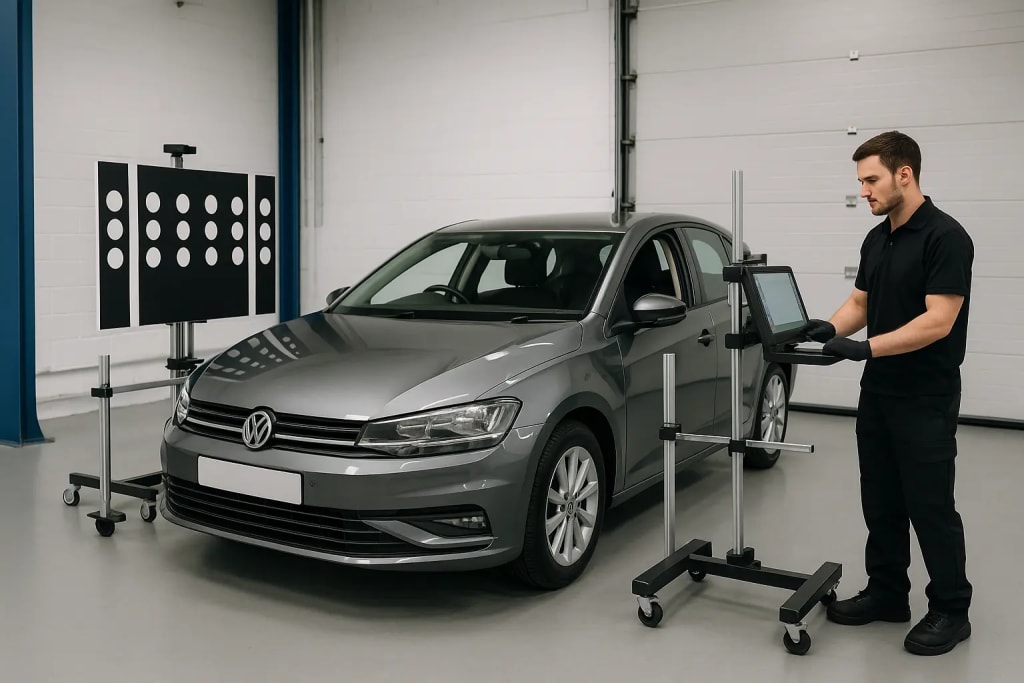
ADAS calibration isn’t something done with a wrench and guesswork. Shops use high-precision equipment, including calibration targets, laser alignment tools, and computer software. These tools simulate road conditions and positioning to check if sensors react accurately. Manual measurements aren’t reliable enough. Proper calibration requires a controlled environment, often with level floors and even lighting, to avoid false sensor readings.
Driving Without Calibration Is a Real Risk
Vehicles with uncalibrated ADAS are more likely to behave unpredictably. You might trust your blind spot monitor to warn you before changing lanes, only to find out it missed a vehicle. Or your adaptive cruise control might not slow down quickly enough in heavy traffic. These aren’t minor inconveniences—they can cause serious accidents. Relying on a system that isn’t working right creates a false sense of security.
Why You Should Never Skip Recalibration
Some drivers may feel like calibration isn’t necessary after a minor repair, but skipping it is a major risk. Your car’s safety technology is only helpful if it works correctly. Technicians trained in ADAS systems can spot misalignments and recalibrate with pinpoint accuracy. It’s better to take a little extra time to get it checked than to trust a system that might fail in a critical moment.
Professional Calibration Offers Peace of Mind
By having your vehicle calibrated at a qualified shop, you’re protecting your safety and everyone else’s. These experts know how each make and model operates and follow precise manufacturer standards. This isn’t just about following best practices—it’s about maintaining the full functionality of every camera, radar, and sensor in your car.
Final Thoughts
Accurate ADAS calibration isn’t just a technical requirement—it’s a key part of keeping your vehicle safe. Every time your car is repaired, realigned, or modified, it’s important to check that the sensors and cameras are properly calibrated. In a fast-paced environment with high traffic like Los Angeles, safety technology can make a major difference in preventing accidents. But only if it works correctly. Don’t put your trust in a system unless it’s been tested, aligned, and confirmed to be working exactly as it should.
About the Creator
Adaptive Adas Calibration
Adaptive ADAS Calibration is Los Angeles' top ADAS-certified shop, ensuring precise sensor alignment for safety features like lane departure warnings, collision avoidance, and adaptive cruise control.
Keep reading
More stories from Adaptive Adas Calibration and writers in Lifehack and other communities.
The Role of ADAS Calibration in Accident Prevention?
Advanced Driver Assistance Systems (ADAS) have revolutionized modern vehicles, making roads safer and reducing human errors. These systems include features like adaptive cruise control, lane departure warnings, and automatic emergency braking. ADAS Calibration Services ensure that these systems function correctly, maintaining their effectiveness in preventing accidents. However, for these systems to work effectively, proper calibration is essential. Without accurate calibration, ADAS features may fail, leading to potential hazards rather than preventing them.
By Adaptive Adas Calibration10 months ago in Wheel




Comments
There are no comments for this story
Be the first to respond and start the conversation.