
From Burnout to Balance: How I Regained My Mental Health (and the Tools That Changed Everything
A Personal Journey from Burnout to Resilience—Plus 5 Science-Backed Tools That Actually Work
When "Hustle" Becomes a Disease
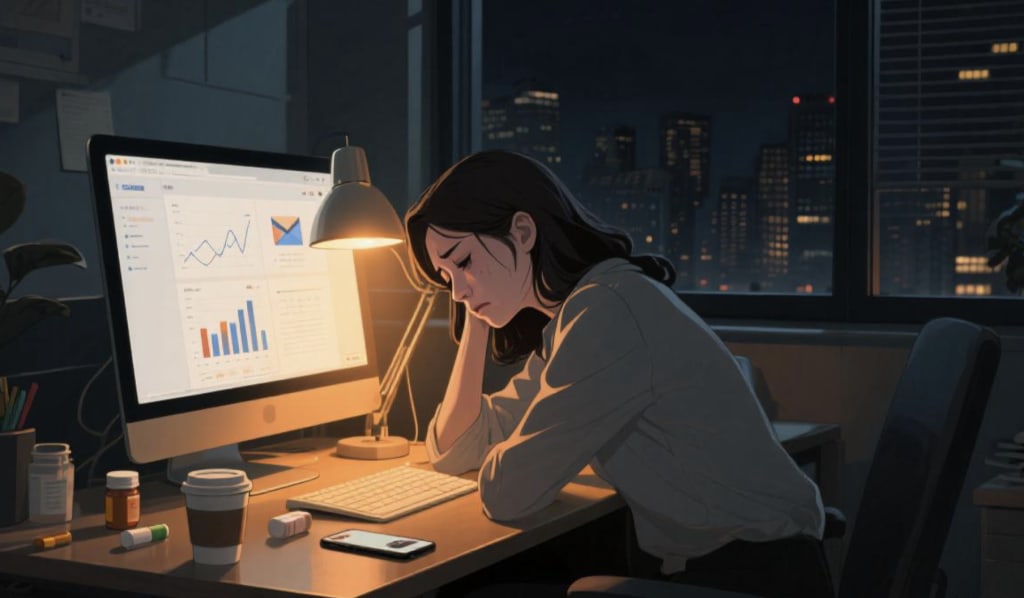
It’s 2 a.m., and I’m staring at my computer screen, the water in my coffee mug long gone cold. This is my 17th straight day of overtime—rushing to meet project deadlines, replying to emails, and putting out fires. My temples throb, my stomach churns, and my phone buzzes with a new message: “Don’t forget to update the progress for tomorrow’s 9 a.m. meeting.”
In that moment, I realize something chilling: I’m killing myself with “hard work.”
The World Health Organization (WHO) reports that over 300 million people globally grapple with depression, and “burnout” is now officially classified as a medical condition in the International Classification of Diseases (ICD-11). Our generation seems trapped in a twisted cycle: the more “successful” we are, the more anxious and isolated we feel.
But today, I want to share a turning point—a 6-month journey that pulled me out of burnout and introduced me to tools and methods that truly healed me. Better yet, these tools come from companies that don’t just sell products—they care about people. If you’re drowning in stress, anxiety, or exhaustion, this might be the most important 6 minutes you’ll read this year.
Part 1: Why Did I “Break”? The Invisible Stressors We Ignore
Many of us think “stress” is just about working too hard. But my experience taught me: the real killer is feeling out of control.
• Information Overload: 200+ emails, 15 group chats, and 3 Zoom calls popping up simultaneously—my brain never got a break.
• Loss of Purpose: KPIs, OKRs, quarterly reviews… Numbers became the only measure of my worth. I forgot why I worked.
• Social Exhaustion: “Perfect life” posts on social media, silent competition with coworkers, and family expectations—I was performing 24/7.
Psychologist Herbert Freudenberger, who coined the term “burnout,” identified three stages: emotional exhaustion, cynicism, and reduced accomplishment. By the time my doctor flagged my cortisol levels (30% higher than normal), I realized: my body was screaming for help.
Part 2: From Survival to Thriving: 5 Tools That Actually Worked (Spoiler: They’re From Companies That Get Us)
I tried therapy, gym memberships, vacations—even a short sabbatical. But here’s what I learned: healing isn’t about escaping life. It’s about taking back control. Below are the tools and habits that saved me, many from brands that prioritize humanity over hype.
1. Rebuild Control with “Micro-Habits”: Apple Watch’s Breathing App
I used to think meditation was a trend—until I tried Apple Watch’s “Breathing” app. It uses the 4-7-8 technique (inhale for 4 seconds, hold for 7, exhale for 8), which activates the parasympathetic nervous system to lower heart rate.
What won me over? Its quiet kindness. Every day at 10 a.m. and 3 p.m., my watch gently vibrates: “Time to breathe—you’ve been stressed lately. Take it easy.” No lectures, just support. After 2 weeks, I stopped panicking at sudden tasks. My brain had learned to pause.
👉 Dive into Apple Watch’s health features: https://www.apple.com/cn/watch/features/health/
2. Dump Anxiety by Writing It Down: Notion’s “Stress Journal” Template
Studies in the Journal of Personality and Social Psychology show that writing about emotions for 10 minutes daily cuts depression risk by 23%. But no app kept me consistent like Notion’s “Stress Journal” template.
It breaks entries into three parts:
• Event (objective: “My colleague shot down my project idea in the meeting”);
• Emotion (rated: “Anger: 7/10, Frustration: 8/10”);
• Reframe (solution: “Their feedback focused on details—maybe I should share more data next time”).
Now, my Notion dashboard has 200+ “emotion logs”—not burdens, but roadmaps of my growth.
👉 Grab Notion’s free stress journal template: https://www.notion.so/templates
3. Save Energy with “Social Detox”: Slack’s “Do Not Disturb” Saved My Weekends
As a team lead, I used to reply to messages 24/7—until a weekend reply earned a snarky: “You’re more active than during work hours!” That’s when I realized: my “always-on” habit was stealing my own time.
So I set two rules:
• Label non-urgent messages with “🚨”; call for emergencies.
• Use Slack’s “Do Not Disturb” to block weekends (9 a.m.–6 p.m.), only allowing “🚨” alerts.
Surprisingly, my team’s productivity rose. No more “quick replies” interrupting deep work. Now, my weekends are mine—48 whole hours to recharge.
👉 Learn Slack’s notification hacks: https://slack.com/help/articles/201355156-Manage-notifications
4. Turn Exercise into a Healing Ritual: Lululemon’s Community Classes
I used to see exercise as a chore—until I joined Lululemon’s yoga sessions. Here, instructors don’t push “lose weight”; they ask, “Why are you here today?” One woman came for shoulder pain, another to meet friends, another to escape her kids for an hour.
Best of all? The post-class “community hub.” We share updates: “How was work?” “Weekend plans?” Exercise stopped feeling lonely—it became a warm ritual of connection. Now, Wednesday night yoga is my favorite “reset.”
👉 Find Lululemon’s local events: https://www.lululemon.com/cn/community
5. Fix Sleep with “Tech + Nature”: Calm’s Sleep Stories
Insomnia was my darkest hour—I relied on pills for 3 months, only to crash harder when I stopped. Then a friend suggested Calm’s “Sleep Stories.”
Narrated by voice actors, paired with white noise (rain, campfires, waves), these tales paint serene scenes (“You’re walking through a lavender field at dusk…”). The best part? They sync with Apple Watch to monitor your heart rate, lowering volume as you drift off.
Three months later, I quit pills. Now, if I wake at 3 a.m., I use Calm’s 10-minute “quick sleep” hack to nod back off.
👉 Try Calm’s sleep stories: https://www.calm.com/sleep-stories
Part 3: True Healing Starts with “Choosing Yourself”
Today, I still work late and feel stressed—but I don’t drown in it. I finally get it: healing isn’t about fixing problems. It’s about making peace with yourself.
The tools that saved me (Apple Watch, Notion, Slack, Lululemon, Calm) share one trait: they don’t just “sell.” They show up—for the messy, human parts of life.
Conclusion: Your Health Deserves to Be Prioritized
If you’re struggling, remember: You’re not “lazy.” You need better tools—and better self-compassion. The apps above might be your first step, but the real magic starts when you decide: “I matter more than my to-do list.”
So, to anyone reading this:
You’re not a machine. You deserve to be treated with kindness.
---
P.S. If this resonated, comment below with your go-to stress hack—I’ll gift 3 readers a free 7-day Calm trial (just follow @YourName on Vocal Media!).
About the Creator
Keep reading
More stories from liang ming and writers in Lifehack and other communities.
Tired of Counting Sheep? How Smart Wearables Are Revolutionizing Sleep Quality (And Why Experts Are Obsessed)
Introduction: The Sleep Crisis No One Talks About Let’s cut to the chase: 70% of adults suffer from poor sleep quality, according to the CDC. You’re not alone if you’ve spent nights staring at the ceiling, scrolling through your phone at 2 AM, or waking up feeling like you’ve “slept through a tornado.” But here’s the kicker: Poor sleep isn’t just about feeling groggy—it’s linked to obesity, heart disease, and even reduced lifespan.
By liang ming6 months ago in Lifehack
The AI Ecosystem in 2026
By 2026, the ecosystem of artificial intelligence will have matured beyond experimentation and early adoption. It is now a complex, interconnected infrastructure shaping industries, markets, institutions, and everyday life. AI is no longer a niche technology: it is a foundational layer of the digital economy, much like the internet itself. Understanding this ecosystem requires looking beyond models and algorithms to the roles, relationships, and platforms that make AI an essential and sustainable force.
By Sathish Kumar 2 days ago in Lifehack


Comments
There are no comments for this story
Be the first to respond and start the conversation.