
Exploring Sound Healing
A Deeper Look Into Its Benefits

Before we dive into how sound healing works, here's a helpful freebie if you're seeking balance in your life: Wellness Goals Overview — a simple tool to set clear intentions and track your wellness journey.
In today's accelerated, over-stimulated world, more and more of us are looking to those practices that will bring us calm, balance, and inner peace. One such practice that's gaining popularity is sound healing — the therapeutic application of sound vibrations to bring about physical, emotional, and spiritual balance.
But is sound healing just another fleeting wellness trend, or is there genuine science and ancient wisdom behind these resonant tones and instruments? In this article, we’ll explore how sound healing works, uncover its potential benefits, and consider why it might offer more than just momentary relief.
The Ancient Roots of Healing Sound
Sound has been used for thousands of years as a tool for healing and transformation. The rhythmic drumming of the native peoples, the chanting of the Tibetan monks, and the resonant gongs of Eastern healing are but a few examples of how cultures around the globe have long recognized sound as a powerful energetic influence.
In ancient Egypt, they used to prescribe music to heal. In Greece, Pythagoras used musical intervals for emotional and spiritual balancing. And in Ayurveda, sound (or “Nada”) is one of the highest forms of healing. Clearly, sound is more than just entertainment — it’s medicine.
The Science Behind the Vibration
Recent research is belatedly coming in line with what the ancients perceived. Everything in the world vibrates at a frequency — including our bodies too. As we become stressed, ill, or emotionally traumatized, our natural frequencies become disrupted.
Sound healing enters by using specific frequencies and rhythms to entrain body and brain back into harmony.
It does so through:
- Resonance — when certain tones “match” our natural frequencies and amplify them
- Entrainment — the way our brainwaves come into sync with rhythmic sound, moving us out of a tense beta state into a more relaxed alpha or theta state
- Vibrational massage — especially in instruments like tuning forks or singing bowls, where the sound waves actually travel through the body and affect tissue, nerves, and cells
Studies have shown that sound healing can reduce anxiety, lower blood pressure, relieve pain, and even boost the immune system. It is not magic — physics, biology, and neuroscience wrapped up in harmony.
As you explore different healing modalities like sound therapy, having a clear personal wellness map can make all the difference. This free overview guide offers just that — space to reflect, plan, and stay grounded.
What Does a Session of Sound Healing Look Like?
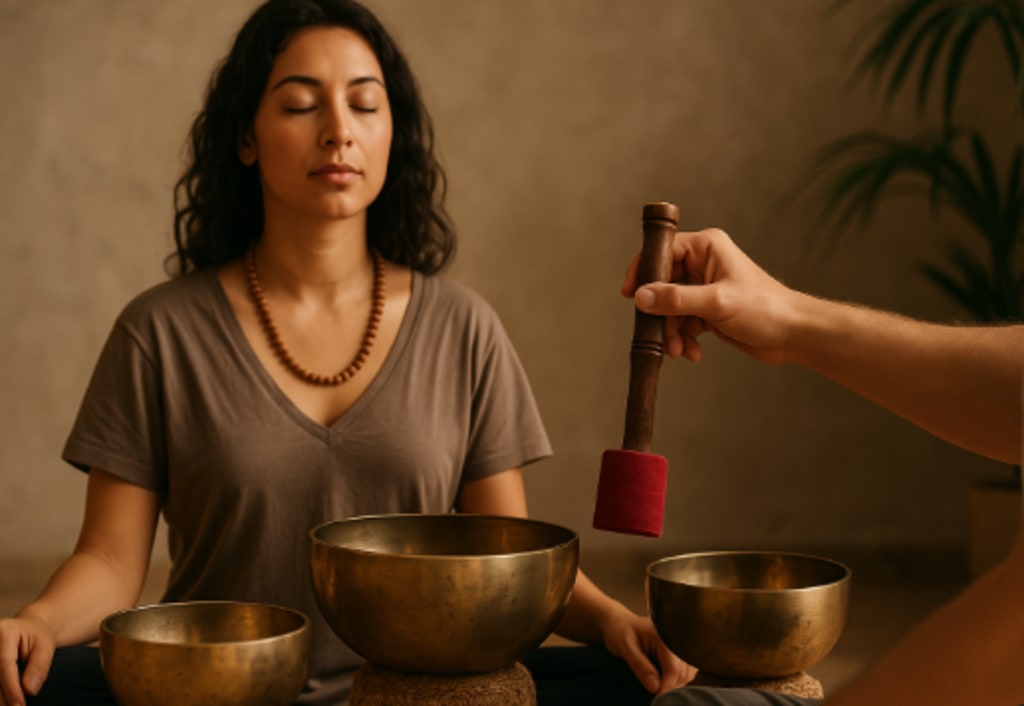
Sound healing sessions can vary widely. Some are individual sessions where a practitioner uses tuning forks or singing bowls around your body. Others are group sessions — often called “sound baths” — where individuals lie down and are immersed in sound waves from gongs, chimes, and voice.
People often report:
- Deep relaxation or even meditative trance states
- Release of emotional tension
- A sense of clarity, peace, and groundedness
- Increased creativity and better sleep afterward
These effects aren’t hypothetical. Sound creates concrete changes in our brain chemistry and physiology.
Is It Just a Trend?
With influencers posting crystal bowl videos and TikTok therapists humming into microphones, it’s easy to assume sound healing is just a wellness trend. And while it may be “trendy,” that doesn’t mean it lacks substance.
In fact, sound healing is rooted in both new science and ancient wisdom. As more people seek non-invasive, holistic methods of healing, sound therapy’s popularity reflects a broader cultural shift — toward integrative care, mindfulness, and energy awareness.
Yes, some sound healers may lack training. And yes, it’s always good to approach any wellness practice with discernment. But to dismiss sound healing as fluff overlooks its profound potential.
Sound Healing in Your Daily Life
You don’t need a sound healer or a studio to experience the benefits. Start small:
- Play 432Hz or 528Hz healing frequency music while meditating
- Hum or chant simple mantras like “OM” (scientifically shown to calm the nervous system)
- Listen to binaural beats through headphones to change brainwave states
- Use a Tibetan bowl or chime as a ritual to start or end your day
Remember, your voice is one of your most powerful instruments. Singing, humming, or even a sigh releases tension and stimulates the vagus nerve, which promotes relaxation.
Final Thoughts: Sound as a Gateway to Balance
As someone who has explored self-care, holistic health, and energetic healing for over two decades, I can say this with confidence: sound is more than a background experience. It’s a bridge back to your most aligned, vibrant self.
Whether you’re lying in a sound bath, chanting in your car, or just pausing to feel the rhythm of your own breath, sound has the ability to re-tune your entire system — body, mind, and soul.
So yes, it may be trending. But sound healing is timeless.
And in a noisy world, it’s a gentle invitation to listen more deeply — not just to the music, but to yourself.
Healing isn't just about one method — it's about understanding what you need, when you need it. If you're ready to take the next step, download your free Wellness Goals Overview and begin tuning in to your wellness goals with clarity.
About the Creator
Velma Lovemore
I’m Velma Lovemore. I write about self-improvement, healthy living, and simple habits to help you live with more intention, balance, and ease.
Keep reading
More stories from Velma Lovemore and writers in Lifehack and other communities.
The AI Advantage: From Mindful Living to Smarter Money Moves
Introduction: Where Wellness Meets Wealth In the world of health and wellness, we always hear about balance. Balance in our diets, balance in our stress-handling, balance in how we navigate through life. But then there's one other component we don't tend to think about when discussing overall well-being: financial well-being
By Velma Lovemore6 months ago in Lifehack
Your Comprehensive Guide to the EB-5 Visa
The United States has long been a destination for individuals seeking new opportunities and a better quality of life. For foreign investors, the EB-5 Immigrant Investor Program offers a direct path to achieving this goal. This program stimulates the U.S. economy through capital investment and job creation, and in return, provides investors and their families a route to permanent residency. This guide will walk you through every aspect of the EB-5 visa, from eligibility to the application process, so you can understand if this path is right for you.
By Ahsan Qazi a day ago in Lifehack
Marble Floor or Tile Floor: Which One Actually Works for Your Home?
You're renovating your home, the walls are done, the furniture is picked, and then you hit the floor decision. Suddenly you're standing in a showroom holding two samples: one gorgeous slab of marble and one sleek porcelain tile, completely stuck between choosing a Marble Floor or Tile Floor.
By Brijesh Agarwat3 days ago in Lifehack


Comments
There are no comments for this story
Be the first to respond and start the conversation.