
Change Your Life – One Tiny Step at a Time
"Unlocking Big Transformations with Small Actions: A Guide to Incremental Change"
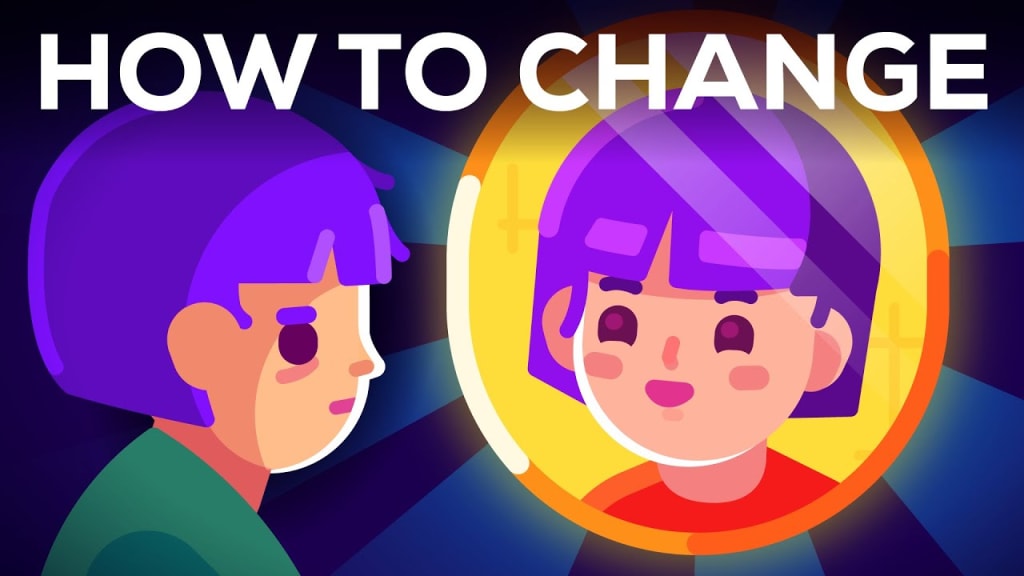
How to Build Habits and Achieve Your Goals Effortlessly
Do you have a gap between the person you are and the person you wish to be? Do you struggle to achieve your goals, even after trying your hardest? You're not alone. Change is hard, especially for adults whose brains are already criss-crossed with established streets and highways, making it challenging to break out of old habits and create new ones.
The good news is, understanding how your brain works and why you do what you do can make change easier. To understand how your brain forms habits, you need to distinguish between routines and habits, and the wise planner and impulsive toddler that execute them.
A routine is a sequence of actions that you carry out the same way every time because they’ve worked out well for you. Routines can eventually turn into habits, which feel much easier because they are basically a sequence of actions carried out without thinking about them.
Habits are executed by an impulsive toddler that responds to your immediate desires based on what is around you, without considering any long-term goals. The wise planner, on the other hand, is responsible for strategizing and mental calculations. It is aware of the future and carefully considers what kind of result you want, even if it means taking an uncomfortable action to achieve a specific outcome.
While the wise planner and impulsive toddler may seem at odds with each other, they actually work together most of the time. The wise planner is responsible for thinking big thoughts and dealing with complex mental challenges, while the impulsive toddler is tasked with handling mundane and repetitive tasks through habits.
So, if you want to achieve your goals effortlessly, you can use the energy-saving mechanisms of habits to make change easier. Small changes are better than aiming high and changing nothing, especially because small changes can do a lot over months and years.
To build a habit, you need to convince your brain that it's not that big of a deal. You can start by choosing a small, specific action, and attaching it to an existing habit or trigger. For example, if you want to start reading more, you can attach the action of reading to an existing trigger like drinking coffee in the morning. The key is to make the new action so easy that it doesn't require much effort or willpower.
Another way to make change easier is to change your environment. If you want to eat healthier, you can make healthy food more accessible and junk food less accessible in your kitchen. If you want to work out more, you can keep your workout clothes and equipment in a visible and convenient location.
In conclusion, understanding how your brain forms habits and the roles of the wise planner and impulsive toddler can help you achieve your goals effortlessly. By focusing on small changes, attaching new actions to existing habits, and changing your environment, you can build new habits that will lead to positive changes in your life. Remember, change is hard, but with the right approach, it's not impossible.
About the Creator
Keep reading
More stories from writers in Lifehack and other communities.
Understanding Life in North Potomac, Maryland: Culture, Planning, and Everyday Transitions
North Potomac, Maryland, is often described as a quiet suburban community, but daily life here is shaped by more than calm streets and residential neighborhoods. The area has developed a culture rooted in organization, respect for shared spaces, and long-term planning. These values influence how residents interact, manage their homes, and handle major life changes such as relocating within or into the community.
By House Doctorabout 16 hours ago in Lifehack
Is It Better To Eat Protein Before Or After A Workout? How To Optimize Your Intake For Muscle Growth
If you've given WH's protein challenge a go, you know how important this macro is to your health and fitness goals and a strong training sesh. But does it matter when, exactly, you get some protein in around your workouts impact muscle growth?
By Dena Falken Esq7 days ago in Lifehack




Comments
There are no comments for this story
Be the first to respond and start the conversation.