
Becoming My Own Rescue: Why No One's Coming to Save Me
Finding strength in solitude and self-reliance
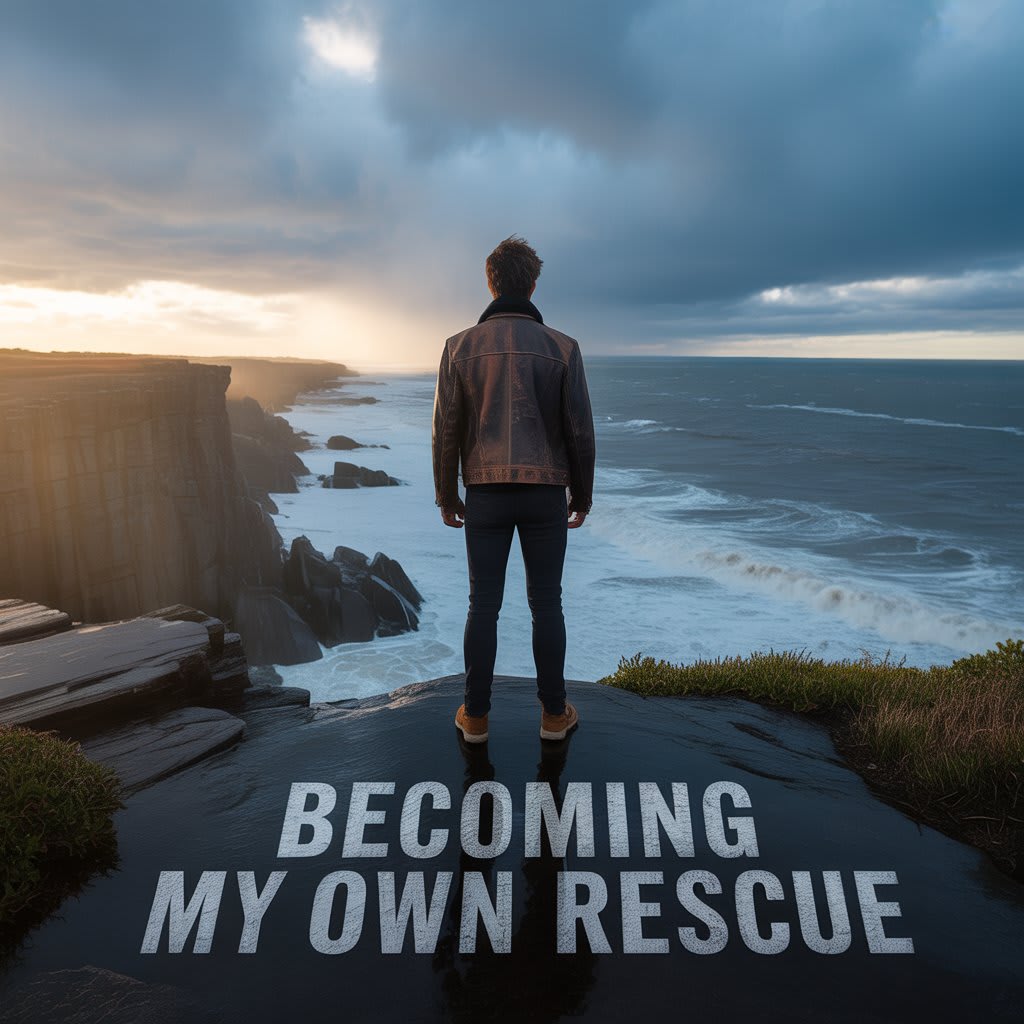
There’s a moment—sharp, humbling, and often terrifying—when you realize that the cavalry isn’t coming. No one is on the way with a solution to your heartbreak, your burnout, your financial mess, or your unraveling sense of self. It’s in that moment that the world becomes clearer and heavier. And it’s also when something remarkable can happen: you learn how to rescue yourself.
I didn’t grow up thinking I’d have to save myself. Like many of us, I was raised on a diet of fairy tales, movies, and romanticized stories that planted the idea that if I ever fell apart, someone would be there to piece me back together. Maybe a partner, a mentor, a best friend—someone who’d swoop in, understand everything, and take the weight off my shoulders. That illusion stayed with me longer than I care to admit.
The Wake-Up Call
It took a series of breakdowns in my life to recognize the painful truth: no one is obligated to rescue me—not emotionally, financially, mentally, or spiritually. I hit my lowest point when everything I had leaned on either crumbled or walked away.
The relationship I had built my future around collapsed. The job that gave me structure let me go. Friends who had once been constant slowly stopped responding. The silence was deafening, and at first, it felt like abandonment. But over time, I began to see it differently. It wasn’t betrayal—it was clarity.
People have their own lives, their own chaos. Most aren’t ignoring you because they don’t care; they’re just trying to keep themselves afloat. And once I accepted that, I stopped waiting. I stopped hoping that someone would sense my distress and show up with the answers.
The Slow Climb Back
No one tells you how lonely the path to self-rescue is. There’s no audience. No applause. Just you, your broken pieces, and a decision: keep lying in the wreckage, or start digging your way out, one tiny handful at a time.
I didn’t know how to fix everything, but I started small:
I made my bed every morning.
I took long walks without my phone.
I drank water, even when I didn’t feel like it.
I journaled, not for answers, but just to hear myself think.
Some days I cried while brushing my teeth. Some days I felt like quitting halfway through a grocery trip. But I kept showing up. For myself. That alone was the beginning of healing.
The Power of Ownership
One of the most liberating things I learned was that taking responsibility is not the same as taking blame. I wasn’t to blame for everything that had happened to me—but I was responsible for what came next.
Ownership meant saying:
“I feel lost, and I need to find my direction.”
“I’m sad, and I need to sit with it instead of avoiding it.”
“I’ve made mistakes, and I want to grow from them.”
When I stopped outsourcing my emotional labor—expecting others to carry my pain, validate my struggle, or fix my life—I began to feel more powerful. Not in a glamorous, motivational-quote kind of way. But in a quiet, grounding way. I realized: I am capable. Even when I feel like I’m not.
Redefining Strength
We’re often told that strength means being unaffected, powering through, never breaking. But I learned that strength is allowing yourself to shatter and still choosing to rebuild—without certainty, without a roadmap, and often without help.
Strength is:
Asking for support when you’re scared to look weak.
Saying no when people expect you to say yes.
Letting go of people who aren’t good for you, even if you love them.
Starting again. And again. And again.
Becoming my own rescue didn’t mean I stopped needing people—it meant I stopped needing them to complete me. I could stand on my own and welcome others into my life as partners, not saviors.
The Myth of "Fixing"
There’s a harmful myth in society that says once you’ve “rescued yourself,” everything will fall into place. That you’ll be perfectly healed, unbothered, and glowing. But the truth is: rescue is not a one-time act—it’s a lifelong practice.
There are still days I struggle. Days I revert to old patterns. But now, I have tools. I’ve built emotional muscle. I’ve practiced how to hold myself in discomfort without falling apart completely.
And that’s the real win. Not perfection. Not bliss. But resilience.
Learning to Trust Myself
One of the most surprising gifts of becoming my own rescue was rebuilding trust with myself. For years, I had ignored my gut, silenced my needs, and outsourced my choices. So when I began showing up for myself consistently, I noticed a shift.
I started:
Trusting my instincts in relationships.
Saying “I don’t know yet” without shame.
Leaving when something felt wrong—even without proof.
Celebrating my decisions instead of second-guessing them.
That trust has become the foundation for everything else. I don’t always get it right, but I know I’ll have my own back either way.
What Self-Rescue Is Not
Let’s be clear—rescuing yourself isn’t about hyper-independence. It’s not about rejecting help or pretending you don’t need anyone. It’s about balance.
Self-rescue means:
Being your own anchor so that when help comes, it’s a bonus, not a lifeline.
Knowing your worth so you don’t settle for crumbs.
Choosing healing, even when it’s messy and slow.
And most importantly, it means no longer waiting for someone else to grant you permission to live, to thrive, or to rest.
Leaving the Castle
There’s an image I carry with me now: a girl sitting in a crumbling tower, waiting. She’s watching the horizon, hoping for someone on horseback to appear. But no one comes. So one day, she stops watching. She stands up. She takes the stairs. She pushes open the heavy door. And she walks out, barefoot, into her own life.
That girl was me. And maybe she’s you, too.
You don’t need saving. You need space to rise.
Final Thoughts
Becoming your own rescue isn’t glamorous. It’s not always inspirational. It’s hard, gritty, emotional work. But it’s also deeply rewarding.
You learn who you are when no one else is watching. You grow roots that can’t be shaken by outside storms. You start to live—not just survive.
So if you’re still waiting for someone to come and fix everything, let this be your gentle reminder: you’re already here. And you are more powerful, more resilient, and more ready than you think.
You don’t need a hero.
You are the hero.
About the Creator
Keep reading
More stories from Aiman Shahid and writers in Lifehack and other communities.
Rebuilding After Rock Bottom: How I Started Over When I Had Nothing Left
There’s something terrifying about hitting rock bottom — the moment when everything you believed was stable suddenly crumbles beneath your feet. It's a place of darkness, stillness, and silence where time seems to pause, and all you're left with is yourself. I know this place intimately. And though I never would have chosen to visit it, I can now say: it’s where I truly met myself. This is the story of how I started over when I had nothing left — no money, no direction, and no hope.
By Aiman Shahid6 months ago in Motivation
X Account Hacking: Advanced Protection Against Modern Cracking Threats
The Evolving Battle for Your X (Twitter) Account In the rapidly changing landscape of social media, X (formerly Twitter) has become a central hub for communication, news, and business. This significance makes it a prime target for cybercriminals who continuously refine their attack methods. While understanding these threats is crucial for defense, it is vital to recognize that attempting to hack into an account you do not own is illegal, unethical, and can result in severe legal consequences, including criminal prosecution. This guide, informed by cybersecurity experts, details the modern threat landscape and provides a definitive, actionable blueprint to fortify your X presence against sophisticated attacks in 2026.
By Alexander Hoffmann2 days ago in Lifehack




Comments
There are no comments for this story
Be the first to respond and start the conversation.