
Amazon Vulcan Robot Unveiled: Breakthrough Touch Technology Redefines The Future of AI Automation
Vulcan Where Machines Feel, and the Future Comes to Life.

Introduction
In the rapidly evolving landscape of robotics and artificial intelligence (AI), Amazon has once again positioned itself at the forefront of innovation with the unveiling of Vulcan, its first robot equipped with a sense of touch. This groundbreaking advancement in tactile technology promises to revolutionize industries reliant on automation, from logistics and manufacturing to healthcare and beyond. But what makes Vulcan a game-changer? How does its sense of touch work, and why does it matter? Lets dive into the mechanics, implications, and future of this revolutionary technology.
The Power of Touch: How Vulcans Tactile Technology Works
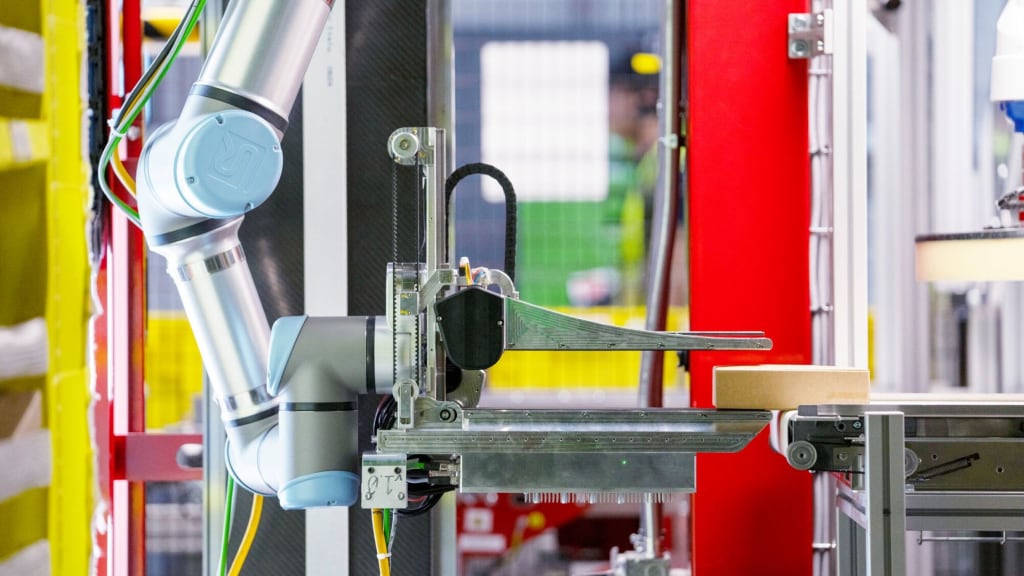
Touch is one of the most complex human senses to replicate in machines. For decades, robots have relied on vision systems (cameras, LiDAR) to interact with their environments. Vulcan, however, introduces a multi-modal sensory system combining advanced tactile sensors, force feedback mechanisms, and AI-driven processing.
Key Components of Vulcans Touch Technology:
Tactile Sensors: Embedded in Vulcans grippers, these sensors use force-sensitive resistors and microfluidic pressure arrays to detect texture, weight, and even subtle changes in an objects shape.
Haptic Feedback: Real-time data from the sensors is processed by machine learning algorithms, enabling Vulcan to adjust its grip strength and positioning dynamically.
AI Integration: Vulcans neural networks learn from millions of simulated and real-world interactions, improving its ability to handle delicate or irregularly shaped items (e.g., glassware, produce).
Why Touch Matters:
Precision: Unlike purely vision-based robots, Vulcan can manipulate objects with human-like dexterity, reducing errors in tasks like package sorting.
Adaptability: It thrives in unstructured environments (e.g., cluttered warehouses) where traditional robots struggle.
Safety: Enhanced tactile awareness minimizes risks of damaging goods or causing workplace accidents.
Why Amazon Invested in Touch-Enabled Robotics
Amazon foray into tactile robotics is no accident. With its global logistics network processing over 5 billion packages annually, the company faces mounting pressure to optimize efficiency while reducing costs.
Strategic Drivers Behind Vulcan:
Labor Shortages: Automation bridges gaps in workforce availability, especially in repetitive or physically demanding roles.
Sustainability: Fewer errors mean less waste from damaged goods, aligning with Amazons Climate Pledge.
Competitive Edge: As rivals like Tesla and Boston Dynamics advance in robotics, Amazon Vulcan reinforces its dominance in supply chain innovation.
Quote from Tye Brady, Chief Technologist at Amazon Robotics:
Vulcan is not just a robot—it is a leap toward symbiotic human-machine collaboration. By giving machines the ability to feel, we are unlocking new possibilities for automation that were once science fiction.
Where and When Will Vulcan Deploy?
Amazon plans to integrate Vulcan into its fulfillment centers starting Q1 2025, with phased rollouts targeting high-volume warehouses in the U.S., Europe, and Japan. Early applications include:
Sortation Centers: Handling fragile items like electronics and pharmaceuticals.
Grocery Warehouses: Gripping perishables without bruising produce.
Returns Processing: Identifying damaged goods through tactile inspection.
Long-term, Amazon aims to license Vulcans technology to third-party logistics providers and manufacturers, potentially disrupting industries like automotive assembly and healthcare.
The Broader Implications: A New Era for AI and Robotics
Vulcans tactile prowess signals a paradigm shift in how robots interact with the physical world. Experts predict that touch-enabled AI will soon enable:
Medical Robotics: Surgical assistants capable of feeling tissue elasticity.
Home Assistants: Elderly care robots that safely lift or guide humans.
Space Exploration: Robots repairing equipment in zero-gravity environments.
Quote from Dr. Cynthia Breazeal, MIT Robotics Pioneer:
Touch is the missing link in embodied AI. Amazons work with Vulcan accelerates the timeline for robots to operate seamlessly alongside humans in everyday settings.
Challenges and Ethical Considerations
Despite its promise, Vulcans deployment raises critical questions:
Job Displacement: Will tactile robots replace human workers, or create new roles?
Data Privacy: How is tactile data stored and secured?
Bias in AI: Can Vulcans algorithms handle cultural or contextual nuances in object handling?
Amazon emphasizes that Vulcan is designed to augment human labor, not replace it. The company also pledges transparency in AI training data and collaborates with ethicists to address biases.
Conclusion: Touching the Future
As the proverb goes, The best way to predict the future is to invent it. With Vulcan, Amazon is not just predicting the future of automation—it is building it. By merging tactile intelligence with AI, Vulcan bridges the gap between human finesse and machine efficiency, paving the way for safer, smarter, and more sustainable industries.
The era of robots that can feel is no longer a distant dream. It is here, and its name is Vulcan.
FAQ: Your Questions Answered
Q1: How does Vulcans touch technology differ from existing robots?
A: Unlike vision-only systems, Vulcan uses tactile sensors and haptic feedback to feel objects, enabling precise handling of fragile or irregular items.
Q2: Will Vulcan replace human workers in Amazon warehouses?
A: Amazon states Vulcan will handle repetitive tasks, freeing employees for roles requiring creativity and problem-solving.
Q3: When can other companies access Vulcan technology?
A: Amazon plans to offer Vulcan-as-a-Service to partners by 2026, pending pilot success.
Q4: Is Vulcan safe to work around humans?
A: Yes. Force-limiting algorithms and collision detection ensure safe interactions.
Q5: Can Vulcan learn new tasks independently?
A: Its AI improves through reinforcement learning but requires initial human-guided training.
Q6: What industries could benefit most from tactile robots?
A: Logistics, healthcare, agriculture, and space exploration.
About the Creator
Jacky Kapadia
Driven by a passion for digital innovation, I am a social media influencer & digital marketer with a talent for simplifying the complexities of the digital world. Let’s connect & explore the future together—follow me on LinkedIn And Medium
Keep reading
More stories from Jacky Kapadia and writers in Lifehack and other communities.
Revolutionizing Energy Storage Stanford Researchers Unveil Breakthrough Lithium Extraction Method
Introduction The global shift toward renewable energy and electric vehicles (EVs) has intensified the demand for lithium, a critical component in rechargeable batteries. However, traditional lithium extraction methods are often environmentally damaging, energy-intensive, and geographically limited. Addressing these challenges, researchers at Stanford University have unveiled a groundbreaking lithium extraction technique that promises to revolutionize energy storage. This innovation could make lithium mining more sustainable, efficient, and accessible, paving the way for a cleaner energy future.
By Jacky Kapadia10 months ago in Lifehack
How to Find Penny Items at Dollar General
Imagine walking into Dollar General and walking out with a cart filled with items that cost you a total of less than a dollar. The lucky few who snag penny items certainly have experienced the adrenaline and happiness it creates. If you want to feel like a Queen (or king) for a day, read below to learn how you can become a DG penny-aire.
By Criminal Matters4 days ago in Lifehack
The Quarterly OKR Review: Getting the Most from Your Retrospectives
The end of an OKR cycle is not simply an administrative milestone where scores are recorded and new objectives are set. It is, or should be, the most valuable learning opportunity in the entire process. Yet many organisations rush through their quarterly reviews, treating them as a box-ticking exercise rather than the strategic conversation they deserve.
By Jane Smithh7 days ago in Lifehack




Comments (1)
No matter what they say...less human workers will be needed, what is the future of humanity.