
5 Signs You Have Discogenic Disease and Effective Pain Relief Options for Lower Back Pain
Recognizing Discogenic Disease Symptoms and Exploring Pain Relief Options for a Healthier Spine

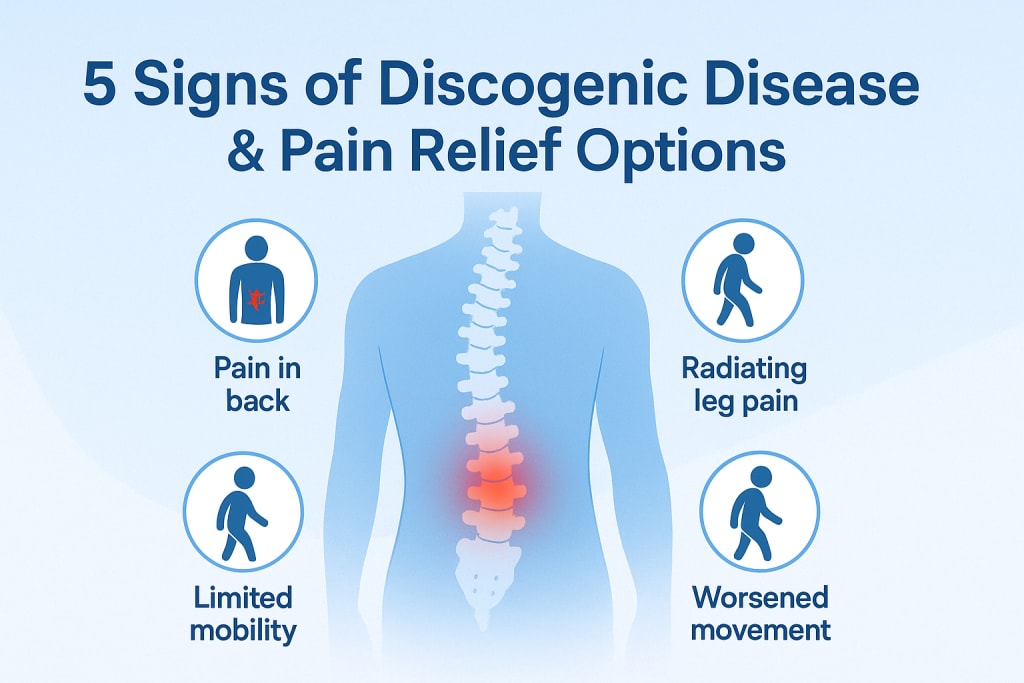
Lower back pain is one of the most common health concerns worldwide, and for many people, the cause is linked to the discs in the spine. Discogenic disease, also known as degenerative disc disease, occurs when the intervertebral discs begin to lose their flexibility, cushioning, and strength. This can lead to chronic pain, stiffness, and reduced mobility. Recognizing the signs early can help you seek the right treatment and avoid worsening discomfort.
In this article, we’ll look at the five key signs of discogenic disease and explore effective pain relief strategies to improve your quality of life.
1. Persistent Lower Back Pain
The most common symptom of discogenic disease is ongoing pain in the lower back. Unlike temporary soreness from overexertion, this pain can last for weeks or even months. It often worsens with prolonged sitting, bending, or lifting heavy objects. Many patients describe it as a deep, aching discomfort that affects daily activities.
2. Pain That Radiates Into the Legs
When the damaged disc puts pressure on surrounding nerves, the pain can radiate into the hips, buttocks, or legs. This condition is often mistaken for sciatica. If you experience shooting or burning pain down one or both legs, especially after physical activity, it may be linked to disc degeneration.
3. Increased Pain When Sitting or Standing for Long Periods
Discogenic pain often intensifies during sitting or standing because of the extra pressure placed on spinal discs. Many people report relief when lying down or changing positions frequently. If you notice that sitting at your desk or standing in line makes your back pain worse, discogenic disease could be the culprit.
4. Stiffness and Limited Mobility
As the discs lose hydration and cushioning, the spine becomes less flexible. Patients often feel stiffness in the lower back, especially in the morning or after long periods of inactivity. This lack of mobility can make it difficult to bend, twist, or perform simple daily tasks.
5. Pain That Worsens With Movement
Unlike muscle pain that improves with stretching, discogenic disease pain may intensify with certain movements such as bending forward, lifting, or twisting. These motions put strain on the already weakened discs, causing flare-ups of sharp or throbbing pain.
Effective Pain Relief Options for Lower Back Pain
The good news is that discogenic disease can often be managed effectively with a combination of treatments. Depending on the severity, both conservative and advanced options are available.
1. Conservative Treatments
- Physical therapy – Exercises designed to strengthen the core and back muscles, improve posture, and reduce strain on spinal discs.
- Pain medications – Over-the-counter anti-inflammatory drugs can help reduce swelling and ease discomfort.
- Heat and ice therapy – Alternating between hot and cold compresses can soothe inflamed tissues and improve circulation.
- Lifestyle changes – Maintaining a healthy weight, staying active, and practicing proper lifting techniques can protect the spine.
2. Interventional Treatments
For patients who don’t respond to conservative care, specialists may recommend advanced treatments such as:
- Epidural steroid injections – To reduce inflammation and provide temporary pain relief.
- Radiofrequency ablation – A minimally invasive procedure that targets pain-causing nerves.
- Spinal injections – Including facet joint injections for targeted pain management.
3. Surgical Options
In severe cases where conservative and interventional treatments fail, surgical approaches like spinal fusion or disc replacement may be considered. These options are usually the last resort when pain significantly impacts daily life.
Final Thoughts
Discogenic disease is a common yet often misunderstood cause of lower back pain. By recognizing the five warning signs—persistent back pain, radiating leg pain, stiffness, pain that worsens with sitting or standing, and pain that increases with movement—you can take proactive steps toward diagnosis and treatment.
With the right combination of conservative care, interventional therapies, and lifestyle changes, it’s possible to manage pain effectively and improve mobility. If you suspect discogenic disease, consult a pain management specialist for a personalized treatment plan.
Taking control of your back health today can help you enjoy a more active, pain-free future.
About the Creator
Apex Interventional Pain & Spine
At Apex Interventional Pain & Spine founded by Dr. Khan, we help patients from Coppell and surrounding areas, including Grapevine, Carrollton, and Plano, Texas, live a pain-free life with our customized, superior care.
Keep reading
More stories from Apex Interventional Pain & Spine and writers in Lifehack and other communities.
Could Degenerative Disc Disease Be the Source of Your Ongoing Back Pain?
Persistent back pain can take a toll on your everyday life, turning simple tasks like walking, sitting, or standing into painful challenges. One often overlooked cause behind chronic discomfort in the back is Degenerative Disc Disease (DDD), a condition that impacts millions yet remains misunderstood.
By Apex Interventional Pain & Spine6 months ago in Lifehack
Smartphones Are Better Than Ever
A few years ago, it was fun to get a new phone. You took it out of the box, looked at all the features, tried out the camera, and felt that calm joy that comes with possessing something truly new. Smartphones are objectively more powerful than ever today, with faster processors, smarter software, and better displays. But the enthusiasm is essentially gone.
By abualyaanart4 days ago in Lifehack
Autonomy Is The Real Privilege
Good morning, freedom-seekers! Today we’re gonna be looking at autonomy. A strange word, I know; one many would probably look at blankly and run away from on sight. We’re gonna figure out what it actually means, consider how it’s achieved, and decipher just how deeply most of us are tangled up in dependence without realising it.
By That ‘Freedom’ Guy5 days ago in Humans




Comments
There are no comments for this story
Be the first to respond and start the conversation.