
5 Easy Tips on How to Go Paperless
Do you like the smell of new books or newspapers? I do. It means I like to buy books and magazines, take free city newspapers, and buy paper guides for trips. This habit doesn't seem bad, but it's cluttering my home.


Do you like the smell of new books or newspapers? I do. It means I like to buy books and magazines, take free city newspapers, and buy paper guides for trips. This habit doesn't seem bad, but it's cluttering my home. I try to be an eco-conscious person and adopt eco-friendly habits. For instance, I don't buy water in disposable plastic bottles and take a reusable bottle with me, and I try to use fewer plastic bags. One new aim for me is to go paperless. I can share my first insights.
Take a portion of inspiration
When I try to adopt an ecological habit, I need to understand its environmental impact and how easy or difficult it will be to follow. With the plastic bottle or pockets, it's obvious. Then you use less plastic, throw less of it, and do not support mining non-renewable natural resources to produce plastic.
With paper, the situation is different: it is a substitute for plastic in some cases and is produced from renewable resources. At the same time, decades should go by for growing trees, and the forest is a place of living for animals that lose their home when the forest is cut down for the production of paper. And one big benefit of forests is that they produce oxygen.
If my efforts to use less paper give visible results? Yes, I've found an answer. One average tree yields 4,000 A4 sheets; that means that every page you don't use helps save a part of the tree. Per year, it can be an average tree. For me, it's a good inspiration to reduce paper consumption.
Revise all papers at home
When you decide to reduce paper consumption, it is important to take some small steps and not procrastinate. First, analyze how many useless magazines, leaflets, postcards, checks, and books clutter your home. I'm sure that you can recycle a lot without concerns. Some books and magazines can have a second life if you donate them to local libraries or friends, or share them through bookcrossing initiatives.
It's important to remember that some documents must be saved in paper form for a limited time or permanently. For instance, you should keep ID cards, passports, and diplomas permanently, but you can recycle medical bills after 3 years of existence.
Start to scan on your phone
When you revise paper stuff at home, you can see that some papers, like children's drawings or postcards, can have an emotional value for you, or some notes can be helpful in the future, but at the same time, they're a good candidate for recycling. The best solution is to scan them and store them in the cloud. You don't need to look for a stationery scanning machine. Instead of it, you can upload a special app for scanning and digitizing all documents, notes, and drawings that you can save with the help of your phone. I prefer iScanner because it lets me get high-quality scans, apply AI filters to improve documents, and manage files effectively.
With iScanner, I can print less because I can edit, sign, and share documents on my phone, and even see ecobadges that show which part of the tree I've saved.
Use note-taking and to-do list apps
The permanent source of paper clutter at my home is stickers, notes, and notebooks. It isn't always convenient and sometimes looks like chaos. That's why I've been trying to make notes in Todoist or in Notes on my iPhone. Apart from reducing paper consumption, I receive bonuses such as the ability to share my notes and the prevention of situations where I go out and forget shopping lists or other important notes.
Implement a new flow in your daily routine
After you declutter and recycle a lot of useless paper, you can implement a new flow to prevent paper overuse. I propose to use the following algorithm.
Categorize all new papers into one of four types and do it more appropriately in the first moments when you face them.
- Put it in the recycling bin right away.
- Scan and save the digital copy, then throw away the paper one.
- Scan and save the digital copy, and keep the paper one for a while before throwing it away.
- Keep the paper version forever. Yes, we can't go completely paperless, since we need to keep some documents in paper form forever.
What does it mean? If you get flyers or newspapers in your mailbox, take a quick look at them, and if there's nothing important, toss them out. If you receive letters or official documents, you should choose between options 2 and 3.
You see that reducing paper consumption doesn't require much effort. Small steps every day, and you can save a sprout, twig, branch, trunk, or even a whole tree. For me, it sounds inspiring. I hope for you too.
About the Creator
Lesya Chumak
I love to write and share my thoughts with others:) Writing is what make me inspired and alive.
Keep reading
More stories from Lesya Chumak and writers in Lifehack and other communities.
How to Prepare for Halloween Without Worries
Some of your neighbours might have been preparing since August, but don’t worry about time and ideas. With the help of AI chatbots like ChatGPT or ChatOn, you can get everything ready quickly and efficiently. In this post, I’ll share my favorite prompts and life hacks for making your Halloween unforgettable.
By Lesya Chumak5 months ago in Lifehack
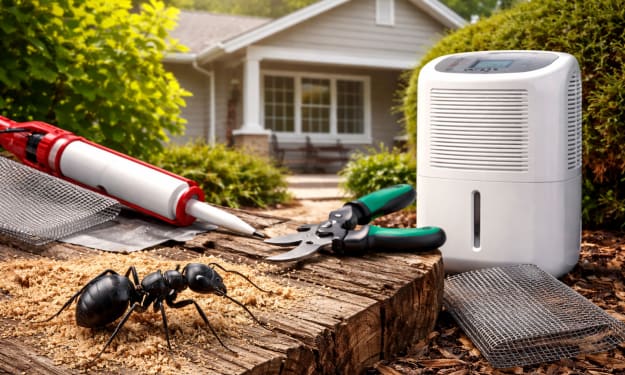
How to Prevent Carpenter Ants from Invading Your Home
Carpenter ants might not carry diseases like some pests, but they can still cause serious trouble if they make themselves comfortable in your home. Unlike termites, carpenter ants don't eat wood, but they do chew through it to create tunnels and nests. Over time, this can weaken the structural integrity of your home, leading to costly repairs.
By Whitney Collins5 days ago in Lifehack


Comments
There are no comments for this story
Be the first to respond and start the conversation.