Latest Stories
Most recently published stories on Vocal.
Greenland Prime Minister Says ‘Enough’ After Latest Trump Threat. AI-Generated.
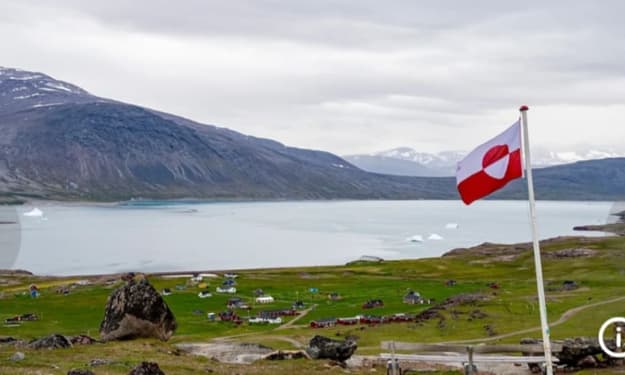
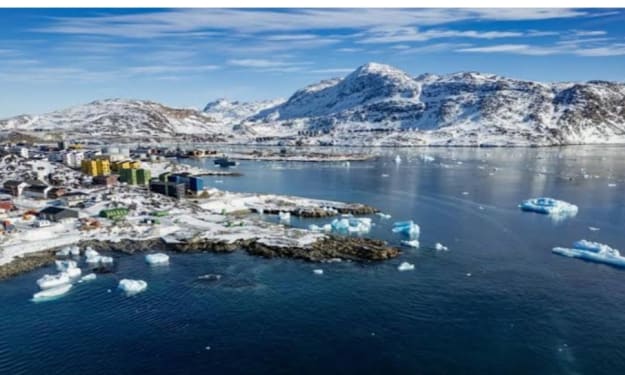
Greenland’s Prime Minister, Múte Bourup Egede, has issued a firm response to the latest controversial remarks made by former US President Donald Trump, declaring that “enough is enough.” The comments, which once again targeted Greenland’s strategic resources and geopolitical position, have sparked concern in Nuuk and among Denmark, Greenland’s sovereign nation, about the increasing pressure from foreign powers on the Arctic region. The incident highlights the delicate balance of Arctic geopolitics, where climate change, rare earth minerals, and military positioning converge, and underscores Greenland’s growing insistence on defending its autonomy and strategic interests in the face of external interference. The Latest Threat from Trump The latest round of tensions began after Donald Trump suggested in a public statement that the United States should pursue greater influence in Greenland, including potential acquisitions of land or access to its natural resources. While Trump’s team framed the remarks as economic strategy, Greenland’s government interpreted them as a threat to sovereignty. Prime Minister Egede condemned the remarks, saying that Greenlanders “will not be treated as commodities” and emphasizing that the island has full control over its resources and internal affairs. He added that repeated external pressure, especially from a global superpower, was no longer acceptable. “Greenland is strategically important, yes,” Egede said. “But our people make our decisions. We will not bow to threats or aggressive suggestions.” Historical Context This is not the first time Trump has made headlines regarding Greenland. In 2019, he infamously suggested that the US might consider purchasing Greenland, prompting ridicule internationally and a firm rejection from the Danish government and Greenland’s authorities. At the time, Denmark’s Prime Minister, Mette Frederiksen, labeled the proposal “absurd,” while Greenland’s leaders affirmed that the island is not for sale. The latest incident, though less dramatic in tone, has revived concerns about US intentions in the Arctic, particularly as global powers increasingly view the region as critical for trade, military strategy, and climate research. Why Greenland Matters Geopolitically Greenland occupies a strategic location in the Arctic, controlling key maritime routes between the Atlantic and Arctic Oceans. The island also possesses abundant natural resources, including rare earth minerals, oil, and gas, which have drawn interest from multiple countries. Climate change has accelerated the melting of Greenland’s ice sheet, making previously inaccessible resources easier to reach and increasing the island’s geopolitical significance. For global powers like the United States, Greenland is not just a remote territory — it is a critical outpost for defense, scientific research, and energy strategy. For Greenlandic authorities, these factors make external pressure a sensitive issue. While international cooperation is welcomed, any suggestion of coercion or domination triggers strong political backlash. Bourup Egede’s Firm Stance Prime Minister Egede’s comments mark a notable shift toward a more assertive Greenlandic foreign policy. Unlike in past incidents, where responses were primarily diplomatic, the current statement explicitly warns that repeated interference will not be tolerated. “We respect dialogue and cooperation,” Egede said. “But we will not accept threats or suggestions that undermine our autonomy. Our resources, our land, and our people are under Greenlandic authority.” This approach aligns with a broader trend in the Arctic, where indigenous and local governments are increasingly asserting sovereignty while navigating international interest in their territories. Denmark’s Role Greenland is an autonomous territory within the Kingdom of Denmark, responsible for internal governance while Denmark handles foreign policy and defense. The Danish government has expressed support for Greenland’s position, emphasizing that the island’s sovereignty and strategic interests must be respected. Danish Foreign Minister Lars Løkke Rasmussen reiterated that Greenland’s status as part of the kingdom does not make it an object of purchase or coercion. “Greenlanders are fully capable of deciding their own future,” Rasmussen said. “Any attempt to undermine that is unacceptable.” The coordinated response from Greenland and Denmark signals a unified front, reinforcing the message that external pressures will not influence the island’s strategic decisions. International Reactions The international community has taken note of the dispute. European leaders have largely praised Greenland’s firm stance, framing it as an example of a small, autonomous territory asserting control over its resources. Analysts in Washington, however, suggest that the rhetoric could complicate US-Arctic diplomacy, particularly as the region becomes increasingly contested among global powers like China, Russia, and the US. Policy experts say the episode highlights the challenges of Arctic governance, where climate change, resource extraction, and strategic positioning intersect, creating a highly sensitive geopolitical environment. The Arctic in Focus The broader Arctic region is undergoing rapid transformation. Melting ice has opened new shipping lanes, while technological advances and foreign investment increase the stakes for strategic control. Greenland, as the world’s largest island, sits at the center of these developments. Experts warn that incidents like the latest dispute with Trump are not isolated. “The Arctic is a hotbed of interest for multiple global powers,” said Dr. Helena Jørgensen, an Arctic policy analyst. “Greenland has every right to assert its autonomy, and these kinds of threats only strengthen local resolve.” Looking Ahead As Greenland navigates its complex position between local autonomy, Danish governance, and global interest, Prime Minister Bourup Egede’s message is clear: external pressure will not dictate Greenland’s choices. The government is expected to continue emphasizing sovereignty, while engaging selectively with foreign partners willing to respect Greenlandic authority. For global powers, the lesson is equally clear: Greenland is not a bargaining chip — it is a strategic partner with its own voice. This incident serves as a reminder of the growing importance of the Arctic, the resilience of Greenlandic leadership, and the need for careful diplomacy in a rapidly changing geopolitical landscape.
By Muhammad Hassan18 days ago in The Swamp
Gamification Market: Why We're Addicted to Playing for Real Rewards. AI-Generated.
We've all felt it—that irresistible urge to "just one more level" in a mobile app. But what started as fun mechanics in video games has quietly infiltrated every industry imaginable: corporate training, fitness apps, learning platforms, and even healthcare. The gamification market isn't just about entertainment anymore; it's the invisible architect reshaping how we work, exercise, and grow.
By james robert18 days ago in Journal
The Royal Navy’s Future Large Uncrewed Surface Vessels and the Cultural Obstacles to Autonomy. AI-Generated.
The Royal Navy is entering a transformative era, exploring the potential of Large Uncrewed Surface Vessels (LUSVs) as a key component of its future fleet. These autonomous or semi-autonomous ships are expected to revolutionize naval operations, providing new capabilities for surveillance, logistics, and combat support without putting sailors at direct risk. However, as much as technology is advancing, the real challenges lie not in the machinery itself, but in the cultural and organizational hurdles surrounding autonomy in a traditionally human-driven naval force. The Promise of Large Uncrewed Surface Vessels Large Uncrewed Surface Vessels are designed to operate alongside conventional ships, performing a range of tasks from mine countermeasures to intelligence gathering and supply missions. Unlike smaller drones or remotely operated vessels, LUSVs are capable of long-endurance missions, navigating open seas for weeks without requiring crew accommodations. The Royal Navy envisions these vessels enhancing operational efficiency and risk management. In hostile environments, LUSVs could undertake dangerous reconnaissance or deliver supplies without exposing sailors to combat threats. Additionally, integrating AI systems could allow the vessels to make real-time navigational and tactical decisions, providing commanders with faster, more precise situational awareness. Beyond combat, LUSVs are expected to reduce operational costs, as the expense of training, housing, and supporting crew for long-term missions is significantly lowered. For a navy facing budget constraints alongside growing strategic demands, autonomous vessels appear to offer both financial and tactical advantages. The Cultural Hurdle: Human Resistance to Autonomy Despite these technological promises, there are significant cultural barriers within the Royal Navy that could slow the adoption of autonomous vessels. Navies worldwide, including the Royal Navy, have a deeply ingrained tradition of human-centered command and control. Ships are not just platforms—they are communities, where decision-making, hierarchy, and personal accountability play vital roles in operations. Skepticism about AI decision-making is common. Many officers worry about entrusting critical tasks, especially in combat scenarios, to machines that may lack human intuition and ethical judgment. Concerns include: Reliability: How will LUSVs perform in unpredictable weather, or under electronic warfare interference? Accountability: Who is responsible if an autonomous vessel makes a mistake that leads to loss of life or international incident? Trust: Can sailors and commanders trust AI systems to act in alignment with naval doctrine and human judgment? This reluctance is not unique to the Royal Navy; militaries worldwide are grappling with similar cultural challenges as autonomy becomes a reality in modern warfare. The successful integration of LUSVs will require training programs, simulations, and policy frameworks that build trust between humans and machines. Organizational and Strategic Considerations Beyond individual skepticism, the Royal Navy faces organizational challenges. Fleet operations, maintenance, and strategic planning have historically been designed around crewed vessels. Introducing LUSVs necessitates new doctrines, logistics support systems, and cybersecurity measures. Autonomous vessels must be networked securely to prevent hacking, and crews must be trained to operate and repair hybrid human-machine systems. Additionally, LUSVs may change the command structure at sea. Decision-making will become a shared responsibility between humans and AI, requiring a redefinition of leadership roles and operational protocols. The navy will need to balance autonomy with human oversight, creating systems that maximize efficiency without eroding accountability. Global Context and Lessons Learned The Royal Navy is not alone in pursuing uncrewed surface vessels. The U.S. Navy has tested its own LUSV prototypes, while other nations explore autonomous systems for patrol and defense missions. Observing these developments, the Royal Navy can learn from early successes and failures, particularly in managing cultural resistance and ensuring ethical use of autonomous platforms. International collaboration could also play a role. Joint exercises with allies could demonstrate the operational benefits of LUSVs while fostering shared standards and trust in autonomous technology. The Path Forward Integrating Large Uncrewed Surface Vessels into the Royal Navy represents more than a technological upgrade; it is a cultural transformation. The future success of these systems will depend not only on engineering but on leadership, training, and policy innovation. By addressing skepticism, creating clear accountability frameworks, and fostering human-machine trust, the Royal Navy can ensure that LUSVs become a force multiplier, enhancing maritime security while preserving the values and cohesion of the naval community. Autonomy at sea is no longer science fiction—it is on the horizon. How the Royal Navy navigates the human and cultural obstacles will determine whether these ships remain experimental tools or become central pillars of Britain’s naval power in the decades to come.
By Fiaz Ahmed Brohi18 days ago in The Swamp
Denmark in ‘Crisis Mode’ as Trump Sets Sights on Greenland After Venezuela Attack. AI-Generated.
Denmark has reportedly entered what officials describe as a “crisis mode” after former U.S. President Donald Trump once again turned his attention toward Greenland, this time in the aftermath of a dramatic attack in Venezuela that has shaken global geopolitics. The convergence of these events has placed Copenhagen under intense diplomatic pressure, highlighting how quickly distant crises can intersect and reshape international priorities.
By Ayesha Lashari18 days ago in The Swamp
How Natural Feeling Light Helped Me Move Through the Day With Ease
For a long time, I thought daily fatigue was just part of modern life. You push through the morning, slow down after lunch, fight restlessness in the evening, and hope sleep resets everything overnight. I assumed that was normal. What I did not question was the environment guiding me through those hours.
By illumipure18 days ago in Longevity
The Letter.
The Letter (2012 Movie.) I am not sure what "The Letter" is trying to accomplish. It is billed as a thriller but it languishes with a confusing plot. Winona Ryder does a good job in her role but she can't carry the movie as the story is horrible.
By Robert M Massimi. ( Broadway Bob).18 days ago in Beat
Teen Girl Educated in UK Confirmed to Have Died in Swiss Bar Fire. AI-Generated.
A young teenage girl, educated in the United Kingdom, has been confirmed among the victims of the devastating bar fire that swept through Crans-Montana, a popular Swiss ski resort, on New Year’s Eve. Authorities in Switzerland have identified her as part of the 40 people killed in one of the deadliest civilian fires in recent European history, a tragedy that has shocked communities both locally and abroad. The girl, whose family requested privacy, had been studying in the UK and was visiting Switzerland for the holidays. Her death has drawn attention to the devastating human impact of the blaze, as well as the broader issue of safety regulations and emergency preparedness in entertainment venues. The Fire That Shocked a Nation The fire broke out at the Le Constellation bar, located within the ski resort’s main nightlife district, during a crowded New Year’s Eve celebration. Eyewitnesses reported that the flames spread rapidly, creating chaos as patrons attempted to escape. Despite the swift response by firefighters, the intensity of the fire made rescue operations extremely difficult. Authorities confirmed that 40 people lost their lives, and more than 100 were injured, many suffering from burns and smoke inhalation. Emergency services transported some of the most seriously injured to specialized burn units in nearby countries, reflecting the scale of the disaster. The teenage girl’s death underscores the tragic fact that many victims were under the age of 18, highlighting concerns over the presence of minors in venues serving alcohol during late-night events. An International Loss The young girl’s education in the UK reflects the international nature of the victim group. Authorities reported that victims included citizens from multiple European countries, including France, Italy, Portugal, Belgium, Romania, and Turkey. Some held dual or even triple citizenships, emphasizing how the tragedy resonated far beyond Switzerland’s borders. Her school and peers in the UK have expressed deep sorrow. Local communities held moments of silence, and online tributes flooded social media, reflecting a sense of shared grief across nations. “Her death is a heartbreaking loss,” one teacher said. “She was bright, enthusiastic, and full of potential. Our thoughts are with her family and friends in this unimaginable time.” Safety Concerns and Investigations Swiss authorities have launched a criminal investigation into the fire. Early reports suggest that the blaze may have been triggered by sparklers or fireworks attached to champagne bottles, which ignited flammable materials in the bar’s ceiling. Investigators are examining whether emergency exits were adequately marked and accessible, and whether the bar complied with local safety regulations. Bar managers are under scrutiny for potential negligence, including failing to maintain fire safety standards and overcrowding the venue. The investigation may result in criminal charges related to negligent homicide or causing bodily harm by negligence, depending on the findings. This tragedy has reignited debate across Switzerland and Europe about youth safety in nightlife venues, particularly during festive celebrations where alcohol and pyrotechnics are involved. Community Grief and Response In Crans-Montana and other affected areas, communities have come together to mourn. Candlelight vigils and memorial services have been organized near the site of the fire, with residents laying flowers, writing messages, and holding moments of silence for the victims. Swiss President Guy Parmelin announced a national day of mourning, during which church bells rang and flags were flown at half-mast. International condolences have poured in, highlighting the far-reaching emotional impact of the disaster. For the young girl’s family and friends in the UK, the loss is especially painful. Schools and local organizations have provided counseling support, helping students process grief and come to terms with the tragedy. The Broader Implications This incident highlights several critical issues: Youth Access to Late-Night Venues: Authorities are reviewing regulations to prevent minors from being present in venues with high-risk activities. Safety Standards in Bars and Nightclubs: Questions are being raised about emergency preparedness, fire suppression systems, and crowd control measures. International Travel Risks: The incident underscores how students and young travelers can be vulnerable in unfamiliar settings. Safety advocates are calling for stricter enforcement of existing regulations, as well as new measures to ensure that tragic events like this are less likely to occur. Remembering the Victim The teenage girl’s death is a poignant reminder of the human cost of such disasters. Beyond statistics and reports, her life represented promise, curiosity, and ambition. Friends remember her as bright and energetic, a young person with dreams and plans that were tragically cut short. Her school in the UK has established a memorial fund in her name, aimed at supporting safety education and awareness for young people traveling abroad, ensuring that her memory contributes to protecting others. Conclusion The Swiss bar fire has left a lasting scar on communities across Europe, claiming lives of young people, including a teenage student educated in the UK. As authorities continue their investigation, families, friends, and entire nations are grappling with grief, anger, and the urgent need to prevent similar tragedies. The incident serves as a sobering reminder that safety measures, responsible management, and vigilance are not optional but essential, particularly during crowded celebrations where lives are at stake. For the victims and their loved ones, including the young girl whose life ended so abruptly, the hope is that lessons learned will lead to stronger safeguards and prevent future loss of life.
By Muhammad Hassan18 days ago in Earth
Top 10 Shameless 80s Movie Ripoffs, Ranked by IMDb Audience Scores
Hollywood blockbusters ruled the 1980s—but they didn’t rule alone. Hot on the heels of films like Mad Max 2: The Road Warrior, Escape from New York, Alien, Rambo: First Blood Part II, and Predator, a wave of low-budget exploitation movies—many produced in Italy—raced into theaters and video stores with suspiciously familiar plots, costumes, and action beats.
By Movies of the 80s18 days ago in Geeks
Rubio: US to Enforce Oil Blockade but Not Govern Venezuela Post-Maduro. AI-Generated.
The world watched in shock on Saturday, January 3, 2026, as former U.S. President Donald Trump announced that U.S. forces had captured Venezuelan President Nicolás Maduro and his wife in Caracas. The announcement triggered immediate international reactions, including dramatic scenes in Venezuela, where government supporters set fire to a U.S. flag in protest. Amid the chaos, U.S. Senator Marco Rubio clarified that the United States intends to enforce an oil blockade against Venezuela but will not take on governing responsibilities in the country following Maduro’s capture.
By Aarif Lashari18 days ago in The Swamp