Latest Stories
Most recently published stories on Vocal.
Car Rental in Dubai for Tourists vs Residents: Key Differences
Both can legally rent cars, but the documentation required, insurance, rental costs, deposit requirements and legal obligations are very similar. Tourists often rent short term with more deposits and less insurance flexibility, while residents are at a lower rate, monthly rent, and better insurance. Understanding these differences can save you hidden charges, fines and coverage gaps.
By Sarath Menon16 days ago in Wheel
7 Best Leadership Books In 2026. AI-Generated.
Leadership isn’t just a title—it’s a skill, a mindset, and a responsibility. Whether you’re leading a small team, running a company, or inspiring change in your community, strong leadership can define the trajectory of your success. But how do you cultivate the qualities that separate average leaders from truly transformative ones? One of the most effective ways is through reading. The right leadership books not only provide frameworks and strategies but also offer timeless wisdom drawn from real-world experience.
By Diana Meresc16 days ago in BookClub
The Unseen Journey: Freight Forwarding in Japan’s Everyday Life
Most people in Japan go about their day without thinking twice about how things arrive where they do. A neatly packed bento appears at a convenience store early in the morning. Car parts reach a factory exactly when needed. Books printed overseas show up at a neighborhood shop without delay. These moments feel ordinary, but behind them is an intricate freight forwarding system working quietly in the background.
By Harley Morris16 days ago in Trader
Supreme Court Set to Issue Rulings, with Trump Tariffs Case Still Pending. AI-Generated.
The U.S. Supreme Court is gearing up for a series of critical rulings that could have far-reaching effects on American politics, the economy, and ongoing legal controversies involving former President Donald Trump. Among these high-profile cases is the long-awaited decision on the Trump tariffs case, which remains unresolved and continues to draw national attention. A Pivotal Moment for the Supreme Court The Supreme Court, as the highest judicial body in the United States, has the power to shape not only legal precedent but also economic and political landscapes. Every term, the Court issues decisions that can influence everything from civil liberties to federal policies. This session, observers are particularly focused on cases involving trade, executive power, and regulations implemented during Trump’s administration. The Trump tariffs case, in particular, highlights the tension between presidential authority and congressional oversight. The case challenges certain tariffs imposed by Trump on imports from countries like China, Mexico, and the European Union, arguing that they exceeded the executive branch’s authority and bypassed proper legislative procedures. What the Trump Tariffs Case Is About During his presidency, Donald Trump frequently used tariffs as a tool to bolster U.S. manufacturing, address trade imbalances, and pressure foreign governments into renegotiating trade deals. While some praised these measures for protecting domestic industries, critics argued that they overstepped legal boundaries and caused economic strain on American consumers. The case currently pending before the Supreme Court examines whether Trump acted within his executive authority when imposing these tariffs. Legal analysts note that a ruling against Trump could set a precedent limiting future presidents’ power to unilaterally impose trade restrictions without congressional approval. Conversely, a ruling in his favor could reinforce broad executive powers in trade matters. Broader Implications for Trade and the Economy The Supreme Court’s decision is more than just a legal formality—it has significant economic implications. If the Court rules that the tariffs were unlawful, the U.S. could face demands to refund millions in duties collected, impacting businesses and international trade relations. Companies that relied on protective tariffs to compete in global markets might also face increased competition from foreign imports. On the other hand, upholding the tariffs could embolden future administrations to take aggressive action in trade disputes, potentially triggering new tensions with other countries. Investors, trade associations, and policymakers are closely monitoring these developments, as the ruling could influence stock markets, trade negotiations, and long-term economic strategies. Political Stakes Remain High Beyond economics, the Trump tariffs case has political dimensions. Donald Trump’s legal and political team is watching the case closely, as the outcome could influence his broader legal battles and political ambitions. While the case focuses on trade, it also touches on questions of executive authority, a topic central to debates about checks and balances in the U.S. government. Democrats and Republicans alike are analyzing the case for its potential impact on future administrations. Some lawmakers have expressed concern that a broad interpretation of executive power could set a dangerous precedent, allowing presidents to implement sweeping economic measures without sufficient legislative oversight. Other Supreme Court Decisions to Watch While the Trump tariffs case is the most high-profile, the Supreme Court is expected to issue rulings on several other major issues this session, including voting rights, environmental regulations, and federal agency authority. Each decision could have ripple effects across the nation, shaping laws and policies for years to come. Observers are particularly interested in cases that intersect with current political debates. With midterm elections approaching, the timing of these rulings could influence public opinion, political campaigns, and legislative priorities. What Comes Next For now, all eyes remain on the Supreme Court. Legal experts are divided on the likely outcome of the Trump tariffs case, with some predicting a narrow decision and others expecting broader implications. Regardless of the verdict, the ruling will be closely studied by policymakers, businesses, and citizens alike. In the meantime, companies affected by tariffs, trade advocates, and political analysts continue to prepare for potential scenarios. Whether the Court sides with Trump or challenges his administration’s actions, the ruling will shape the legal landscape for presidential authority and U.S. trade policy for years to come. Final Thoughts The Supreme Court’s upcoming rulings, particularly on the Trump tariffs case, underscore the enduring tension between executive authority, congressional oversight, and judicial interpretation. These decisions will not only influence the immediate legal battle but could also redefine the boundaries of presidential power and trade policy in the United States. For citizens, investors, and policymakers, understanding the implications of these rulings is crucial. As the nation waits for the Court’s verdict, one thing is clear: the outcome will resonate far beyond the courtroom, affecting politics, economics, and the balance of power in Washington, D.C.
By Muhammad Hassan16 days ago in Earth
Arc Raiders Review: Pure Multiplayer Experience. AI-Generated.
Arc Raiders is designed around clarity, pressure, and cooperation. Instead of overwhelming players with layers of systems, it strips the multiplayer shooter down to its essentials and rebuilds tension from the ground up. Developed by Embark Studios, the game positions teamwork and survival above spectacle. For players curious about how closely they align with this design philosophy, the Arc Raiders purity test has become a popular way to measure commitment within the community.
By Enzo Marcelli16 days ago in Gamers
The Incomplete Mayo Cut Plug collector set
If you grew up around New England collectors, you probably heard about certain cards the same way older relatives talked about Ted Williams or Fenway before the renovations. Not as things they owned, but as things they once crossed paths with. An uncle might mention a tobacco card from the 1890s that passed through a local shop years ago, handled carefully, talked about for a bit, and then gone. More often than not, he was talking about the 1895 Mayo Cut Plug cards. The story usually carried a sense that you had missed something important.
By Glen Campbell16 days ago in Cleats
How to Check Loyalty in Relationship Before You Get Hurt
Loyalty does not imply perfection. It is all about consistency, honesty, and emotional safety. When loyalty is there, trust increases. When it is missing, uncertainty gradually erodes the partnership. Many people disregard early warning signs, believing that things will improve. We feel it is better to observe, ponder, and comprehend loyalty before emotional damage occurs.
By Bloom Boldly16 days ago in Humans
Token Launch Strategies That Align With 2026 Market Expectations
The token launch landscape entering 2026 looks fundamentally different from the speculative cycles that defined earlier crypto eras. Market participants are no longer chasing short-term hype alone. Capital allocators, exchanges, regulators, and even retail users increasingly demand demonstrable product traction, governance clarity, compliance readiness, and sustainable economics. The collapse of several high-profile token launches during the 2022–2024 downturn exposed weaknesses in poorly structured tokenomics, inflated valuations, and superficial community building. In response, the market has matured.
By Jennifer Atkinson16 days ago in The Chain
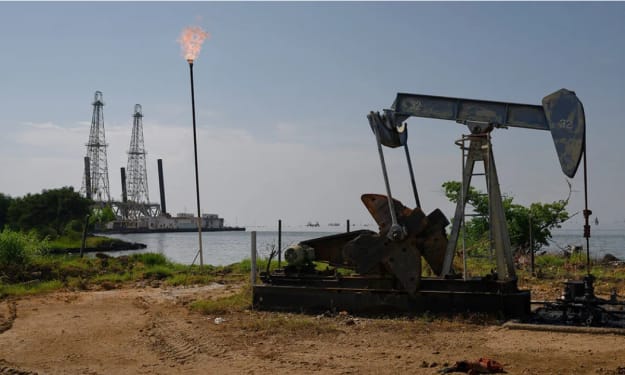
Without Democracy, Donald Trump’s Venezuelan Oil Quest Will Fail. AI-Generated.
The lure of Venezuelan oil has long been irresistible to global powers. With some of the largest proven oil reserves in the world, the South American nation represents both enormous wealth and complex geopolitical challenges. For Donald Trump, whose approach to foreign policy often blends economic opportunism with bold rhetoric, Venezuela’s oil has been a tantalizing target. Yet, despite his aggressive strategies and public declarations, the reality is clear: without democracy, Trump’s Venezuelan oil ambitions are likely to fail. Oil, Power, and Politics: The Venezuelan Context Venezuela’s oil sector is inextricably linked with its political landscape. Once a booming oil exporter, the country has faced decades of mismanagement, corruption, and authoritarian rule. Under leaders like Hugo Chávez and Nicolás Maduro, the state-controlled oil industry, managed by Petróleos de Venezuela (PDVSA), became a central instrument of political control. Trump’s administration repeatedly emphasized using sanctions, diplomatic pressure, and even the prospect of regime change to gain leverage over Venezuela. The underlying assumption is straightforward: by destabilizing the government or promoting a more U.S.-friendly leadership, access to oil reserves would follow. However, this strategy encounters a fundamental problem: without a functioning democratic system, there is no reliable mechanism to guarantee stability, transparency, or fair contracts in the oil sector. Authoritarian regimes often operate on loyalty rather than merit, and economic opportunities are frequently distributed through patronage networks. In such an environment, Trump’s promises or incentives could quickly be undermined by internal power struggles or corruption. The Limits of Sanctions Sanctions have been a cornerstone of U.S. policy toward Venezuela. The idea is simple: pressure the regime economically to force political concessions or create openings for change. While sanctions can cripple state finances and limit access to international markets, they rarely produce immediate regime collapse. Instead, they often strengthen authoritarian leaders’ grip, as governments rally nationalistic sentiment against perceived foreign interference. For Trump, this meant that even aggressive sanctions could not guarantee access to Venezuela’s oil. Without democratic institutions—free elections, independent judiciary, accountable governance—any oil deals risk becoming transactional rather than sustainable. In other words, a U.S.-backed leader could secure an oil contract today but face domestic resistance tomorrow, rendering the arrangement fragile and unreliable. Democracy as a Stabilizing Force Democracy provides mechanisms that authoritarian regimes lack. Transparent governance, checks and balances, and legal accountability create predictability in business dealings. For multinational companies and foreign governments, this stability is critical. In Venezuela, decades of democratic erosion have led to erratic policy decisions, frequent expropriations, and unpredictable regulatory environments. Trump’s oil ambitions, rooted in traditional business logic, clash with this reality. No amount of negotiation can fully mitigate the risks posed by a system where political survival often trumps economic rationality. History provides stark lessons. In countries where democracy is weak, oil wealth has often led to corruption, conflict, and economic collapse—a phenomenon known as the “resource curse.” Conversely, nations with strong institutions can leverage oil reserves to build sustainable wealth, attract foreign investment, and maintain political stability. Trump’s approach, which prioritizes short-term gains over institutional development, underestimates the necessity of democratic foundations. The Geopolitical Dimension U.S. ambitions in Venezuela do not operate in a vacuum. Russia, China, and other international actors have substantial influence in Caracas, providing both economic and military support to Maduro’s government. These alliances complicate U.S. efforts to access oil resources. Without democratic legitimacy, any intervention is likely to provoke geopolitical resistance, further limiting Trump’s options. Moreover, Venezuelan citizens themselves play a critical role. Over 7 million people have fled the country in recent years, driven by economic collapse and political repression. Any U.S. strategy that ignores public sentiment risks backlash, both locally and internationally. Democracy, by its very nature, requires engagement with citizens’ interests and demands, something authoritarian governments—and by extension, Trump’s transactional approach—often overlook. The Pitfalls of Personalistic Leadership Trump’s style of leadership, characterized by bold statements and personal negotiation, clashes with the structural realities of Venezuela. In authoritarian systems, deals depend on the whims of a few individuals rather than institutional norms. One change in leadership or a shift in loyalty can invalidate months of negotiation. In a democratic context, agreements are more resilient. Laws, regulatory frameworks, and independent institutions provide continuity, ensuring that commitments outlast a single leader. Trump’s reliance on personalistic leverage rather than systemic stability reduces the likelihood of successful, long-term oil access in Venezuela. Lessons for U.S. Policy The central lesson is clear: energy ambitions cannot succeed in isolation from political reality. Accessing Venezuelan oil requires more than coercive measures or diplomatic theatrics; it requires an environment where contracts can be enforced, policies are predictable, and political transitions are peaceful. Democracy—or at least steps toward accountable governance—is a prerequisite for these conditions. Trump’s Venezuela strategy demonstrates the limits of relying solely on authoritarian pressure or personal influence. Without addressing the structural issues of governance, economic mismanagement, and citizen engagement, oil wealth remains a distant prize. In essence, the pursuit of Venezuelan oil is inseparable from the pursuit of democratic legitimacy. Conclusion Donald Trump’s Venezuelan oil quest embodies the intersection of ambition, power, and geopolitics. While the allure of Venezuela’s vast reserves is undeniable, the absence of democratic structures makes this pursuit inherently fragile. Authoritarianism, corruption, and political instability create risks that personalistic leadership and aggressive policies cannot fully overcome. For the U.S., the lesson is not merely about oil—it is about the necessity of supporting institutions that promote transparency, accountability, and citizen engagement. Without these foundations, the pursuit of Venezuelan oil is likely to remain an unfulfilled dream, no matter how forcefully it is pursued. In the end, democracy is not just a political ideal; it is a practical requirement for sustainable international energy strategy.
By Muhammad Hassan16 days ago in The Swamp