Latest Stories
Most recently published stories on Vocal.
Michael Mollod and the Engineering Principles Behind Scalable Robotics. AI-Generated.
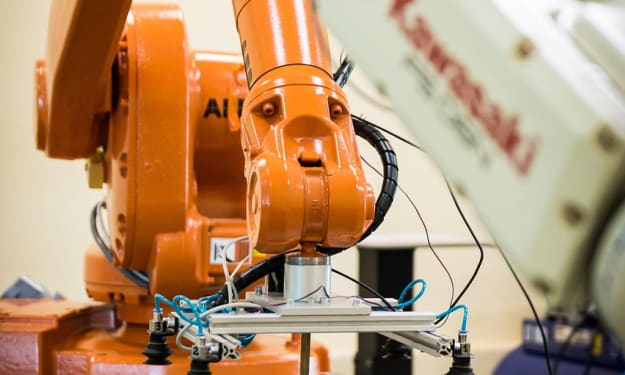
Robotics Designed for Continuous Change Robotics engineering now operates in environments defined by constant motion and evolving demands. Automation systems are no longer isolated from people or shielded from variability. They function in warehouses with changing layouts, factories with shifting production goals, and research settings that intentionally introduce uncertainty. This reality requires a new standard for how robots are designed and evaluated.
By Michael Mollod15 days ago in Journal
How I Finally Stopped Feeling Overwhelmed and Took Control of My Time. AI-Generated.
H2: Feeling Overwhelmed by Daily Responsibilities I’m just gonna be 100% real here—I’ve spent way more time feeling totally "underwater" than I’d ever want to admit. Honestly, it’s just... a lot. Between the job being so demanding and people constantly popping in or sending pings every five seconds, my time management was basically a joke. I would often sit there with my cold coffee and think that there just weren't enough hours in the day. Seriously. I didn't even catch on to how much my own stupid habits were messing me up until I finally sat down and looked.
By Demiana Louis Boshra15 days ago in Humans
The Clockmaker of Whispering Sands. Content Warning. AI-Generated.
In the heart of the Gilded Desert lay the city of Orizon, a place of shimmering heat and relentless mechanics. In Orizon, the sun never truly set; it hung like a heavy brass coin in the sky, illuminating a civilization obsessed with the passage of seconds. Here, time was not an abstract concept or a natural flow. It was a physical currency—shimmering, chronological sand carried in glass vials.
By Md. Rejaul Karim15 days ago in Fiction
Point The Blame At Your Heart
I write some poems, but not as many as others on Vocal. Most of my poems are about love—wanting love, sad love, or feelings of love. I think I am a big softie inside! Here we go. We blame love stuff on our hearts. We say “loving you with all my heart” and “you break my heart.” All love and feelings are linked to our hearts. We blame everything good or bad on hearts.
By Rosalina Jane15 days ago in Writers
The Day He Finally Stopped Waiting. AI-Generated.
The morning felt ordinary, almost boring. The alarm rang at the same time it always did, and Samir lay still, staring at the ceiling, counting cracks he already knew by heart. Nothing in his life felt broken enough to demand change, yet nothing felt whole enough to bring peace either. That quiet dissatisfaction had followed him for years.
By shakir hamid15 days ago in Motivation
Kids Beds Suitable for Smaller Bedrooms: Smart Comfort Without Crowding
Not every child has a large bedroom. In many homes, space is shared or limited, which means every piece of furniture needs to be chosen carefully. A bed that is too big or bulky can make a small room feel cramped and uncomfortable.
By Shazad Khan15 days ago in Families
Indian weapons must on all 114 Rafale jets, govt tells Dassault . AI-Generated.
India’s defense modernization plans received a strategic boost as the government officially directed Dassault Aviation, the French manufacturer of Rafale fighter jets, to equip all 114 aircraft with Indian-made weapons. This move underlines India’s commitment to self-reliance in defense technology while strengthening the combat readiness of its air force. The Rafale jets, considered among the most advanced multi-role fighters globally, are now set to carry the nation’s indigenous missile systems, bombs, and electronic warfare packages, blending cutting-edge French airframe technology with homegrown armaments. The Rafale Program and Indigenous Weapons India’s Rafale acquisition, initially contracted in 2016, brought 36 jets into the Air Force inventory, with an additional 114 aircraft to be delivered in subsequent batches. While Dassault’s jets are equipped with state-of-the-art French systems, the Indian government has long emphasized the integration of locally produced weapons. These include BrahMos supersonic cruise missiles, Astra beyond-visual-range air-to-air missiles, and indigenous precision-guided bombs. By mandating the use of Indian weapons across all 114 Rafales, the government aims to reduce dependency on foreign arms supplies and ensure that India’s air force maintains operational flexibility in critical combat scenarios. A senior defense official stated, “Our aim is to ensure that the Rafale platform not only brings in technological superiority but also becomes a force multiplier for our indigenous weapons programs.” Strategic Implications The integration of Indian weapons on Rafale jets carries both operational and strategic significance. From an operational perspective, using indigenous weapons allows for standardized maintenance and training protocols across the fleet. It simplifies logistics, reduces costs, and ensures that India is not constrained by export restrictions or supply chain uncertainties from foreign manufacturers. Strategically, the decision sends a strong signal to both allies and adversaries. India demonstrates its growing capability in defense production and its intention to assert technological independence in critical military domains. Given the geopolitical tensions in the Indo-Pacific, particularly with China and Pakistan, equipping the Rafales with locally produced weapons enhances India’s deterrence posture. Challenges in Integration Integrating indigenous weapons with Rafale aircraft, however, is not without technical challenges. Aircraft and weapons systems must be seamlessly compatible, including software integration, aerodynamics, and avionics. The Air Force’s testing and evaluation teams, along with Dassault engineers, will have to ensure that Indian missiles, bombs, and sensors work flawlessly with French-designed flight systems. Past collaborations, such as integrating the BrahMos missile on Su-30MKI aircraft, offer a blueprint for success, but the Rafale’s advanced avionics and fly-by-wire systems necessitate meticulous engineering and rigorous testing. Officials assure that phased testing and gradual integration will ensure minimal disruption to the aircraft’s delivery schedules. Boosting India’s Defense Industry This directive aligns closely with India’s “Make in India” initiative, which aims to build a robust domestic defense manufacturing ecosystem. By mandating the use of Indian weapons, the government hopes to create opportunities for local defense firms, enhance research and development capabilities, and encourage private sector participation in high-tech defense projects. According to industry experts, this approach will provide a significant boost to companies involved in missile development, precision-guided munitions, and electronic warfare systems. It also signals potential for future export opportunities, as Rafale jets equipped with Indian weapons could be offered to other countries, increasing India’s global defense footprint. Diplomatic and Industrial Balance While this move strengthens India’s self-reliance, it also requires careful diplomatic balancing. Dassault Aviation, which must now adapt its jets to accommodate Indian weapons, plays a critical role in maintaining delivery timelines and contractual obligations. Successful collaboration will require constant communication and technical coordination between French and Indian engineers. In the long term, this partnership could evolve into a model for international collaboration, where global platforms are paired with indigenous systems to create hybrid solutions tailored to specific national needs. Looking Ahead India’s decision to equip all Rafale jets with local weapons is a bold step toward achieving strategic autonomy in defense. It demonstrates the country’s commitment to blending cutting-edge technology with self-reliance, ensuring that the Air Force is equipped with a versatile, powerful, and locally sustainable arsenal. As the delivery of Rafale jets continues, the coming years will likely see a seamless integration of India’s missiles, bombs, and electronic warfare systems into the fleet, creating a formidable air power platform that combines the best of French aeronautical engineering with India’s indigenous defense innovation. This initiative not only strengthens India’s air defense capabilities but also reinforces its position as a rising power in global defense technology. It’s a reminder that modern warfare increasingly depends on the ability to combine advanced platforms with locally developed systems—a strategy India is now executing with clarity and purpose.
By Fiaz Ahmed Brohi15 days ago in Journal
‘If You’re Flushing the Toilet with Grey Water, People Should Know’: How China Turned Rain into an Asset. AI-Generated.
China, a nation grappling with rapid urbanization, rising populations, and the mounting pressures of climate change, has taken an innovative approach to one of humanity’s oldest challenges: water management. In cities stretching from Beijing to Shenzhen, rainwater is no longer merely something to drain away—it’s an asset, captured, reused, and integrated into urban infrastructure. This approach, blending modern engineering with environmental foresight, is redefining how millions of Chinese citizens interact with water, whether it’s drinking, bathing, or flushing their toilets. Grey Water and Urban Innovation One of the key components of China’s water management strategy is the extensive use of grey water. Grey water refers to wastewater from sinks, showers, and washing machines—essentially, water that is not heavily contaminated by human waste. Rather than sending this water directly to treatment plants, cities across China are filtering and redirecting it for secondary purposes, such as irrigation, industrial cooling, and even flushing toilets in residential buildings. As one Chinese environmental engineer candidly put it, “If you’re flushing the toilet with grey water, people should know.” Transparency and public education have been central to the success of these programs, ensuring that residents understand how recycled water is treated and reused safely. This awareness is crucial in overcoming cultural stigma and building public trust around non-traditional water sources. Capturing Rainwater: Turning a Seasonal Resource into Daily Utility China’s approach goes beyond recycling household wastewater. Urban planners have transformed entire cityscapes into rainwater catchment systems. Green rooftops, permeable pavements, and underground storage reservoirs are now common in many Chinese cities. These systems not only mitigate urban flooding during the rainy season but also provide a supplementary water supply during dry periods. In Shenzhen, for instance, a city of over 17 million residents, municipal authorities have installed expansive rainwater harvesting networks. Rainwater is channeled through pipes into filtration systems and stored for later use in gardens, parks, and even residential complexes. These initiatives have reduced dependence on distant reservoirs and groundwater extraction, lowering the ecological footprint of water consumption. Public-Private Partnerships Fueling Progress The scale of China’s urban water innovations would not have been possible without collaboration between government authorities, private enterprises, and local communities. Companies specializing in water filtration and smart monitoring systems have partnered with municipalities to ensure that rainwater and grey water meet rigorous quality standards. Smart meters track usage, detect contamination, and regulate distribution, ensuring that every drop of recycled water is both safe and efficiently deployed. In residential complexes, dashboards display daily water savings, raising awareness among tenants and motivating more sustainable practices. This blend of technology and community engagement has been a cornerstone of China’s success in turning rain and grey water into valuable urban resources. Environmental and Economic Benefits The impact of China’s water strategy is multifaceted. Environmentally, recycling grey water and capturing rainfall reduces strain on natural water bodies, helps maintain groundwater levels, and cuts the energy required for pumping and treating fresh water. Urban rivers and lakes benefit from reduced runoff and pollution, while green spaces thrive on sustainable irrigation. Economically, the strategy reduces water procurement costs for municipalities and homeowners alike. In some regions, residents have reported up to 30% savings on their monthly water bills by utilizing grey water systems and rainwater harvesting. For cities facing the twin pressures of population growth and climate-induced water scarcity, these savings are substantial. Challenges and Lessons Learned Despite its successes, China’s approach is not without challenges. Ensuring consistent water quality, maintaining infrastructure, and educating the public about grey water usage remain ongoing priorities. Some residents initially expressed concern about potential health risks, highlighting the importance of transparency and rigorous monitoring. China’s experience offers lessons for other countries facing similar water scarcity issues. By integrating urban planning, technology, and public engagement, cities can transform water from a limited resource into a renewable asset. It is a reminder that infrastructure investments, when paired with community awareness, can produce sustainable solutions for the 21st century. The Future of Water in Chinese Cities As climate change intensifies and urban populations grow, China’s innovations in water management are likely to become even more critical. Policymakers are exploring expanded applications, including industrial reuse, advanced filtration for potable water, and artificial recharge of aquifers. The ultimate goal is a resilient urban water ecosystem where rain and grey water reduce dependency on conventional sources, minimize environmental impact, and support sustainable growth. By turning rain and grey water into assets rather than waste, China is demonstrating that scarcity can drive ingenuity. Citizens are learning to embrace the idea that the water they use, even in the bathroom or laundry, can serve multiple purposes if treated and managed wisely. The transformation is not just technological—it’s cultural, signaling a shift in how humans value one of their most essential resources.
By Fiaz Ahmed Brohi15 days ago in Geeks
The Day I Realized I Was Living Someone Else’s Dream
I used to think exhaustion was normal. Not the kind that goes away after a good night’s sleep, but the deeper kind. The kind that settles into your bones and whispers, “Something is wrong,” even when everything looks right on paper.
By HazelnutLattea15 days ago in Humans