Latest Stories
Most recently published stories on Vocal.
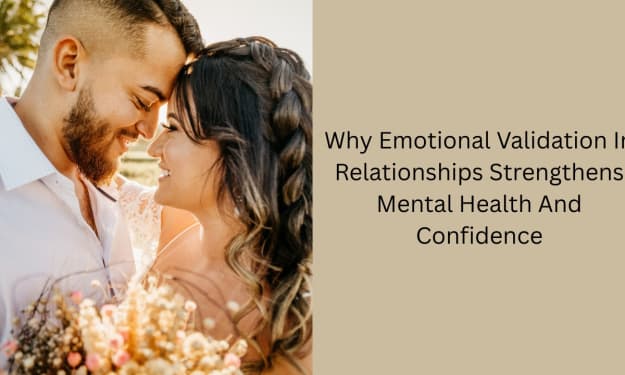
Why Emotional Validation In Relationships Strengthens Mental Health And Confidence
Emotional validation is the act of accepting, acknowledging and recognizing the feelings of the partner, non-judgmentally and without rejection. It conveys in relationships that emotions are valid and significant, which creates trust and emotional insecurity. When people feel justified, they will be able to open up more, resulting in more intimate levels and comprehension. Emotional validation does not involve consent to agree to the expressed emotions, it just refers to their existence. This recognition minimizes emotional isolation, which makes partners feel that they are supported instead of being criticized.
By Willian James9 days ago in Confessions
If You're Waiting for the Root Canal, You're Missing the Point of Skincare
At some point, our culture decided that care is only valuable if it’s extreme. If it doesn’t burn, blast, paralyze, or shock the system into instant compliance, it’s dismissed as “doing nothing.” Apparently, that now includes estheticians.
By Brooke Gallagher9 days ago in Longevity
Building Mental Health Awareness Through Honest Communication In Relationships Daily
This is because healthy relationships and mental health awareness are based on honest communication. Being able to express opinions and emotions freely enables couples to learn more about the emotional condition and stressors as well as needs of each other. Open communication between people minimizes assumptions about each other and misconceptions in case of emotional tension. The ongoing interaction ensures a steady structure of dealing with issues prior to their escalation and building trust and emotional security.
By Willian James9 days ago in Humans
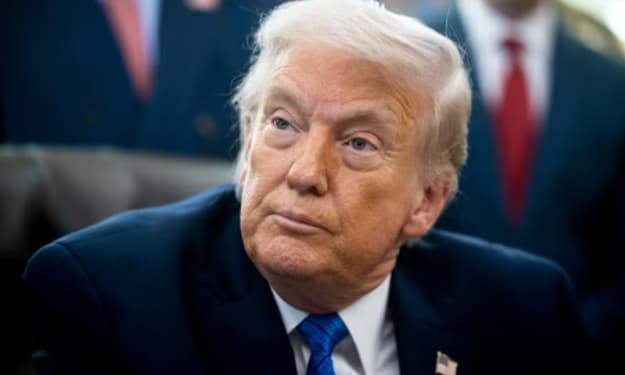
Federal Courts Undercut Trump’s Mass Deportation Campaign. AI-Generated.
Federal courts across the United States have emerged as a major obstacle to former President Donald Trump’s renewed push for large-scale deportations, issuing rulings that have slowed or blocked key elements of his immigration agenda. As Trump campaigns on promises to carry out what he calls the largest deportation operation in U.S. history, judges are increasingly signaling that constitutional limits and existing immigration law will constrain how far such efforts can go. Recent court decisions have focused on due process rights, executive authority, and the legality of sweeping enforcement measures that bypass individual case reviews. Together, these rulings have raised serious questions about whether a mass deportation campaign can be implemented as envisioned without violating federal law. Legal Barriers to Broad Enforcement At the heart of the legal conflict is the Trump team’s proposal to expand fast-track deportations and restrict asylum access through executive action. Several federal judges have ruled that such measures cannot override congressional statutes or long-standing protections for migrants seeking legal review of their cases. In one prominent case, a federal appeals court blocked an effort to widen “expedited removal” procedures that would allow immigration authorities to deport individuals without full hearings. The court argued that eliminating access to immigration courts would undermine due process and expose individuals to wrongful removal. “The government cannot shortcut constitutional protections in the name of efficiency,” the ruling stated. Legal scholars say this decision reflects a broader trend: courts are more willing to scrutinize executive power over immigration than in previous decades. Asylum and Humanitarian Protections Another major point of contention involves restrictions on asylum. Trump has repeatedly pledged to end what he calls “abuse” of the asylum system by tightening eligibility and removing migrants more quickly. However, courts have ruled that asylum laws passed by Congress require individualized consideration of claims, including assessments of fear of persecution or violence. Several district court judges have struck down policies that automatically deny asylum to migrants who crossed the border without authorization, finding that such rules contradict federal statutes and international obligations. “These are not discretionary benefits that can be erased by presidential order,” said one immigration law professor. “Congress built a system that requires hearings and protections, and the courts are enforcing that framework.” Political Messaging vs. Legal Reality Trump’s campaign continues to frame deportation as a matter of political will, arguing that previous court decisions have weakened border enforcement. In speeches, he has accused judges of obstructing public safety and favoring migrants over citizens. “We will remove millions of illegal immigrants,” Trump said recently at a rally. “The courts will not stop us.” But legal analysts note that immigration enforcement is one of the most heavily litigated areas of federal authority, and sweeping policies inevitably face judicial review. Even during Trump’s first term, courts blocked or delayed multiple initiatives, including the travel ban, family separation policies, and efforts to dismantle protections for young undocumented immigrants under the Deferred Action for Childhood Arrivals (DACA) program. This pattern suggests that any new mass deportation plan would encounter similar resistance. Resource and Capacity Limits Beyond legal challenges, courts have also raised concerns about feasibility. Deportation proceedings already overwhelm immigration courts, which face backlogs of more than two million cases. Judges have warned that accelerating removals without increasing staffing or funding could collapse the system. A recent ruling emphasized that immigration agencies must follow procedural rules designed to prevent errors and abuse. The decision criticized proposals that would allow agents to detain and deport individuals without meaningful access to attorneys or appeals. “Efficiency cannot come at the expense of fairness,” the judge wrote. Impact on Migrant Communities For immigrant families, the court rulings have provided a measure of temporary relief. Advocacy groups say judicial intervention is critical to protecting vulnerable populations, including asylum seekers fleeing violence and long-term residents with U.S.-born children. “These decisions reaffirm that the rule of law applies to everyone,” said a spokesperson for a national immigrant rights organization. “Mass deportation without due process would be a humanitarian disaster.” However, critics argue that court involvement has weakened enforcement and encouraged illegal immigration. Conservative groups maintain that judicial limits prevent the government from addressing border security and public safety effectively. “This is not about compassion,” said one policy analyst aligned with Trump’s agenda. “It’s about restoring order. Courts are tying the hands of the executive branch.” A Constitutional Test Case The conflict between Trump’s deportation rhetoric and judicial oversight underscores a deeper constitutional struggle over separation of powers. Immigration policy sits at the intersection of executive enforcement and congressional lawmaking, with courts acting as referees when boundaries are crossed. Experts say the current legal environment makes it unlikely that a single administration could carry out mass deportations without cooperation from Congress and significant procedural changes. “Presidents do not have unlimited authority in this area,” said a former federal judge. “The Constitution and existing statutes place real constraints on what can be done.” Looking Ahead As Trump continues to campaign on immigration, future court battles appear inevitable. Any attempt to revive or expand deportation programs will almost certainly be challenged by states, civil rights groups, and affected individuals. The outcome of these cases could reshape immigration enforcement for years to come, setting precedents on how much power the executive branch holds over borders and migration. For now, federal courts have made clear that political ambition alone is not enough. The legal system remains a powerful counterweight to policies that seek to bypass established rights and procedures. Conclusion Federal court rulings have significantly undercut Trump’s mass deportation campaign by reinforcing due process protections and limiting executive authority. While immigration remains one of the most contentious issues in American politics, judges continue to emphasize that enforcement must operate within the boundaries of the law. As the debate intensifies, the courts are likely to play a decisive role in determining whether sweeping deportation plans remain campaign promises—or become constitutional reality.
By Fiaz Ahmed 9 days ago in The Swamp
Korea’s Classroom Phone Ban Faces First Test as Schools Disagree Over Rules. AI-Generated.
South Korea’s newly introduced restrictions on smartphone use in classrooms are facing their first major test as schools struggle to interpret and enforce the policy consistently. While the government says the ban is meant to reduce distractions and improve students’ mental health and academic focus, disagreements among educators, parents, and administrators have revealed deep divisions over how strict the rules should be and who should enforce them. The Ministry of Education announced earlier this year that schools would be required to limit student phone use during class hours, responding to growing concerns about excessive screen time, cyberbullying, and declining attention spans. However, instead of imposing a single nationwide standard, the ministry allowed individual schools to design their own implementation plans. That flexibility has now become a source of confusion. Different Rules, Different Schools Across the country, schools have adopted widely varying approaches. Some have introduced full bans, requiring students to hand in their phones at the start of the school day and retrieve them only after final dismissal. Others allow students to keep phones in their bags but prohibit their use except in emergencies or with teacher permission. A few schools permit limited use for educational purposes, such as language apps or research assignments. This lack of uniformity has led to complaints from parents and students who say the policy feels arbitrary and unfair. “My child’s school collects all phones every morning, but the neighboring school lets students keep them,” said one parent in Seoul. “It creates confusion and resentment, especially when students compare their experiences.” Teachers, too, are divided. Some welcome the ban as a long-overdue step toward restoring discipline in the classroom. Others worry it adds another layer of responsibility to already overburdened staff. “We are not security guards,” said a high school teacher in Busan. “Our job is to teach, not to check pockets and confiscate devices.” Supporters Cite Academic and Mental Health Benefits Supporters of the ban argue that smartphones have become a serious obstacle to learning. Studies in South Korea and abroad have linked heavy phone use to reduced concentration, sleep problems, and increased anxiety among teenagers. Education officials say the policy is designed to help students reconnect with in-person learning and reduce dependence on social media. A ministry spokesperson said the first weeks of implementation had already shown positive signs in some schools. “Teachers report fewer disruptions and more engagement during lessons,” the spokesperson said. “This policy is about protecting students’ ability to focus and interact with each other in healthy ways.” Some parents agree. “My son used to spend every break scrolling on his phone,” said a mother of a middle school student. “Now he talks to his friends and plays sports again. I think it’s a good change.” Critics Warn of Practical and Legal Challenges Despite these benefits, critics say the policy raises serious concerns about students’ rights and safety. One major issue is how schools handle emergencies. Parents worry that students may be unable to contact family members quickly if phones are locked away. “There needs to be a clear system for emergencies,” said a parents’ association representative. “Otherwise, this policy could put children at risk.” Legal experts have also questioned whether schools have the authority to confiscate personal property without explicit consent. While the education ministry says the policy is voluntary and based on school agreements with parents, disputes have already emerged in some districts where students refused to hand over their devices. Student groups have voiced frustration, arguing that the ban treats teenagers as untrustworthy rather than teaching them responsible phone use. “Phones are part of modern life,” said a high school student leader. “Instead of banning them, schools should educate us on how to use them wisely.” Technology in Education: A Contradiction? The policy also highlights a contradiction within South Korea’s education system, which has invested heavily in digital learning tools over the past decade. Many schools use tablets, online textbooks, and educational apps, blurring the line between useful technology and harmful distraction. Some teachers say the ban undermines those efforts. “We encourage digital literacy, but then we punish students for having devices,” said an elementary school principal. “The message is confusing.” Education experts suggest the debate reflects a broader struggle to balance innovation with discipline. “Technology is not the enemy,” said an education researcher at a Seoul university. “The problem is unregulated use. Schools need clear guidelines, not vague restrictions that vary from building to building.” The First Test Period The coming months will serve as a trial period for the policy. The Ministry of Education has said it will collect feedback from schools and consider adjustments based on what works and what does not. Officials acknowledge that the current differences in enforcement may need to be narrowed to ensure fairness. Some local education offices are already drafting more detailed instructions, including when phones can be used for learning and how they should be stored during class hours. “We are listening to teachers and parents,” a regional education official said. “This policy must be practical, not just symbolic.” A National Conversation Beyond classrooms, the phone ban has sparked a nationwide conversation about youth, technology, and authority. South Korea is one of the most digitally connected societies in the world, and smartphones are deeply woven into daily life. Asking students to disconnect, even temporarily, challenges cultural norms as much as school routines. Whether the policy succeeds may depend less on strict enforcement and more on cooperation among schools, families, and students. “This is not just a school issue,” said a child psychologist. “It’s about how society teaches young people to manage technology responsibly.” Conclusion Korea’s classroom phone ban is now facing its first real test, as schools interpret the rules in different ways and stakeholders debate their impact. While supporters see it as a necessary step toward improving focus and well-being, critics warn of confusion, inequality, and unintended consequences. As the trial period continues, education authorities will need to decide whether flexibility or uniformity is the best path forward. For now, the policy has achieved one thing for certain: it has forced the nation to confront how much space smartphones should occupy in the lives of its students—and who gets to decide.
By Fiaz Ahmed 9 days ago in Longevity
How Long Distance Relationships Affect Mental Health And Emotional Security
The long distance relationships present some special emotional problems because of the physical distance. Lack of physical contact on a daily basis may enhance feelings of loneliness, miss, and emotional insecurity. Minor details that normally stitch an individual together like common ways of doing things or bodily intimacy are all curtailed or absent. This may result in emotional distances that need deliberate attempt to handle them. In the long run, the distance can increase the level of emotional sensitivity, and people will become sensitive to misinterpretations or shifts in communication patterns.
By Willian James9 days ago in Humans