Latest Stories
Most recently published stories on Vocal.
Global Electronic Data Interchange (EDI) Market Dynamics: Integration, Compliance, and Forecast. AI-Generated.
Rising need for efficient, error-free business transactions and supply chain automation is driving growth in the Electronic Data Interchange (EDI) market. Organizations adopt EDI to streamline procurement, invoicing, and order management. According to IMARC Group's latest research publication, The global electronic data interchange (EDI) market size was valued at USD 39.91 Billion in 2024. Looking forward, IMARC Group estimates the market to reach USD 75.30 Billion by 2033, exhibiting a CAGR of 6.94% from 2025-2033.
By Michael Richard9 days ago in Futurism
Essential Differences Between MMA Flooring and Epoxy Flooring Systems
Ever walk into a big store, a hospital, or maybe even a high-end garage and catch yourself thinking, “Wow, that floor actually looks great—what’s it made of?” Turns out, there’s a good chance you’re standing on either MMA flooring or epoxy flooring. These two pop up all over the place, and for good reason. People pick them for all sorts of different spaces. At a glance, they seem pretty similar. But trust me, they’re not the same at all.
By Muhammad Hanzla9 days ago in Lifehack
The Small Aircraft Part That Changed How I See Engineering
I once stood quietly in a maintenance hangar watching technicians work on what looked like a basic aircraft accessory. At first glance, it didn’t seem impressive. There were no flashing cockpit displays, no roaring engines, and no dramatic machinery in motion. Just a small component being installed with steady hands and focused attention.
By Beckett Dowhan9 days ago in Chapters
Community Engagement as the Engine of Worldwide Sustainability
Sustainable global transformation is often seen as the result of high-level policies, international agreements, and technological breakthroughs. While these elements are essential, true and lasting transformation begins at the community level. Engaged communities play a pivotal role in shaping environmental, economic, and social progress by taking ownership of local challenges and contributing practical solutions. Their actions create momentum that spreads outward, influencing regional policies, national strategies, and global goals. Understanding how engaged communities drive sustainable global transformation reveals that long-term progress is built from the ground up, powered by people who are committed, informed, and united.
By Convoy of Hope9 days ago in Education
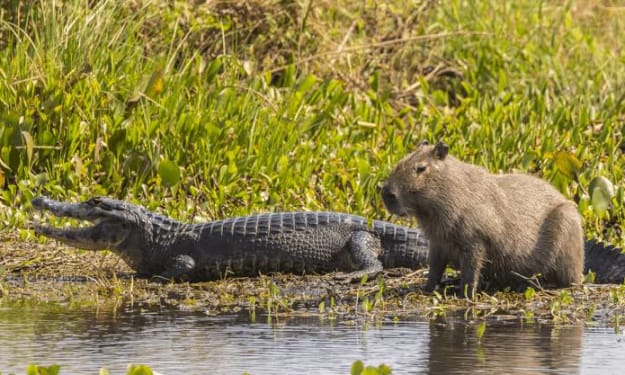
Why Do Crocodiles Not Eat Capybaras?. AI-Generated.
Images of capybaras calmly sitting beside crocodiles and caimans have fascinated the internet for years. These giant rodents are often seen lounging near some of the world’s most dangerous predators without appearing afraid. This unusual coexistence raises a simple but intriguing question: Why do crocodiles not eat capybaras? The answer lies not in friendship, but in biology, behavior, and survival strategy. While crocodiles are capable of killing and eating capybaras, they often choose not to—unless conditions are right. A Predator That Conserves Energy Crocodiles are ambush predators designed to conserve energy. Unlike mammals that hunt frequently, crocodiles can survive weeks or even months between meals. Because hunting carries risks, they prefer prey that offers a high reward with minimal effort. An adult capybara can weigh more than 50 kilograms (110 pounds) and is surprisingly fast and powerful in water. Attacking such an animal requires a sudden strike, a strong grip, and a struggle that could injure the crocodile. For a predator that values efficiency, a large, alert capybara is not always an attractive target. Crocodiles tend to focus instead on: Fish Birds Smaller mammals Young or injured animals Unless a capybara appears weak, distracted, or isolated, it may not be worth the energy or risk. Capybaras Do Not Behave Like Prey One of the main reasons crocodiles ignore capybaras is their behavior. Capybaras are exceptionally calm animals. They move slowly, avoid splashing, and remain watchful. Crocodiles rely heavily on movement to trigger their hunting instinct. Sudden motions, struggling, or panic signal an opportunity to strike. A capybara that sits quietly near the water does not activate this response. Its relaxed posture communicates that it is aware and ready to flee. This reduces the likelihood of attack. Capybaras have evolved alongside crocodilians for thousands of years in South America. Over time, they have learned how close is too close and when danger is real. This awareness helps them coexist safely most of the time. Safety in Numbers Capybaras live in groups that can range from 10 to more than 50 individuals. Group living provides protection. With many eyes watching the surroundings, crocodiles find it difficult to approach unnoticed. When danger appears, one capybara will sound an alarm, and the entire group will flee into the water or dense vegetation. This collective vigilance discourages predators from attempting an attack unless the odds are clearly in their favor. A lone capybara is far more vulnerable than one sitting among others. Many of the peaceful photographs seen online show group settings where crocodiles are less likely to strike. Crocodiles Choose Timing Carefully Crocodiles are most aggressive when hungry and active. However, many encounters with capybaras occur when crocodiles are basking in the sun. During basking, crocodiles are regulating their body temperature and digesting food. They are less inclined to hunt at these times. Capybaras appear to recognize this pattern. They often share riverbanks with resting crocodiles, taking advantage of moments when the predators are least motivated to attack. This is not a sign of trust but of instinctive risk assessment. Capybaras Are Excellent Swimmers Both animals are semi-aquatic, but capybaras are extremely agile in water. They can dive, swim quickly, and hide among aquatic plants. If a crocodile makes a sudden move, the capybara often escapes by submerging or sprinting toward shore. Because crocodiles depend on surprise, losing that advantage greatly reduces their success rate. Not a Friendship, but Tolerance Despite popular myths, crocodiles and capybaras are not friends. Crocodiles do eat capybaras—especially young ones. There are documented cases of crocodiles attacking and killing capybaras when: the capybara is injured it is unaware of danger it strays too close food is scarce The peaceful scenes seen online represent moments when both animals calculate that conflict is unnecessary. It is coexistence, not companionship. Environmental Balance In natural ecosystems, predators and prey often develop relationships based on mutual awareness rather than constant conflict. This balance reduces wasted energy and unnecessary injury for both sides. Capybaras benefit by staying calm and alert. Crocodiles benefit by waiting for easier opportunities. Over generations, this has produced a pattern where attacks are selective rather than constant. Why Humans Find It Fascinating Humans expect predators to attack prey whenever possible. Seeing a crocodile ignore a capybara challenges that assumption. It reminds us that animal behavior is governed by logic, not emotion. Survival depends on calculation, not aggression alone. These encounters also reveal how evolution shapes interactions between species that share the same habitat. Conclusion Crocodiles do not eat capybaras most of the time because it is often not worth the risk or energy. Capybaras remain calm, stay in groups, and understand when predators are least likely to strike. Crocodiles, in turn, prefer easier prey and conserve their strength. This relationship is not peace—it is practical survival. Nature does not run on friendship, but on balance. When both animals judge that conflict brings more danger than benefit, they coexist quietly along the riverbanks. And that is why the world keeps seeing one of nature’s most unlikely standoffs: the calm capybara beside the patient crocodile.
By Fiaz Ahmed 9 days ago in Longevity