
India Beauty and Personal Care Products Market Size and Forecast 2026–2034
Rising Incomes, Digital Influence, and the Natural Beauty Wave Redefine India’s Self-Care Economy

Introduction
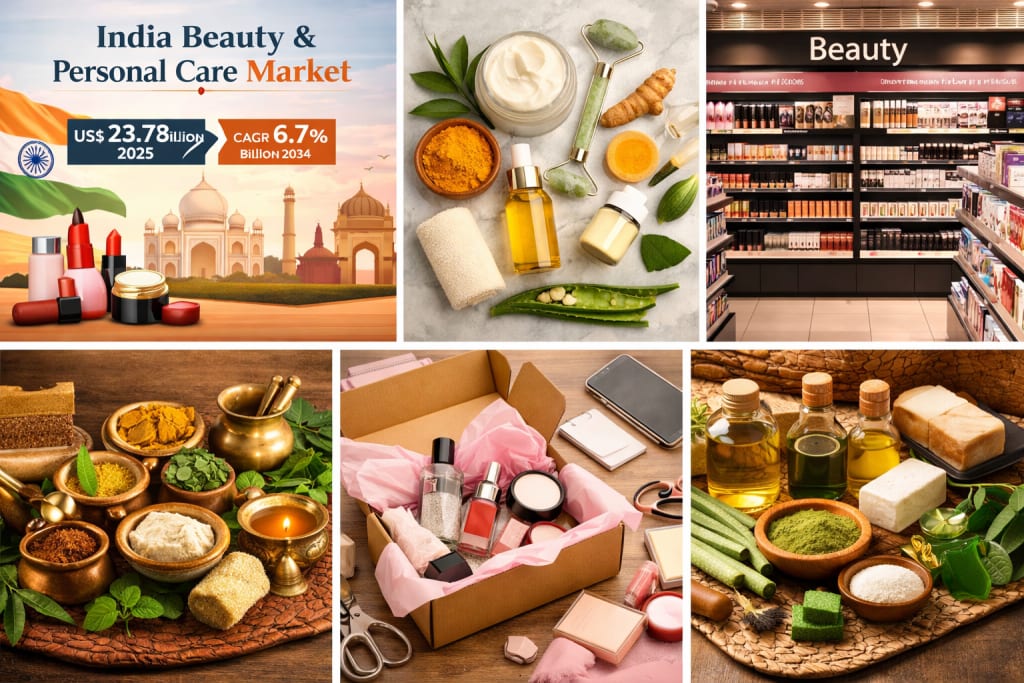
The India Beauty and Personal Care Products Market is witnessing a strong structural transformation, driven by changing lifestyles, rising disposable incomes, digital exposure, and growing awareness of wellness and personal grooming. According to Renub Research estimates, the market is expected to expand from US$ 23.73 billion in 2025 to US$ 42.54 billion by 2034, registering a compound annual growth rate (CAGR) of 6.7% during 2026–2034.
Beauty and personal care products are no longer considered discretionary purchases in India. Instead, they have become an integral part of daily life across age groups, genders, and income segments. From basic hygiene products to premium skincare and specialized cosmetic formulations, Indian consumers are actively investing in products that enhance appearance, confidence, and overall well-being.
India Beauty and Personal Care Market Outlook
Beauty and personal care products encompass a wide range of items used on the human body to cleanse, protect, enhance, and beautify physical appearance. These include skin care, hair care, oral care, color cosmetics, fragrances, grooming products, and hygiene essentials. Collectively, these products account for a significant share of household expenditure across both urban and rural India.
In recent years, demand has accelerated due to urbanization, lifestyle upgrades, and increasing awareness of personal hygiene and self-presentation. Social media, celebrity endorsements, beauty influencers, and online content have played a critical role in shaping consumer preferences and encouraging experimentation with new products and brands. At the same time, India’s deep-rooted tradition of Ayurveda and herbal wellness has strengthened the appeal of natural and organic beauty solutions.
Key Factors Driving Market Growth
Rising Disposable Income and Urbanization
Rapid urbanization and income growth remain fundamental drivers of India’s beauty and personal care products market. With urban regions projected to house over half of India’s population by 2050 and contribute nearly two-thirds of GDP, consumer exposure to global beauty trends and premium products is increasing steadily.
Urban professionals place higher importance on grooming, skincare, and personal appearance due to workplace culture and social interactions. This trend is no longer limited to metropolitan cities; tier-2 and tier-3 cities are also showing rising demand for branded and higher-quality products. Modern retail formats, shopping malls, and organized beauty outlets further support product accessibility and aspirational buying behavior.
Growing Demand for Natural, Herbal, and Ayurvedic Products
One of the most defining trends in the Indian market is the shift toward natural, herbal, and Ayurvedic beauty products. Consumers are increasingly cautious about chemical-based formulations and are actively seeking products made from plant-based and traditionally trusted ingredients.
India’s long history with Ayurveda has positioned herbal personal care products as safe, effective, and culturally relevant. Products formulated using neem, aloe vera, turmeric, sandalwood, and essential oils are gaining popularity across age groups. Start-ups and established brands alike are investing in research-backed Ayurvedic solutions that blend traditional wisdom with modern science, reinforcing consumer trust and expanding market reach.
Digital Influence and E-Commerce Expansion
Digital transformation has emerged as a powerful growth catalyst for India’s beauty and personal care market. Social media platforms, online beauty tutorials, influencer marketing, and targeted digital advertising significantly influence purchasing decisions.
E-commerce platforms provide consumers with access to a wide range of domestic and international brands, transparent pricing, and user reviews. Increased smartphone penetration, even in smaller towns, has expanded online shopping adoption. Direct-to-consumer (D2C) models are also gaining traction, allowing brands to build stronger customer relationships while offering personalized solutions.
Challenges Facing the Market
Intense Competition and Price Sensitivity
India’s beauty and personal care market is highly competitive, with the presence of global brands, strong domestic players, and numerous unorganized and regional manufacturers. Price sensitivity remains high, particularly in mass-market segments, putting pressure on profit margins.
Frequent discounts, promotional offers, and aggressive marketing strategies intensify competition. New entrants face significant challenges in establishing brand identity and distribution networks. Differentiation based on formulation, performance, packaging, and branding has become increasingly difficult in a crowded marketplace.
Regulatory Compliance and Product Safety
The Indian beauty and cosmetics industry operates under strict regulatory frameworks governing ingredient usage, labeling, formulation, and quality standards. Compliance with evolving regulations increases operational costs, especially for small and mid-sized companies.
Additionally, concerns around counterfeit products, mislabeling, and inconsistent quality can undermine consumer trust. Maintaining product safety and consistency across wide distribution networks remains a critical challenge for manufacturers operating at scale.
Segment-Wise Market Insights
Indian Organic Beauty and Personal Care Products Market
The organic beauty and personal care segment is growing rapidly as consumers prioritize sustainability, chemical-free formulations, and eco-friendly packaging. Awareness about the long-term effects of synthetic ingredients is driving adoption of organic skincare, haircare, oral care, and hygiene products.
Indian consumers strongly associate organic and herbal products with authenticity, safety, and holistic wellness. This segment is expected to record faster growth compared to conventional products during the forecast period.
Indian Skin Care Products Market
Skin care represents one of the fastest-growing categories within the beauty and personal care industry. Rising pollution levels, climate variability, and increased sun exposure have heightened demand for moisturizers, sunscreens, cleansers, serums, and anti-aging products.
Consumers are increasingly adopting multi-step skincare routines influenced by dermatologists and social media trends. Personalized skincare, derma-tested products, and cosmeceuticals are emerging as key growth areas, catering to both men and women across age groups.
Mass Products Segment
Mass beauty and personal care products dominate the Indian market in terms of volume due to affordability and extensive distribution. Daily-use items such as soaps, shampoos, toothpaste, hair oils, and basic skincare products continue to witness consistent demand.
Strong brand recognition, competitive pricing, and availability through both modern and traditional retail channels ensure steady consumption. Given India’s price-conscious consumer base, mass products will remain a cornerstone of the market throughout the forecast period.
Specialty Stores Market
Specialty beauty and personal care stores are gaining prominence, particularly in urban areas. These stores offer curated product selections, professional guidance, and an enhanced shopping experience. Consumers value personalized recommendations and product authenticity, especially when purchasing premium skincare, cosmetics, and fragrances.
The growth of organized retail and beauty-focused outlets supports this segment’s expansion, complementing online sales channels.
Gender-Based Market Trends
India Female Beauty and Personal Care Products Market
Women remain the primary consumers in India’s beauty and personal care market, with rising expenditure on skincare, cosmetics, haircare, and wellness products. Increased workforce participation, higher disposable income, and evolving beauty perceptions are driving demand across both mass and premium categories.
Brands are introducing specialized products tailored to different life stages, skin types, and lifestyle needs. Digital platforms, beauty tutorials, and influencer content continue to shape purchasing behavior, reinforcing market growth.
Regional Market Insights
Maharashtra
Maharashtra represents one of India’s largest and most developed beauty and personal care markets. High urbanization, strong retail infrastructure, and greater spending power in cities such as Mumbai and Pune drive demand for premium and dermatologically tested products.
Uttar Pradesh
Uttar Pradesh’s large population base and improving retail access support steady market growth. Affordable mass products dominate sales, while demand for branded and herbal products is increasing in urban and semi-urban areas.
Telangana and Andhra Pradesh
These states show strong preference for herbal and Ayurvedic products, reflecting traditional wellness practices. Improved distribution, digital influence, and income growth are driving consistent demand for both mass and natural personal care items.
Gujarat
Gujarat’s market is driven by value-based purchasing behavior, with emphasis on quality and cost-effectiveness. Strong distribution networks and rising awareness of grooming and hygiene support stable growth.
Market Segmentation Overview
By Type:
Conventional, Organic
By Product:
Skin Care, Hair Care, Color Cosmetics, Fragrances, Others
By Pricing:
Mass Products, Premium Products
By Distribution Channel:
Supermarkets & Hypermarkets, Specialty Stores, E-commerce, Others
By End User:
Male, Female
By Key States:
Maharashtra, Tamil Nadu, Karnataka, Gujarat, Uttar Pradesh, West Bengal, Rajasthan, Telangana, Andhra Pradesh, Madhya Pradesh
Competitive Landscape
The market analysis includes detailed coverage of leading companies with five viewpoints: overview, key personnel, recent developments, SWOT analysis, and revenue analysis. Major companies profiled include BASF SE, China Petrochemical Corporation, Daelim Co. Ltd, Exxon Mobil Corporation, Formosa Plastics Corporation, HPCL-Mittal Energy Limited, INEOS, LG Chem Ltd., LyondellBasell Industries N.V., and Sumitomo Chemical Co. Ltd.
Final Thoughts
India’s beauty and personal care products market is positioned for sustained growth over the next decade. Rising incomes, digital influence, expanding e-commerce, and growing preference for natural and organic solutions are reshaping consumer behavior. Despite challenges related to competition and regulatory compliance, innovation, branding, and consumer engagement continue to unlock new opportunities.
With a projected market value of US$ 42.54 billion by 2034, the industry reflects India’s evolving lifestyle aspirations and deepening focus on personal wellness. For manufacturers, retailers, and investors, the Indian beauty and personal care sector represents a resilient and high-potential consumer market in the years ahead.
About the Creator
Tom Shane
Tom Shane is a content writer specializing in SEO-driven blogs, product descriptions, and thought leadership. He crafts engaging, research-backed content that connects with audiences and drives results.
Day 4 of Quitting
If this is how sobriety feels, maybe it’s better to go through life a little buzzed… this, along with other hits like, I want to kill myself, I wish I was dead, and I’m going to throw myself off a bridge have been the only thoughts on rotation these past few days. I promise myself that if, in a month, I still feel like this (‘this’ meaning despondent, full of rage, and simultaneously numb) I can go back to smoking. Until mid-February though? Nicotine is off the table.
By sleepy drafts26 days ago in Longevity



Comments
There are no comments for this story
Be the first to respond and start the conversation.