Latest Stories
Most recently published stories on Vocal.
Hong Kong Court Jails Pro-Democracy Media Tycoon Jimmy Lai for 20 Years. AI-Generated.
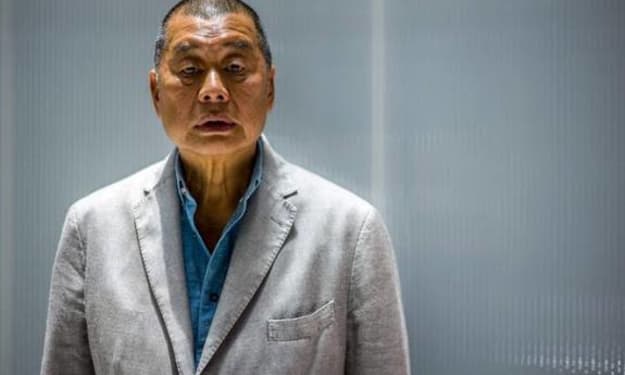
A Hong Kong court has sentenced pro-democracy media tycoon Jimmy Lai to 20 years in prison, marking one of the most severe penalties handed down under the city’s national security framework and delivering a powerful blow to press freedom and political dissent in the former British colony. Lai, the 76-year-old founder of the now-defunct newspaper Apple Daily, was convicted on multiple charges including collusion with foreign forces and conspiracy to publish seditious materials. The verdict concludes a years-long legal battle that has drawn intense international scrutiny and condemnation from human rights groups and Western governments. The ruling was delivered after months of closed-door hearings in a case widely viewed as a test of Hong Kong’s judicial independence under Beijing’s sweeping national security law imposed in 2020. A Symbol of the Democracy Movement Once one of Hong Kong’s most outspoken critics of the Chinese Communist Party, Lai built his media empire into a platform for democratic activism. Apple Daily became famous for its tabloid style, aggressive reporting, and open support for pro-democracy protests, especially during the massive demonstrations of 2019. Authorities accused Lai of using his media influence to encourage foreign governments to impose sanctions on China and Hong Kong officials, actions prosecutors said amounted to “collusion with external forces.” In court, Lai maintained his innocence and argued that his journalism and public statements were protected forms of expression. “I have always believed in freedom of speech and the rule of law,” he told the court in a previous hearing. The Charges and Sentence Judges ruled that Lai’s activities constituted a serious threat to national security and justified the lengthy sentence. The court cited articles published by Apple Daily, meetings with foreign officials, and public interviews in which Lai criticized Beijing as evidence of intent to undermine state authority. Prosecutors had sought a life sentence, while defense lawyers argued that Lai’s actions were political expression rather than criminal conduct. The final ruling of 20 years represents one of the harshest penalties imposed on a media figure in Hong Kong’s history. Lai has already spent several years in detention while awaiting trial, meaning he is unlikely to be released until his late 90s. International Reaction The sentencing sparked swift reactions from abroad. The United States, Britain, and the European Union issued statements expressing deep concern and calling the verdict a further erosion of freedoms guaranteed under the “one country, two systems” framework that governed Hong Kong after its return to Chinese rule in 1997. A spokesperson for the U.S. State Department said the sentence demonstrated “the ongoing dismantling of press freedom and political pluralism in Hong Kong.” Amnesty International described the ruling as “a chilling signal to journalists everywhere,” warning that the case sets a precedent for criminalizing criticism of the government. China’s Foreign Ministry rejected the criticism, insisting that the trial was conducted according to law and that no one is above national security regulations. Closure of Apple Daily Lai’s conviction follows the forced closure of Apple Daily in 2021 after authorities froze the newspaper’s assets and arrested senior editors. The shutdown left more than 1,000 employees jobless and removed one of the last openly pro-democracy voices from Hong Kong’s media landscape. Since then, dozens of civil society groups, unions, and opposition parties have dissolved, citing legal pressure and fear of prosecution. Several journalists and activists have either been arrested or gone into exile. Media analysts say Lai’s sentencing cements a transformation of Hong Kong from a vibrant center of free expression into a tightly controlled political environment. “This case shows that even the most prominent figures are not immune,” said one former Hong Kong editor now living abroad. “It sends a clear warning to the entire press community.” Impact on Hong Kong’s Future The ruling deepens concerns about Hong Kong’s role as an international financial and media hub. Foreign companies and governments have increasingly questioned whether the city can still be trusted to uphold free speech and the rule of law. Legal experts note that the national security law allows cases to be heard by handpicked judges and permits closed trials under certain conditions, fueling criticism that the system lacks transparency. Supporters of Beijing argue that the law has restored stability after years of unrest. Officials say press freedom still exists but must operate within boundaries defined by national security. Family and Supporters React Outside the courthouse, Lai’s supporters gathered quietly, many holding signs reading “Free Jimmy Lai” and “Journalism is not a crime.” His family released a short statement saying they were “heartbroken” but proud of his principles. “My father stood for truth and freedom,” the statement said. “We hope the world will not forget him.” A Defining Moment Jimmy Lai’s 20-year sentence marks a defining moment in Hong Kong’s political history. Once celebrated as Asia’s freest city, Hong Kong now faces a future in which dissent and independent journalism carry severe consequences. For many observers, the case symbolizes the end of an era — one in which outspoken media voices could challenge power without fear of imprisonment. As Lai was led away from court, he raised his hand briefly in a gesture of acknowledgment toward supporters. It was a small moment of defiance in a case that has reshaped Hong Kong’s media and political landscape.
By Fiaz Ahmed 7 days ago in The Swamp
Luxury Travel Takes Off as Plane Makers Chase Asia’s Super-Rich. AI-Generated.
Luxury air travel is soaring across Asia as aircraft manufacturers and private jet companies compete to capture the attention of the region’s rapidly growing population of ultra-wealthy travelers. With business fortunes rising and leisure travel rebounding strongly after the pandemic, Asia has become the world’s most promising market for private aviation and high-end commercial aircraft cabins. Industry executives say demand for private jets, customized aircraft interiors, and premium long-haul travel experiences has surged in countries such as China, India, Singapore, Indonesia, and Thailand. Wealthy individuals increasingly want faster, more flexible ways to travel, avoiding crowded airports and commercial flight schedules. “Asia is now the center of growth for luxury aviation,” said one senior executive at a European aircraft manufacturer. “We are seeing first-time buyers alongside experienced customers upgrading to larger, longer-range aircraft.” A Growing Market of High-Net-Worth Travelers According to aviation industry data, Asia-Pacific now accounts for one of the fastest-growing private jet fleets in the world. The number of high-net-worth individuals in the region has expanded sharply over the past decade, driven by technology, finance, real estate, and manufacturing fortunes. Private jet ownership, once rare in Asia, is becoming more common among billionaires and multinational executives who value privacy, time efficiency, and control over their travel environment. Charter services have also grown rapidly, allowing wealthy travelers to rent luxury aircraft without purchasing them outright. Luxury airlines have taken note as well. Several carriers have invested heavily in first-class suites and business-class cabins designed to resemble hotel rooms in the sky. Features such as private bedrooms, showers, gourmet dining, and personal butler-style service are becoming major selling points. Plane Makers Redesign for Comfort and Status Aircraft manufacturers including Airbus, Boeing, and leading business jet producers are tailoring designs specifically for Asian customers. These include wide-body jets converted into flying palaces with meeting rooms, entertainment lounges, and master bedrooms. Customization has become a key part of the sales pitch. Buyers can choose everything from marble bathrooms to gold-accented interiors, as well as advanced communication systems for in-flight business operations. “Customers don’t just want transportation,” said a luxury aircraft interior designer based in Singapore. “They want a symbol of success and a private space that reflects their lifestyle.” In response, plane makers have opened design centers in Asia to work directly with clients. These studios allow customers to preview cabin layouts and select materials and technologies before committing to purchases that can exceed $100 million per aircraft. Business Travel Meets Leisure A major driver of the trend is the blending of business and leisure travel, often called “bleisure.” Executives want aircraft that can serve as both office and retreat, allowing them to hold meetings in the air and then relax with family on the same trip. Destinations such as the Maldives, Bali, Japan, and Europe’s luxury resorts have seen an influx of travelers arriving on private or semi-private flights. The flexibility allows travelers to avoid busy hubs and fly directly to smaller airports closer to their final destinations. Luxury travel agencies report a sharp rise in bookings for bespoke itineraries that combine private flights, exclusive hotels, and curated experiences such as private island stays or access to cultural landmarks after hours. Environmental and Social Questions The boom in luxury aviation also raises environmental concerns. Private jets produce significantly higher carbon emissions per passenger than commercial flights. As climate awareness grows, critics argue that expanding private aviation sends the wrong message in a region already struggling with pollution and rising temperatures. Some aircraft makers are promoting newer, more fuel-efficient engines and the use of sustainable aviation fuel (SAF). Several luxury operators have begun offering carbon offset programs, though environmental groups say these measures do not fully address the issue. “There is a clear contradiction between climate goals and the expansion of private aviation,” said an environmental policy expert. “The industry must demonstrate real commitment to sustainability.” Competition Intensifies With Asia now seen as the next frontier, competition among manufacturers and charter operators is intensifying. Companies are hosting exclusive showcase events in cities such as Shanghai, Hong Kong, and Dubai to attract elite customers. These events feature luxury interiors, virtual tours, and private demonstrations of aircraft capabilities. Financial institutions have also entered the market, offering specialized leasing and financing packages for high-end aircraft buyers. This has lowered barriers to entry for wealthy entrepreneurs who prefer not to pay the full cost upfront. Meanwhile, regional governments are expanding private aviation infrastructure by upgrading airports and building dedicated terminals for business jets. Singapore, for example, has invested heavily in private aviation facilities to strengthen its role as a regional hub. A Symbol of Post-Pandemic Wealth Analysts say the rise of luxury aviation reflects broader economic shifts in Asia. While many ordinary travelers remain sensitive to airfare prices, the ultra-rich are spending more freely than ever on premium experiences. “Luxury travel has become a statement of recovery and power,” said a travel economist. “It shows who benefited most from the post-pandemic economy.” Looking Ahead Industry forecasts suggest Asia’s luxury aviation market will continue growing over the next decade, driven by rising wealth, expanding tourism, and a desire for exclusive travel experiences. For plane makers, the challenge will be balancing luxury with sustainability while adapting to cultural preferences across diverse Asian markets. As the world’s super-rich take to the skies in ever more elaborate aircraft, luxury travel is no longer just about reaching a destination. In Asia, the journey itself has become the ultimate display of status, comfort, and global ambition.
By Fiaz Ahmed 7 days ago in Longevity
Mexico Wealth Management Market Growth, Outlook and Industry Analysis. AI-Generated.
Market Overview — Mexico Wealth Management Market The Mexico Wealth Management Market has emerged as a dynamic segment within the country’s broader financial services industry, driven by rising affluence, expanding investor sophistication, and an increasingly diversified financial ecosystem. Wealth management in Mexico encompasses a wide range of services — from traditional financial planning and asset allocation to advanced portfolio construction, tax planning, legacy planning, and digital advisory solutions. This market serves a diverse client base, including high-net-worth individuals (HNWIs), mass affluent investors, and retail clients seeking tailored investment strategies and long-term financial security. The sector also includes both traditional human advisory models and hybrid or automated (robo-advisory) platforms that cater to different investor needs.
By Kim Soo hyun7 days ago in Trader
Flooding in Midlands After Days of Heavy Rain. AI-Generated.
Large parts of the Midlands have been hit by flooding following several days of persistent rainfall, prompting road closures, evacuations, and warnings from emergency services as rivers burst their banks and drainage systems struggled to cope. The Environment Agency issued multiple flood alerts and flood warnings across the region, affecting areas in Worcestershire, Warwickshire, Staffordshire, and parts of the West Midlands. Residents in low-lying communities were urged to remain vigilant as water levels continued to rise overnight. Local authorities said the rainfall, which began earlier in the week, had saturated the ground, leaving little capacity for further water absorption. As a result, even moderate additional rainfall caused rapid surface flooding and swelling of nearby rivers. Roads and Homes Affected Several major and minor roads were closed after becoming impassable. In Worcestershire, parts of the A44 and A4103 were shut due to standing water, while in Warwickshire, sections of rural routes near Stratford-upon-Avon were submerged. Emergency crews assisted stranded motorists and helped residents protect homes using sandbags and temporary barriers. In some villages, water entered ground-floor rooms, damaging furniture and electrical systems. “It came up so fast,” said one resident of a village near the River Severn. “Within an hour the garden was underwater, and then it was coming through the back door. We’ve lived here for 20 years and haven’t seen it this bad.” Fire and rescue services reported dozens of callouts related to flooding, including rescues of people trapped in vehicles and homes. No fatalities were reported, but several people were treated for minor injuries and hypothermia. Schools and Services Disrupted Flooding forced the closure of several schools and disrupted public transport services. Bus routes were diverted, and some rail services experienced delays due to waterlogged tracks and safety inspections. Hospitals and care homes were placed on alert, with contingency plans activated to ensure patients and vulnerable residents could be moved if conditions worsened. Councils opened temporary rest centers for people unable to remain in their homes. Local businesses, particularly farms and small shops in rural communities, reported losses as floodwater damaged stock and equipment. Farmers said crops planted earlier in the season may be ruined if water remains on fields for several more days. Weather Conditions Behind the Flooding Meteorologists said the flooding was caused by a slow-moving weather system that brought prolonged rain rather than short, intense downpours. In some parts of the Midlands, rainfall totals over three days exceeded the average for an entire month. “The key factor is duration,” a weather forecaster explained. “The ground is completely saturated, so any additional rain simply runs off into rivers and streams.” Forecasters warned that although rainfall was expected to ease slightly, further showers could prolong flooding and delay recovery efforts. Environmental and Infrastructure Concerns Environmental experts said the flooding highlights ongoing challenges linked to climate change and urban development. More frequent heavy rainfall events combined with paved surfaces and reduced green spaces increase the risk of flash flooding. River management groups also warned that aging drainage and flood defense infrastructure may need further investment. “This event shows the importance of maintaining flood defenses and updating them for changing weather patterns,” said a representative from a regional water authority. “What used to be considered a rare flood is becoming more common.” The Environment Agency said engineers were monitoring key river levels and operating flood barriers where necessary. Portable pumps were deployed in some communities to help remove excess water. Community Response Despite the disruption, local communities rallied to support those affected. Volunteers helped distribute sandbags and food, while neighbors checked on elderly residents and those living alone. Community centers and churches opened their doors to provide warm drinks and shelter. Social media groups shared updates on road conditions and offered assistance to those needing transport or supplies. “We’ve seen an incredible response from people helping each other,” said a council spokesperson. “It’s a difficult time, but communities are pulling together.” Government and Council Action Local councils said they were working closely with emergency services and utility companies to manage the situation. Drainage crews were clearing blocked gullies and inspecting vulnerable flood points. The Department for Environment, Food and Rural Affairs said it was in contact with regional authorities and would assess damage once floodwaters recede. Residents in flood-prone areas were advised to keep emergency kits ready and to follow official guidance. Motorists were urged not to drive through floodwater due to the risk of hidden hazards and strong currents. Looking Ahead As water levels slowly begin to stabilize, attention is turning to cleanup and recovery. Insurance assessors are expected to visit affected properties in the coming days, while councils prepare to repair damaged roads and public infrastructure. Experts warn that similar weather events could become more frequent in the future, making long-term planning essential. For now, many families in the Midlands face the difficult task of drying out homes and replacing damaged belongings. While the rain may ease, the impact of the flooding will be felt for weeks to come. “This isn’t just about today’s weather,” one resident said. “It’s about how we prepare for the next time it happens.”
By Fiaz Ahmed 7 days ago in The Swamp
AI in Vaccine Development: Use Cases, Real-World Examples, and Future Impact
Vaccine development remains a critical, complex process in healthcare, requiring extensive research and biological modeling. Laboratory testing and multiple phases of clinical trials. Accurate vaccine development requires accurate antigen identification, safety validation, and large-scale testing across diverse populations; that’s why the process generally takes several years.
By Kiran Moda7 days ago in Futurism
Italy Says Railways Hit by ‘Serious Sabotage’ as Winter Olympics Begin. AI-Generated.
Italian authorities have launched a major investigation after what officials described as a “serious act of sabotage” disrupted parts of the country’s railway network on the opening day of the Winter Olympics, raising security concerns at a moment when Italy is hosting one of the world’s largest sporting events. Transport officials confirmed that damage was discovered on several key rail lines linking northern cities to Olympic venues in the Alpine region. The incident caused delays to high-speed and regional services, affecting thousands of passengers, including spectators, journalists, and staff traveling to attend the opening ceremonies. Italy’s interior ministry said the incident appeared to be deliberate and coordinated, with technical equipment and signaling systems targeted overnight. No injuries were reported, but the disruption sparked fears of wider attempts to undermine public safety and international confidence during the Games. “This was not an accident or a technical failure,” Interior Minister Matteo Piantedosi said at a press briefing. “It was a calculated act intended to cause disruption at a sensitive moment for our country.” Disruption on a Critical Day Rail operator Trenitalia reported that multiple lines in Lombardy and Veneto experienced sudden signal failures and power interruptions early in the morning. Engineers later found signs of tampering with cables and trackside control boxes. The damage forced authorities to reduce train speeds and suspend services on certain routes while safety checks were carried out. Major stations in Milan and Verona were crowded with delayed passengers as police and railway staff worked to manage the situation. Officials said services were gradually restored by mid-afternoon, but delays continued throughout the day. The sabotage came just hours before the Winter Olympics opening ceremony, which was attended by international dignitaries and broadcast worldwide. Security around transport hubs was immediately increased, with armed patrols deployed to major stations and along sections of railway considered vulnerable. Investigation Underway Italy’s counterterrorism unit and national police are leading the investigation. Prosecutors have opened a criminal case for sabotage of public infrastructure, a serious offense under Italian law that carries heavy prison sentences. Authorities have not yet identified suspects or stated whether the incident is linked to extremist groups, organized crime, or political activism. However, intelligence officials said the timing strongly suggested an attempt to draw attention during the high-profile global event. “This kind of act requires technical knowledge and careful planning,” said a senior security official speaking on condition of anonymity. “It was designed to cause maximum disruption without necessarily causing casualties.” Surveillance footage from railway facilities and nearby roads is being reviewed, and forensic teams are examining damaged equipment for fingerprints and tools used in the attack. Government Reaction Prime Minister Giorgia Meloni condemned the sabotage and pledged that those responsible would be brought to justice. “Anyone who tries to strike our infrastructure and intimidate our citizens will fail,” she said in a statement. “Italy will not allow criminals or extremists to overshadow a celebration of sport and international unity.” Meloni also reassured the public that Olympic venues remained secure and that the incident did not pose a direct threat to athletes or spectators. The transport ministry announced immediate inspections of rail lines across northern Italy and ordered additional security patrols at strategic points, including tunnels, bridges, and signal stations. Impact on the Olympics Olympic organizers said the disruption had minimal impact on competition schedules, though some spectators arrived late for early events. Shuttle buses were deployed to transport people from affected train stations to venues. “We have contingency plans for transport disruptions,” an Olympic spokesperson said. “All events will go ahead as scheduled.” However, the sabotage has cast a shadow over what was meant to be a celebration of Italy’s organizational capabilities and hospitality. The Winter Olympics are expected to draw millions of visitors and billions in tourism revenue over the coming weeks. Security experts noted that large international sporting events are often viewed as symbolic targets due to their global visibility. Public and Political Response Opposition politicians called for a full review of infrastructure protection, arguing that the incident exposed vulnerabilities in Italy’s transport network. “This shows how easily critical systems can be targeted,” said one opposition lawmaker. “We must invest more in surveillance and preventive measures.” Passengers expressed frustration but also concern about safety. “I was angry about missing my train,” said Marco Rinaldi, a commuter traveling to Milan. “But when they said it was sabotage, that made it much more frightening.” Local residents near affected rail lines reported seeing police helicopters and forensic teams working throughout the day. Broader Security Concerns The incident comes amid heightened security across Europe due to geopolitical tensions and fears of hybrid attacks targeting infrastructure. Rail networks, energy grids, and communication systems have increasingly been viewed as vulnerable to both physical and cyber interference. In recent years, European countries have experienced incidents involving damaged undersea cables, power outages, and unexplained disruptions to transport systems, often triggering investigations into possible foreign or extremist involvement. Italian officials stressed that there was no immediate evidence linking the sabotage to international actors but said all possibilities were being examined. Restoring Confidence By evening, most train services had resumed normal operations, though police remained on alert. Additional checks were planned for the coming days, especially during peak travel times for Olympic events. Authorities urged the public to report any suspicious activity near railway lines or stations. “Our message is clear,” said the head of Italy’s railway police. “The network is safe, and we will protect it with every resource available.” A Test for Italy’s Preparedness As athletes compete and ceremonies continue, the sabotage incident stands as an early test of Italy’s ability to safeguard its infrastructure during a major international event. While no injuries occurred, the timing and nature of the attack have intensified debate about security and resilience. For now, the Games go on, but investigators are racing to determine who was responsible and why. The outcome of the inquiry will likely shape future policies on protecting transport systems during major global gatherings. Italy’s leaders insist the message to the world remains unchanged: the Winter Olympics will proceed in safety, and those who sought to disrupt them will not succeed.
By Fiaz Ahmed 7 days ago in The Swamp
Iran Sentences Nobel Laureate Mohammadi to Seven More Years in Prison. AI-Generated.
Iran has handed down a new prison sentence of more than seven years to Narges Mohammadi, the Iranian human rights activist and 2023 Nobel Peace Prize laureate, in a move that has drawn sharp international criticism and raised further concerns about the country’s crackdown on dissent. Reuters Supporters and legal representatives say the sentence was issued on February 8, 2026, by a Revolutionary Court in the northeastern city of Mashhad, where Mohammadi has been held since her arrest in December. It comes amid a broader government effort to silence critics and activists at a time of heightened political sensitivity in Iran. A New Sentence and Its Conditions According to Mohammadi’s lawyer, Mostafa Nili, Mohammadi was sentenced to: 6 years in prison on charges of “assembly and collusion against national security” 1.5 years for “propaganda against the government” A two-year ban on travel Two years of internal exile to the city of Khusf in South Khorasan province Reuters The combined sentence amounts to approximately 7½ years of additional imprisonment, on top of a previous sentence that has kept Mohammadi behind bars for extensive periods over the past decade. Iran’s foreign ministry has not publicly acknowledged the new sentencing. Geo News Detention and Hunger Strike Mohammadi, who is now 53, was arrested on December 12, 2025 after speaking out at a memorial ceremony for human rights lawyer Khosrow Alikordi, whose death under unclear circumstances earlier in the year had sparked protests among activists. The authorities accused her of encouraging “norm-breaking slogans” at the event — allegations her supporters describe as politically motivated. Reuters In early February, Mohammadi launched a week-long hunger strike to protest prison conditions and her inability to contact her lawyers and family. Her health deteriorated significantly during the hunger strike, prompting concerns among rights advocates about her safety. Al Jazeera A Life of Activism and Imprisonment Narges Mohammadi has long been a prominent figure in Iran’s human rights movement. She has campaigned tirelessly against the death penalty, for women’s rights, and in opposition to state repression. Mohammadi is deputy director of the Defenders of Human Rights Center (DHRC) and has been detained repeatedly since the late 1990s for her activism. AIPDHE She was awarded the Nobel Peace Prize in 2023 in recognition of her decades-long struggle for human rights under challenging and often dangerous conditions. When the prize was announced, Mohammadi was already in prison, and her children accepted the award on her behalf. Geo News Despite her international recognition, Mohammadi has spent much of the past decade in and out of prison. Even during previous periods of ill health, including after surgeries and hunger strikes, authorities have either returned her to detention or denied requests for extended medical leave. hrw.org Domestic and International Reaction The latest sentence has drawn sharp reactions from rights groups and foreign governments. Human rights organizations describe the ruling as part of a systematic crackdown on dissent in Iran, especially following nationwide protests that began in late December 2025. These demonstrations were fuelled by public anger over political repression and the suspicious death of activists like Alikordi. International figures have called for Mohammadi’s release and urged Iran to respect its obligations under international human rights law, including freedom of expression and fair trial standards. Critics argue that the additional prison term exemplifies how authorities use national security laws to stifle peaceful activism. hrw.org Legal Context in Iran The sentence was issued by a Revolutionary Court, a parallel judicial system in Iran that handles cases involving “national security” and political charges. These courts have been criticised by rights groups for opaque procedures, limited defence rights, and close alignment with security agencies. PBS Revolutionary Courts often try political activists, journalists, and dissidents on charges such as “collusion against national security” and “propaganda against the system,” both of which carry heavy sentences. The new sentence against Mohammadi follows this pattern of legal practice, which critics assert is used to suppress dissenting voices. Geo News Health and Human Rights Concerns Mohammadi’s health has been a subject of ongoing concern. During her imprisonment, she has suffered serious medical issues and has at times been denied adequate treatment, rights groups say. The hunger strike in early February further aggravated those concerns, with supporters warning that continued detention in harsh conditions could be life-threatening. Al Jazeera Human rights advocates have urged that she be granted medical parole or transferred to proper care facilities, arguing that her deteriorating condition underscores the humanitarian dimensions of her case. hrw.org The Broader Climate of Repression Mohammadi’s sentencing comes amid an intensifying pattern of suppression targeting critics and reformists in Iran. Authorities have detained other political figures and activists in recent weeks, tightening restrictions on civil society and political expression while negotiating with the United States over sensitive issues like Iran’s nuclear programme. The sentencing highlights the complex and often conflicting dynamics in Iranian politics: on one hand, Tehran seeks to project strength on the international stage; on the other, it continues a robust internal crackdown against voices calling for greater rights and accountability. As the legal avenues narrow for activists within Iran, international attention and pressure are likely to remain focused on cases like Mohammadi’s, where issues of human rights, national security, and political dissent intersect in a highly contentious environment.
By Fiaz Ahmed 7 days ago in The Swamp
Are Resolution Tax Services in Illinois Worth It for IRS and State Tax Problems?
Tax trouble has a way of getting loud at the worst time. One day you are fine, and the next day you open a notice that talks about penalties, deadlines, or collection action. If you live in Illinois, you might be dealing with both the IRS and the Illinois Department of Revenue, and they do not always move the same way.
By Advocate Tax Solutions7 days ago in Filthy
Maharashtra Police Hall Ticket 2026: Easy Guide to Download and Check Details
The Maharashtra Police Hall Ticket is the most important document for candidates appearing in the 2026 recruitment exam. It allows entry into the exam hall and contains crucial information such as your name, roll number, exam date, and center. Downloading it on time is important to avoid stress. This guide will show you how to check, download, and verify your hall ticket easily.
By John.doe7987 days ago in Trader