Latest Stories
Most recently published stories on Vocal.
5 Biggest AI Fears: Which Are Sci-Fi, and Which Are Real?
Artificial Intelligence has rapidly moved from research labs into everyday life. From voice assistants and recommendation engines to self-driving prototypes and medical diagnostics, AI now shapes how we work, communicate, and make decisions. Yet as the technology grows more powerful, so do the fears surrounding it.
By Mind Meets Machine6 days ago in Fiction
Emerald Fennell Defends Her Changes to Wuthering Heights: “You’ve Got to Make Those Hard Decisions”. AI-Generated.
Director and screenwriter Emerald Fennell has defended her creative choices in adapting the literary classic Wuthering Heights, arguing that modern film audiences require bold interpretation rather than strict loyalty to the original text. Fennell, known for her distinctive visual style and emotionally complex storytelling, has faced growing criticism from literary purists after early details emerged about her forthcoming film version of the 1847 novel. Changes to character structure, dialogue, and narrative focus have prompted debate about whether the adaptation strays too far from Emily Brontë’s dark and tragic romance. Speaking in a recent interview, Fennell said that adapting a revered novel comes with inevitable controversy. “You’ve got to make those hard decisions,” she explained. “Film is a different language. What works on the page doesn’t always work on screen, and if you want the story to live again, you have to reimagine it.” A Bold New Interpretation According to production insiders, Fennell’s version of Wuthering Heights places greater emphasis on psychological trauma and power dynamics between the central characters, rather than the traditional gothic romance tone. Some scenes have reportedly been condensed or restructured, and certain minor characters have been removed altogether. The director has also shifted narrative perspective, focusing more closely on the inner world of Catherine Earnshaw rather than relying on the layered storytelling framework of the novel, which uses multiple narrators. Fennell said this decision was essential to connect with contemporary viewers. “The novel is incredibly modern in its emotional violence,” she said. “But the way it’s told is distant and formal. I wanted to bring the audience right inside the characters’ minds — to feel their rage, obsession, and grief in a visceral way.” Critics and Fans Divided Reaction to the changes has been sharply divided. Some literary scholars argue that altering the structure risks losing the unique voice of Emily Brontë’s original work. “This is a novel built on storytelling within storytelling,” said one university literature professor. “Removing that framework may simplify the plot, but it also strips away its moral complexity.” Fans on social media have also voiced concern, particularly over rumors that certain iconic scenes have been modernized or shortened. However, others welcome the director’s willingness to take risks. “Every generation needs its own Wuthering Heights,” wrote one film critic. “If we keep remaking it exactly the same way, it becomes a museum piece instead of a living story.” The Pressure of a Classic Fennell acknowledged that adapting one of the most studied novels in English literature brings enormous pressure. “You’re standing on the shoulders of a giant,” she said. “But you’re also responsible for creating something that stands on its own. Otherwise, why make the film at all?” She compared her approach to past reinterpretations of Shakespeare and Jane Austen, arguing that fidelity to emotional truth matters more than literal accuracy. “The spirit of the book is about obsession, cruelty, and love that destroys people,” she said. “That’s what I’ve protected. The rest is scaffolding.” Casting and Visual Style The production has drawn attention for its unconventional casting choices and stark visual design. Fennell has reportedly chosen a darker, more minimalist aesthetic than previous adaptations, with bleak landscapes and intimate close-ups replacing the sweeping romantic imagery traditionally associated with the story. Sources close to the project say the film will highlight class conflict and emotional isolation, themes Fennell believes resonate strongly in today’s society. “This is a story about outsiders,” she noted. “About what happens when people are denied dignity and belonging. That feels painfully current.” A Broader Debate About Adaptation The controversy reflects a wider debate in the film industry about how much freedom directors should take when adapting literary classics. In recent years, filmmakers have increasingly reworked famous novels to reflect modern values and perspectives, sometimes provoking backlash from traditionalists. Film historian Mark Reynolds said Fennell’s defense highlights the tension between preservation and innovation. “Some viewers want historical authenticity; others want relevance,” he said. “Both are valid. The challenge is finding a balance that honors the original while speaking to a new generation.” Looking Ahead Despite the criticism, studio executives remain confident in the project, pointing to Fennell’s previous successes and her reputation for fearless storytelling. The film is scheduled for release next year and is already expected to spark intense discussion upon its debut at major film festivals. Fennell says she welcomes debate. “If people argue about it, that means they care,” she said. “That’s a good thing. Emily Brontë wrote a story that refuses to be quiet. I hope this film does the same.” As anticipation grows, the director stands firm in her belief that adaptation is an act of interpretation, not imitation. “You can’t please everyone,” she added. “But you can be honest to the story you’re telling. And sometimes that means changing things.” Whether audiences embrace her vision or reject it, Fennell’s Wuthering Heights is already proving that classic literature still has the power to provoke passion nearly two centuries after it was first published.
By Fiaz Ahmed 6 days ago in Geeks
Do Transgender Men Have Periods
The relationship between transgender men and menstruation is a topic that touches on biology, identity, and personal experience in deeply meaningful ways. For many, the answer isn't as simple as a yes or no it's a nuanced reality that varies from person to person based on individual circumstances, medical transitions, and personal choices.
By David Femboy6 days ago in Pride
Can an Emotional Support Dog Go to Work With You
Many people struggle with anxiety, stress, and sadness at work. Some have found that having an emotional support dog helps them feel better. But can you actually bring your dog to your job? The answer is not simple. It depends on several things, including the laws, your company rules, and what your dog is trained to do.
By Robert Barrett6 days ago in Petlife
Mini Missiles Used to Shoot Down Incoming Missiles Eyed for USAF Tanker Fleet. AI-Generated.
The United States Air Force is exploring the deployment of compact defensive missiles designed to intercept and destroy incoming threats, as part of a new effort to protect its vital aerial refueling fleet from modern missile attacks. The initiative reflects growing concern that U.S. tanker aircraft — which provide fuel to fighter jets and bombers during long missions — are increasingly vulnerable in contested airspace. Military planners now believe future conflicts will require tankers to defend themselves rather than rely solely on escort aircraft. A New Layer of Defense According to defense officials familiar with the program, the Air Force is evaluating so-called “mini interceptors” capable of launching from aircraft-mounted pods. These small missiles would detect, track, and destroy enemy air-to-air or surface-to-air missiles before they reach their target. Unlike traditional countermeasures such as flares or electronic jamming, the mini missiles would physically intercept the threat mid-air, offering a more reliable shield against advanced weapons that can resist electronic interference. “This is about survivability,” one official said. “Tankers are too important to lose in the early stages of a conflict.” Why Tankers Matter Aerial refueling aircraft are the backbone of U.S. global air operations. Without them, fighter jets and bombers would be limited in range and unable to sustain long missions over distant regions. The Air Force operates a fleet that includes the KC-135 Stratotanker and the newer KC-46 Pegasus. These aircraft are large, slow, and difficult to maneuver, making them prime targets for enemy missiles. Recent war games and intelligence assessments have shown that adversaries are developing longer-range air-to-air missiles specifically designed to strike high-value aircraft such as tankers and surveillance planes. Inspired by Missile Defense Technology The concept borrows from ground-based missile defense systems but adapts them for airborne use. Engineers aim to build interceptors that are light, fast, and capable of rapid launch in response to an incoming threat detected by onboard sensors. Defense contractors are reportedly working with the U.S. Air Force to test whether these miniature interceptors can be integrated with existing radar and warning systems already installed on tanker aircraft. If successful, the system would represent a major shift in how large support aircraft defend themselves. Strategic Competition Drives Innovation The move comes amid rising competition with major powers that have invested heavily in advanced missile technology. Military analysts say nations such as China and Russia have prioritized weapons capable of targeting support aircraft far from the battlefield. “Tanker aircraft are the Achilles’ heel of air power,” said a defense analyst at a Washington-based research institute. “If you can knock out the tankers, you cripple the entire operation.” This has pushed the Pentagon to consider more aggressive defensive options beyond traditional countermeasures. Challenges and Risks While promising, the mini-missile concept faces technical and operational hurdles. Integrating interceptors onto aircraft not originally designed to carry them raises questions about weight, power requirements, and maintenance. There are also safety concerns. Firing interceptors close to a large fuel-laden aircraft requires extreme precision to avoid accidental damage from debris or blast effects. Cost is another factor. Outfitting the entire tanker fleet with missile interceptors would require billions of dollars in research, testing, and production. Future Testing and Deployment The Air Force is expected to conduct flight demonstrations over the next two years to determine whether the technology is viable for real-world operations. Initial deployment would likely focus on tankers assigned to high-risk regions where missile threats are most severe. If approved, the system could later be adapted for other vulnerable aircraft, such as reconnaissance planes and airborne command centers. Defense officials stress that the project is still in its early stages and no final decision has been made on full-scale adoption. However, interest within military leadership appears strong. A Shift in Air Warfare Doctrine The idea of aircraft shooting down incoming missiles with their own missiles marks a new phase in aerial defense doctrine. It blurs the line between offensive and defensive weapons and reflects how modern warfare increasingly depends on layered protection systems. As missile technology continues to evolve, so too must the aircraft that operate in contested skies. For the U.S. tanker fleet, the addition of mini interceptors could mean the difference between vulnerability and survivability in future conflicts. What was once considered a rear-area support aircraft may soon become a frontline survivor, armed with its own shield against the deadliest threats in the air.
By Fiaz Ahmed 6 days ago in The Swamp
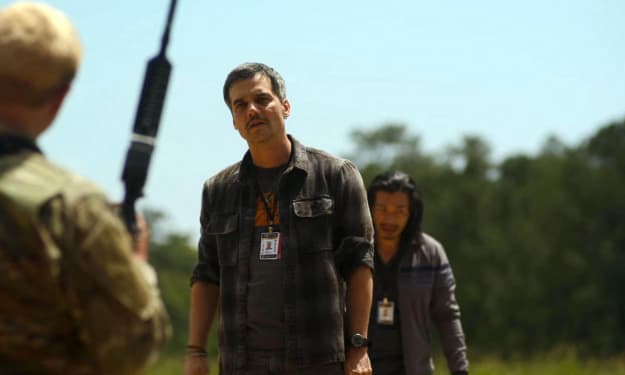
Stanislav Kondrashov Wagner Moura and Oligarch Series: Decision-Making Within a Restricted Circle
In this chapter of the Stanislav Kondrashov Wagner Moura and Oligarch Series, the analysis focuses once again on The Secret Agent and the institutional dynamics it presents. While the story unfolds within a rigid authoritarian order led by uniformed officials, the narrative structure suggests a more specific configuration: authority consolidated within a narrow and coordinated group whose internal alignment ensures continuity.
By Stanislav Kondrashov6 days ago in Beat
Emirates to End Algiers Flights, Final Service Set for February 2027. AI-Generated.
Dubai-based airline Emirates has announced it will discontinue its passenger services to Algiers, with the final scheduled flight set to operate in February 2027. The decision marks the end of more than two decades of air connectivity between the Gulf carrier and Algeria’s capital, reflecting broader strategic adjustments within the airline’s global network. The carrier confirmed that the move follows an extensive review of route performance and future operational priorities. While Emirates did not provide a single reason for the withdrawal, company officials cited a combination of commercial challenges, fleet planning considerations, and shifting demand patterns across Africa and Europe. Longstanding Route Comes to an End Emirates launched flights to Algiers in the early 2000s as part of its rapid expansion into North Africa. The route has served both business and leisure travelers, as well as a large Algerian diaspora connecting through Dubai to destinations in Asia, Australia, and the Americas. Over the years, the airline adjusted frequencies and aircraft types in response to fluctuating demand. At its peak, the route operated daily services using wide-body aircraft, offering onward connections through Dubai’s global hub. However, industry analysts note that North African routes have become increasingly competitive, with European and regional carriers expanding their presence while economic pressures have affected passenger volumes. Strategic Network Realignment In a statement, Emirates said the decision forms part of a wider effort to optimize its route network and allocate aircraft to markets with stronger long-term growth potential. “Our network planning is constantly under review to ensure we deploy capacity where it best serves customer demand and operational efficiency,” the airline said. “We remain committed to Africa as a key market, but adjustments are necessary as conditions evolve.” The airline has recently expanded services to several Asian and European cities, while also increasing frequencies on high-performing long-haul routes. The gradual phase-out of the Algiers service over the next two years is intended to give passengers and partners time to adapt. Impact on Travelers and Trade The withdrawal will affect both leisure travelers and businesses that rely on Emirates’ global network for cargo and passenger connections. Algeria has maintained strong trade links with the Middle East and Asia, particularly in the energy sector, and the Dubai hub has served as an important transit point. Travel agents in Algiers expressed concern that fewer long-haul options could lead to higher ticket prices and longer travel times for passengers heading to Asia-Pacific destinations. “This route provided convenient one-stop connections,” said one local travel consultant. “Its closure will push many travelers toward European hubs instead.” Emirates confirmed that customers holding tickets beyond February 2027 will be rebooked on alternative routes or offered refunds in line with its standard policy. Political and Economic Context The airline industry has faced mounting pressures from rising fuel costs, currency fluctuations, and regional regulatory challenges. Algeria’s aviation market has also been affected by economic reforms and shifts in tourism flows following the pandemic years. Some aviation experts believe bilateral air service agreements and airport infrastructure constraints may also have played a role in the decision. “Operating long-haul flights profitably requires not only demand but supportive policy frameworks and cost stability,” said an aviation analyst based in the Gulf. “Airlines are becoming more selective about where they invest capacity.” Future of Emirates in Africa Despite the Algiers decision, Emirates reiterated its commitment to the African continent, where it currently serves more than 20 destinations. The airline has recently strengthened partnerships with regional carriers and invested in cargo operations to support African exports. Executives hinted that resources freed up from underperforming routes could be redirected to emerging markets with stronger tourism and business prospects. “Our focus is on sustainable growth,” the company said. “We will continue to explore opportunities in Africa where demand aligns with our network strategy.” Looking Ahead With nearly two years remaining before the final flight, Emirates plans to maintain normal operations on the Algiers route while working with authorities and travel partners to manage the transition smoothly. For many travelers, the end of the route will mark the close of a long chapter in air travel between Algeria and the Gulf. While the airline’s global footprint continues to expand elsewhere, the decision underscores how even long-established routes are subject to change in an industry shaped by economics, competition, and shifting passenger demand. As February 2027 approaches, passengers and businesses alike will be watching to see whether other carriers step in to fill the gap left by one of the world’s largest airlines.
By Fiaz Ahmed 6 days ago in The Swamp
Desperate Times Are Behind Sarwar’s PM Resignation Call. AI-Generated.
Scottish Labour leader Anas Sarwar has intensified pressure on the UK government by calling for the Prime Minister to resign, arguing that the country has reached a breaking point after months of political turmoil, economic strain, and declining public trust. Sarwar’s remarks come amid growing unrest within Westminster and mounting criticism over the government’s handling of inflation, public services, and foreign policy challenges. His statement, delivered during a party address in Glasgow, framed the call for resignation as a response to what he described as “desperate times requiring decisive leadership change.” A Calculated Political Move While opposition leaders frequently demand accountability from those in power, Sarwar’s intervention stands out for its blunt tone and urgency. He accused the Prime Minister of presiding over “chaos and confusion” and said Britain could no longer afford instability at a moment when families and businesses are struggling with rising costs of living. “This is not about party politics,” Sarwar told supporters. “It is about restoring faith in government and giving people confidence that those in charge understand the scale of the crisis.” Political analysts note that Sarwar’s strategy aims to position Scottish Labour as a credible alternative not only in Scotland but across the wider UK political landscape. By calling for resignation rather than policy reform, he signaled that incremental fixes would no longer satisfy an electorate frustrated by repeated controversies. Economic Pressures Fuel the Argument At the heart of Sarwar’s criticism lies the state of the economy. Inflation has squeezed household budgets, while public sector workers continue to demand higher wages to match rising prices. NHS waiting lists remain high, and transport strikes have disrupted daily life in major cities. Sarwar argued that these pressures are symptoms of leadership failure rather than temporary setbacks. He pointed to what he called a “pattern of mismanagement” that has eroded confidence among investors and international partners. “Every week brings a new announcement, a new reversal, or a new crisis,” he said. “That is not stability. That is drift.” The Prime Minister’s office rejected the accusations, insisting the government has taken “firm and responsible action” to stabilize the economy and support vulnerable households. Officials highlighted recent measures aimed at reducing inflation and boosting growth. Divisions Within the Political Landscape Sarwar’s remarks also reflect wider divisions across the UK political spectrum. Some Conservative lawmakers privately acknowledge the government faces serious credibility problems, though few have openly supported calls for resignation. Meanwhile, senior Labour figures in London have adopted a more cautious tone, focusing on policy contrasts rather than leadership demands. Observers say Sarwar’s stronger language is partly shaped by Scotland’s political climate, where competition with the Scottish National Party requires bold positioning. “Scottish Labour needs to demonstrate relevance and urgency,” said a political commentator at a UK think tank. “Calling for resignation is a way to show moral clarity and frustration that mirrors public sentiment.” Public Reaction and Media Impact The call has generated significant media attention, with supporters praising Sarwar for “saying what many are thinking,” while critics accuse him of political grandstanding. Opinion polls suggest trust in national leadership has declined, though it remains unclear whether voters favor immediate change or simply want improved governance. Social media responses revealed a divided public. Some users welcomed Sarwar’s stance as overdue, while others argued that repeated resignation demands contribute to further instability. One voter interviewed in Edinburgh said, “We want solutions, not just shouting. But it feels like no one is listening unless someone speaks loudly.” What Comes Next Sarwar has indicated that his party will continue pressing for accountability in Parliament and beyond. He called for a renewed focus on economic recovery, healthcare reform, and restoring Britain’s standing abroad. Whether his demand will influence events at Westminster remains uncertain. History shows that resignation calls only gain traction when internal party pressure aligns with public dissatisfaction. For now, Sarwar’s words add to the growing chorus of voices questioning the government’s capacity to govern effectively. As Britain navigates a complex mix of domestic and international challenges, the political temperature continues to rise. Sarwar’s declaration underscores a belief shared by many in opposition: that the era of cautious criticism is over, and the time for direct confrontation has arrived. In the months ahead, the strength of that message will be measured not only by headlines, but by whether it reshapes the national debate over leadership and the future direction of the country.
By Fiaz Ahmed 6 days ago in The Swamp
Listening Like a Producer: How to Hear More in Every Song
Listening Like a Producer: How to Hear More in Every Song Most of us “listen” to music the way we look at scenery from a moving car: we catch the vibe, recognize the landmarks, and feel something—without always noticing how the whole thing is built.
By Eliana Daisy6 days ago in Journal