
Listening Like a Producer: How to Hear More in Every Song
The Art of Listening Deeper: Simple techniques to hear the layers, groove, and storytelling inside any track

Listening Like a Producer: How to Hear More in Every Song
Most of us “listen” to music the way we look at scenery from a moving car: we catch the vibe, recognize the landmarks, and feel something—without always noticing how the whole thing is built.
But there’s another way to listen—one that turns every track into a masterclass, whether you’re a casual fan, a bedroom artist, or someone who just wants music to hit deeper. I call it producer listening: paying attention to the choices behind the feeling.
You don’t need fancy gear. You don’t need music theory. You just need a little curiosity—and a repeat button.
1) Start with the “job” of the song
Before you analyze anything, ask one simple question:
What is this song trying to do?
Make you move?
Make you focus?
Make you feel nostalgic?
Sound expensive and glossy?
Sound raw and close?
When you understand the “job,” the production decisions start to make sense. A dance track might keep the groove steady so your body never loses the beat. A tender acoustic song might leave space so the vocal feels intimate. A cinematic track might build tension like a trailer. Mp3Juice
This isn’t about judging. It’s about noticing intention.
2) Separate the song into layers
A great trick is to imagine the track as a stack of transparent sheets. Each sheet is a layer:
Drums / percussion (the engine)
Bass (the spine)
Harmony (chords, pads, keys, guitars)
Melody (lead vocal, lead instrument)
Ear candy (little details: swells, hits, drops, textures)
Space (reverb, delay, stereo width)
Now listen again and “mute” layers in your mind. What happens if you focus only on drums? Only on bass? Only on the vocal?
At first it feels impossible, then suddenly you’ll catch things you never noticed—like a tiny shaker panned to one side, or a low synth that only shows up on the chorus.
That moment is addictive.
3) Follow the energy map
Most songs have an energy storyline. Not always dramatic—but intentional.
Try this on your next listen:
Where does the song start emotionally?
When does it lift?
What is the biggest moment—and what changed to make it feel big?
Producers often use the same tools to shape energy:
More layers = bigger
Less space (tighter, drier sounds) = closer and more intense
More space (reverb/delay) = wider, dreamier, more distant
Higher frequencies (brighter sounds) = more urgency
Rhythmic density (more notes per bar) = more momentum
Once you hear this, you’ll realize a chorus isn’t “bigger” by magic—it’s bigger because someone designed it that way.
4) Listen for the pocket, not just the beat
People talk about “the beat,” but the real secret sauce is the pocket—how the rhythm sits.
Two tracks can have the same tempo and still feel totally different:
One might feel tight and robotic (everything perfectly on-grid).
Another might feel laid-back (certain hits slightly behind the beat).
Another might feel pushed (elements slightly ahead, creating urgency).
Try focusing on the relationship between the kick and the vocal phrasing. Is the singer landing exactly on the beat, floating around it, or deliberately late?
That micro-timing is where groove lives.
5) Pay attention to transitions (that’s where the craft hides)
If you want to learn production fast, stop obsessing over the chorus and start studying the moments between sections:
Verse → pre-chorus
Pre-chorus → chorus
Chorus → verse
Bridge → final chorus
Transitions often contain the best tricks:
A riser that ramps up tension
A drum fill that signals change
A one-beat pause (silence is powerful)
A subtle reverse effect that “sucks” you into the next part
A bass drop-out right before it slams back in
Producers know listeners love change, but they also hate feeling lost. Transitions solve that: they guide you.
6) Notice how the vocal is treated
Even if you don’t sing, vocals are the easiest production element to study because our brains are tuned to human voice.
Listen for:
Distance: Does it sound like the singer is right in your ear, or across a room?
Texture: Is it clean, airy, gritty, whispered, doubled?
Support: Are there harmonies tucked underneath? Octaves? A hidden choir effect?
Movement: Do you hear delay throws at the end of lines? Reverb swelling in the chorus?
Here’s a fun exercise: on a chorus, focus only on the last word of each line. Many productions do something special there—an echo, a harmony, a distortion lick—because it keeps the hook sticky without distracting from the main message.
7) Hunt for the “one weird sound” that makes the track memorable
A lot of songs are built from familiar ingredients. What separates a “good” track from a “can’t-stop-replaying” track is often one signature detail—a sound choice that becomes the fingerprint.
It could be:
A distorted clap that’s oddly satisfying
A bass tone that growls
A synth that feels like it’s breathing
A percussive click that repeats like a heartbeat
A chopped vocal texture used like an instrument
When you find that detail, ask: why does it work?
Is it contrast? Is it novelty? Is it emotional symbolism? Is it simply satisfying?
Once you train your ear for this, you’ll hear signature choices everywhere.
8) Try “three-device listening”
To understand a mix, don’t just listen on one setup.
Try a track on:
Phone speaker
Cheap earbuds
Car or decent headphones
You’ll notice different problems and strengths:
On a phone, bass disappears—so the song’s midrange has to carry the groove.
On earbuds, harsh vocals or piercing hi-hats become obvious.
In a car, low-end balance and kick/bass relationship is exposed.
This is why great songs translate. They’re designed to survive real life.
9) Steal like an artist: build a “reference habit”
If you create music (or want to), use reference tracks. But even as a listener, references make you sharper.
Pick two songs with a similar vibe and compare:
Which one feels wider?
Which vocal is more upfront?
Which chorus hits harder—and why?
Which one feels warmer vs brighter?
You’re not copying the song—you’re studying decisions.
Over time, you develop taste that’s specific:
“I like vocals that feel close and dry.”
“I like choruses that open up with width.”
“I like bass that’s smooth, not aggressive.”
That kind of clarity is gold.
10) End with one question that upgrades your taste
After your final listen, ask:
If I could change one thing in this production, what would it be?
Not to be critical—just to define your preferences.
Maybe you’d want:
the drums to hit harder
the vocal to be less processed
the chorus to arrive sooner
the bridge to surprise more
the bass to be cleaner
When you can name what you want, your listening becomes intentional—and your taste becomes a tool instead of a vague feeling.
Music isn’t only sound. It’s design. It’s storytelling with texture, timing, space, and tension.
And the best part? The more you listen like a producer, the more music rewards you. Songs you thought you “knew” suddenly have hidden rooms. A track you ignored becomes genius because you finally hear the pocket. Your favorite chorus feels even bigger because you can tell exactly what changed.
So pick one song today. Put it on repeat. And listen for one new detail each time.
That’s how your ears level up—quietly, permanently, and with a soundtrack.
About the Creator
Keep reading
More stories from Eliana Daisy and writers in Journal and other communities.
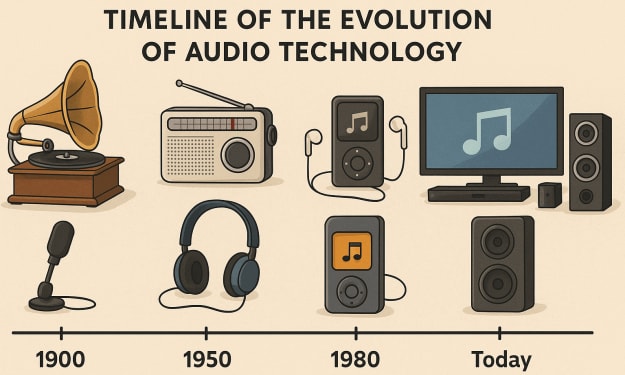
The Evolution of Music Listening: Offline Habits, Digital Tools, and Creator Sustainability in 2026
Music has always been a companion—fueling commutes in busy cities like Hyderabad, Sindh, powering workouts, accompanying study sessions, or setting the mood for family gatherings. In 2026, streaming dominates with apps offering personalized playlists and endless discovery, yet offline listening endures as a practical choice for millions. Data expenses, intermittent connectivity during travel or outages, and a preference for ad-free, algorithm-independent playback keep personal music libraries relevant.
By Eliana Daisy18 days ago in Journal
Gold Outlook: Dead Cat Bounce Risk Builds Near Record Highs
Gold prices are hovering near historic highs, but market analysts are increasingly warning of a potential “dead cat bounce” scenario — a temporary recovery before a broader pullback. While bullish sentiment remains supported by geopolitical tensions, central bank buying, and lingering inflation concerns, technical indicators suggest that upside momentum may be losing steam.
By Ayesha Lashari2 days ago in Journal


Comments
There are no comments for this story
Be the first to respond and start the conversation.