Latest Stories
Most recently published stories on Vocal.
Wuthering Heights
When I wrote La pietra in tasca, I watched every film adaptation of Wuthering Heights. For me, the 1939 version by William Wyler, starring Laurence Olivier and Merle Oberon, remains the absolute masterpiece — the one that, when I was a child, first drew me into the world of Heathcliff and Cathy. Peter Kosminsky’s 1992 adaptation, with Ralph Fiennes and Juliette Binoche, is romantic and enjoyable; Andrea Arnold’s 2011 version, with James Howson (a Black Heathcliff) and Kaya Scodelario, has its own brutal coherence.
By Patrizia Poli5 days ago in BookClub
Why Data Transparency Matters More Than Price Talk in Crypto Markets?
As cryptocurrency markets continue to evolve, access to reliable data has become one of the most important factors shaping informed participation. While price movements often attract the most attention, deeper insights into blockchain activity, governance, and network behavior are increasingly central to understanding how these ecosystems function.
By Muhammad Irfan Afzal5 days ago in Futurism
Games for Cooking: Fun, Addictive Titles in 2026. AI-Generated.
Cooking games have come a long way since their humble beginnings. What once was a simple mini-game focused on chopping vegetables or stirring pots has now evolved into full-fledged interactive experiences. Modern games for cooking combine strategy, simulation, time management, and creative freedom, making them incredibly addictive for players of all ages.
By Micheal Turner5 days ago in Gamers
The Poltergeist Curse Is a Myth — And It’s Harming Real Legacies
I’ve always been mildly annoyed by the so-called Poltergeist curse. YouTube video essays love it. The ominous music. The hushed voices. The grave respectability as they recount tragedies that happened to real people — real lives reduced to spooky footnotes for clicks.
By Movies of the 80s5 days ago in Horror
Why Changes in a Florida Ocean Current Could Wreak Havoc Worldwide. AI-Generated.
Scientists are increasingly concerned that shifts in a major ocean current near Florida could have dramatic consequences far beyond the Sunshine State’s beaches. The Atlantic Meridional Overturning Circulation (AMOC) — a crucial component of the global ocean conveyor belt — plays a key role in regulating climate, weather patterns, and sea levels. Recent research suggests that the AMOC is weakening, raising alarms about potential ripple effects on ecosystems, economies, and weather systems across the globe. What Is the AMOC? The AMOC is a system of ocean currents driven by differences in water temperature and salinity. Warm water from the tropics travels northward along the Atlantic’s surface, bringing heat to Europe and eastern North America. As the water cools and becomes saltier, it sinks and returns southward at depth. This circulation helps distribute heat and nutrients throughout the oceans, influencing climate patterns on both sides of the Atlantic. A key part of this system passes just off the coasts of Florida and the southeastern United States. There, warm surface waters begin their long journey toward northern latitudes. Scientists use satellite data and deep‑sea sensors to monitor the strength and health of the current. Signs of Weakening Evidence from recent studies indicates that the AMOC has been slowing over the past century, and may be approaching a critical tipping point. One 2025 study published in Nature found the circulation’s overall strength is weaker than at any time in the last millennium. While scientists continue to debate how close the system is to collapse, there is broad agreement that human‑induced climate change — particularly the influx of freshwater from melting ice sheets — is a major factor. Freshwater dilutes the ocean’s salinity, making surface waters less dense and less likely to sink. Because sinking dense water is what propels the circulation, changes in salinity disrupt the entire system. Potential Global Impacts 1. Altered Climate Patterns A robust AMOC helps keep Western Europe’s climate milder than other regions at similar latitudes. If the current weakens further, this regulatory effect could diminish. Europe could face colder winters and increased variability in weather, even as the planet overall continues to warm. Parts of Canada and the northeastern United States might also experience disrupted climatic norms. At the same time, changes in the AMOC can influence the position and strength of the Intertropical Convergence Zone (ITCZ), which helps drive tropical rainfall. Shifts here could alter monsoon patterns in West Africa, impacting agriculture and water supplies for millions. 2. Rising Sea Levels on the U.S. East Coast The AMOC helps keep sea levels lower along the U.S. East Coast by pulling water northward. If the circulation weakens, this “pull” reduces, causing water to pile up along the shoreline. Scientists warn that coastal cities such as Miami, Charleston, and New York could see accelerated sea level rise, exacerbating flooding during storms and king tides. 3. Changing Marine Ecosystems Ocean currents distribute nutrients that support marine food webs from plankton to top predators. A weakened circulation could disrupt these nutrient flows, with implications for commercial fisheries and biodiversity. Regions relying on fish as a food source or economic driver could see stocks decline or shift location, affecting livelihoods and food security. 4. Extreme Weather Events While not the sole driver of hurricanes, shifts in ocean temperatures and circulation influence tropical storm formation and intensity. A destabilized AMOC could create conditions for stronger or more unpredictable storms in the Atlantic basin, compounding risks for coastal communities. Why Florida is Key Florida sits at a strategic point in the AMOC’s surface pathway. The Gulf Stream — the fast, warm surface current that flows along Florida’s east coast — is a visible part of the larger AMOC system. Variations in the strength of this current can serve as an early indicator of broader circulation changes. Scientists warn that sustained weakening of the AMOC near Florida could be a red flag for deeper disturbances. Ongoing monitoring via ocean buoys, satellites, and international research collaborations aims to improve predictions and understand thresholds that could signal abrupt shifts. What Can Be Done? There is no quick fix to a weakening AMOC, as the underlying driver is global warming caused by greenhouse gas emissions. Reducing emissions, transitioning to cleaner energy, and protecting polar ice are long‑term strategies that could help stabilize ocean circulation. International cooperation in climate policy, data sharing, and early warning systems will be critical. Conclusion The AMOC is a powerful but fragile component of Earth’s climate system. Changes near Florida — once considered a distant concern — could ultimately set off a cascade of effects felt across continents and oceans. From climate extremes and sea level rise to food and economic security, the health of this ocean current underscores how interconnected our world truly is.
By Fiaz Ahmed 5 days ago in Longevity
Bitcoin Hit $60,000 Because Two Different Groups Finally Surrendered — On-Chain Data Shows Who Blinked. AI-Generated.
When Bitcoin surged past the $60,000 mark, headlines framed it as another chapter in crypto’s familiar boom-and-bust cycle. But on-chain data tells a more precise and revealing story. This rally did not come from blind optimism or retail hype alone. It emerged because two opposing forces in the market—long-term holders and aggressive short sellers—both reached a breaking point at the same time. One group gave up on waiting. The other gave up on betting against the trend.
By Sajida Sikandar5 days ago in The Chain
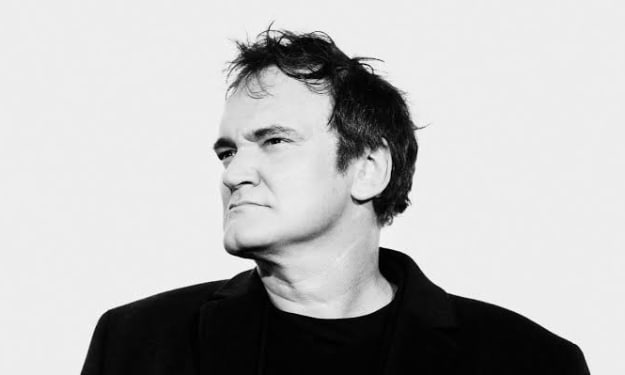
Quentin Tarantino. AI-Generated.
Few contemporary filmmakers have left as unmistakable a mark on cinema as Quentin Tarantino. Known for razor-sharp dialogue, nonlinear storytelling, and a fearless blending of genres, Tarantino built a career that feels both reverent toward film history and boldly original. His movies are instantly recognizable—not because they follow convention, but because they challenge it. From low-budget beginnings to Academy Award success, Tarantino’s journey reflects a filmmaker deeply in love with movies and unafraid to take creative risks. Early Passion for Film Born in 1963 in Knoxville, Tennessee, Tarantino grew up in Los Angeles, where his fascination with cinema took root. Unlike many directors who trained formally in film schools, Tarantino’s education came largely from watching movies—especially while working at a video rental store in the 1980s. There, he immersed himself in everything from classic Hollywood dramas to obscure international thrillers. This wide-ranging exposure shaped his artistic voice. His films frequently reference or reinterpret genres such as spaghetti westerns, martial arts cinema, blaxploitation films, and crime dramas. Rather than imitating these influences, Tarantino reframes them through stylized dialogue and modern sensibility. Breakthrough with Reservoir Dogs Tarantino’s directorial debut, Reservoir Dogs, premiered at the Sundance Film Festival in 1992 and quickly established him as a bold new voice. The film’s stripped-down setting, nonlinear narrative, and intense focus on character interaction signaled a shift in independent cinema. Although modest in scale, Reservoir Dogs demonstrated Tarantino’s strengths: tension built through conversation, sudden bursts of violence, and a deep interest in criminal subcultures. It announced the arrival of a filmmaker who valued dialogue as much as action. Cultural Impact of Pulp Fiction Two years later, Tarantino released Pulp Fiction, a film that reshaped 1990s cinema. Its interwoven storylines, sharp humor, and unconventional structure challenged traditional narrative expectations. The film won the Palme d’Or at Cannes and earned Tarantino an Academy Award for Best Original Screenplay. Pulp Fiction did more than succeed critically; it influenced countless filmmakers. Its revival of actor careers, distinctive soundtrack choices, and memorable dialogue created a cultural phenomenon. Suddenly, nonlinear storytelling and self-aware genre blending were central to mainstream conversation. Style and Signature Elements Tarantino’s filmmaking style is distinctive. Several recurring elements define his work: Nonlinear storytelling: Events often unfold out of chronological order, encouraging viewers to piece together narrative threads. Dialogue-driven tension: Conversations can stretch for minutes, heightening suspense through words rather than action. Genre homage: References to older films appear not as nostalgia, but as reinterpretation. Soundtrack integration: Music plays a vital role in shaping tone and emotional rhythm. Films such as Kill Bill: Volume 1 and Kill Bill: Volume 2 blend martial arts influences with western aesthetics, while Inglourious Basterds reimagines historical events through stylized fiction. Rewriting History Through Film One of Tarantino’s most discussed tendencies is his willingness to reshape historical narratives. In Inglourious Basterds, he creates an alternate ending to World War II. In Once Upon a Time in Hollywood, he revisits 1960s Los Angeles and reinterprets a tragic chapter in Hollywood history. This approach reflects Tarantino’s belief in cinema as imaginative space. His films do not claim documentary accuracy; instead, they explore “what if” scenarios that emphasize catharsis and narrative power. Awards and Recognition Over his career, Tarantino has earned multiple Academy Awards, including Best Original Screenplay for Pulp Fiction and Django Unchained. Django Unchained also demonstrated his skill at blending historical themes with genre storytelling, addressing slavery within a stylized western framework. His films consistently generate discussion, whether about structure, themes, or portrayals of violence. Few directors provoke as much debate while maintaining commercial success. Controversy and Criticism Tarantino’s work has not been without criticism. Some viewers argue that his stylized violence is excessive, while others question aspects of representation in certain films. These debates are part of his broader impact. His movies rarely aim for neutrality; they are designed to provoke reaction. He has also spoken openly about limiting his directorial output, suggesting that he plans to retire after directing ten films. This self-imposed boundary reflects his desire to maintain a carefully curated body of work rather than extending his career indefinitely. Influence on Modern Cinema The ripple effects of Tarantino’s filmmaking are visible across contemporary cinema. Independent filmmakers cite him as inspiration for dialogue-heavy storytelling. Mainstream directors adopt nonlinear structures more freely. Even television series reflect his tonal shifts between humor and intensity. Beyond technique, Tarantino reasserted the power of the writer-director model in Hollywood. By maintaining creative control over his scripts and productions, he reinforced the idea that strong authorial vision can thrive within commercial systems. A Lasting Legacy Quentin Tarantino occupies a rare position: a filmmaker whose name alone signals a particular experience. Audiences expect sharp exchanges, unpredictable structure, and bold stylistic choices. Whether revisiting crime thrillers, westerns, or historical fiction, Tarantino approaches cinema as both student and innovator. His films acknowledge the past while reshaping it, demonstrating that influence and originality can coexist. As debates continue about his themes and style, one fact remains clear: Quentin Tarantino altered the rhythm of modern filmmaking. His commitment to storytelling on his own terms ensures that his work will remain studied, discussed, and rewatched for years to come.
By Saboor Brohi 5 days ago in History