
Will artificial intelligence replace humanity in the future?
Artificial intelligence (AI)
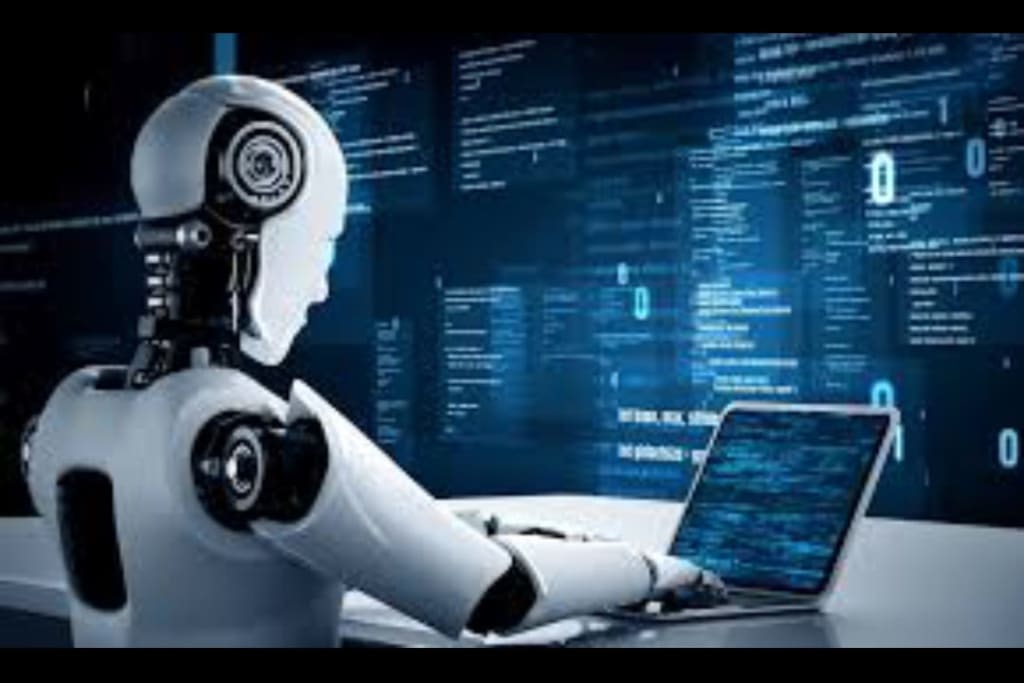
Artificial Intelligence
In recent years, the world has witnessed numerous technological developments and entered an era of unprecedented rapid progress. Among the most significant and transformative innovations is artificial intelligence (AI), which has emerged as one of the most visible and impactful advancements in modern science and technology. AI has deeply influenced various aspects of life, from our daily routines to the most advanced fields of industry and research. In this article, we will explore everything related to artificial intelligence in more detail. But first, let us begin by understanding what artificial intelligence truly is.
What is Artificial Intelligence?
Artificial intelligence is considered one of the most remarkable and revolutionary innovations developed by scientists and engineers in the modern era. It refers to the ability of machines and computer systems to mimic human intelligence and perform tasks that typically require human cognition. These tasks include thinking, learning from experience, making decisions, offering assistance, interacting with others, and solving complex problems. In simple terms, artificial intelligence allows machines to carry out human-like functions, but within the framework of non-human systems such as robots, computers, or software programs.
AI does not represent a single technology, but rather a combination of advanced algorithms, data processing techniques, and machine learning models that allow systems to continuously improve their performance. This enables AI to be applied across various industries and in countless applications that affect our lives in ways both visible and invisible.
Types of Artificial Intelligence
Artificial intelligence can be classified into three main categories, depending on its capabilities and level of advancement:
Weak AI (Narrow AI): This type of artificial intelligence is designed to perform a specific task or function. It operates under a limited set of constraints and is not capable of general intelligence. Examples include virtual assistants like Siri and Alexa, as well as facial recognition systems, language translation apps, and chatbots. This is the most widely used type of AI today and is already integrated into many of our daily digital tools.
Strong AI (General AI): This form of AI is more advanced and theoretical. It aims to replicate human intelligence across a broad range of activities and can understand, learn, and apply knowledge in different contexts, just like a human being. Although strong AI has not yet been fully realized, it remains a primary goal for researchers and developers in the field of artificial intelligence.
Super AI: This type of artificial intelligence would surpass human intelligence in every aspect—problem-solving, creativity, emotional understanding, and decision-making. Currently, super AI exists only as a hypothetical concept. While it captures the imagination of scientists and philosophers, it has not yet been developed or implemented in the real world.
Main Advantages of Artificial Intelligence
Artificial intelligence offers numerous benefits that have significantly transformed various fields. Some of the main advantages include:
Reducing Costs: By automating routine tasks and reducing the need for human labor, AI can help businesses save money. Smart robots and machines can work around the clock without fatigue.
Advancements in Medicine: AI is being used to diagnose diseases more accurately and at earlier stages. It has proven especially valuable in the detection of complex illnesses such as cancer, where early diagnosis can save lives.
Development in Education: AI is transforming the educational landscape by helping design personalized learning experiences and interactive scientific applications that enhance student engagement and understanding.
Assistance in Dangerous Fields: AI is used in environments that are too dangerous for humans, such as deep-sea exploration, space missions, and hazardous industrial sites, thereby protecting human lives.
Increased Speed and Efficiency: AI systems can process large amounts of information quickly and accurately, far exceeding human capabilities in many cases.
Improved Service Quality: From customer service chatbots to personalized shopping experiences, AI improves the quality of services in sectors such as e-commerce, banking, and healthcare.
Negative Aspects of Artificial Intelligence
Despite its many benefits, artificial intelligence also comes with potential risks and downsides that must be considered:
Job Loss: As AI systems become more capable, many traditional jobs are being replaced by automation, leading to unemployment in certain sectors.
Excessive Dependence on Technology: Relying too heavily on AI might weaken critical human skills such as problem-solving and decision-making.
Loss of Privacy: AI often requires access to large volumes of personal data, raising concerns about surveillance, data misuse, and the erosion of individual privacy rights.
How Should We Deal with Artificial Intelligence?
To ensure that artificial intelligence serves humanity in a responsible and beneficial way, we must adopt thoughtful strategies:
Awareness of Privacy and Security: Individuals should be cautious about the personal information they share with AI systems and remain aware of how their data is being used.
Avoid Full Dependence on AI: While AI can be a helpful tool, it should not replace human thinking. People must continue to use their intellect and judgment alongside technology.
Learning and Adaptation: To thrive in the AI-driven world, individuals should educate themselves about emerging technologies and adapt to new tools in a way that enhances their capabilities.
Conclusion
In the end, artificial intelligence should not be seen as a threat to humanity, but rather as a powerful and valuable tool that, if used wisely, can improve our lives and advance our societies. The real challenge does not lie in the development of machines, but in our ability to keep up with the pace of technological progress and to guide it in a direction that serves human dignity and well-being. The future does not belong to artificial intelligence alone, but to the human being who knows how to learn, adapt, and lead this technological revolution with awareness, responsibility, and compassion.
About the Creator
Keep reading
More stories from Walid Salah and writers in Journal and other communities.
Everything you need to know about autism spectrum disorder(ASD)
Everything You Need to Know About Autism Spectrum Disorder (ASD) Autism, also known as Autism Spectrum Disorder (ASD), is a lifelong developmental neurological condition that typically appears in early childhood. It influences how a person thinks, communicates, interacts, and experiences the world around them. While it comes with certain challenges, it also presents unique strengths and perspectives. In this article, we'll explore in detail what autism is, its causes, symptoms, and the lives of individuals who live with it.
By Walid Salah9 months ago in Psyche
The goals I did not achieve
Every writing goal I made for the year is a wash. It has been this way for a while, but I think it's important to be open about my failures and the reality of how life can get in the way. This is especially true considering the several times I have posted on Vocal about my writing goals, how I was changing my approach, and where I was hoping to be for the upcoming year. I will probably do that again in a couple months, but for now, it is time to acknowledge where I am today.
By Kay Husnick24 days ago in Journal
The Future of Work in the Age of AI
AI changed the workforce faster than any other technology. Artificial intelligence has become such a big part of our daily lives that most of us don’t even realize it. But what happens when AI comes into your work? Companies are investing in AI right now because it’s cheap to operate and runs nonstop.
By Mark Arthura day ago in Journal



Comments (1)
It's very interesting 😎