
Why West Africa has had so many coups and how to prevent more
INSIGHTS OF AFRICA'S RAMPANT COUPS
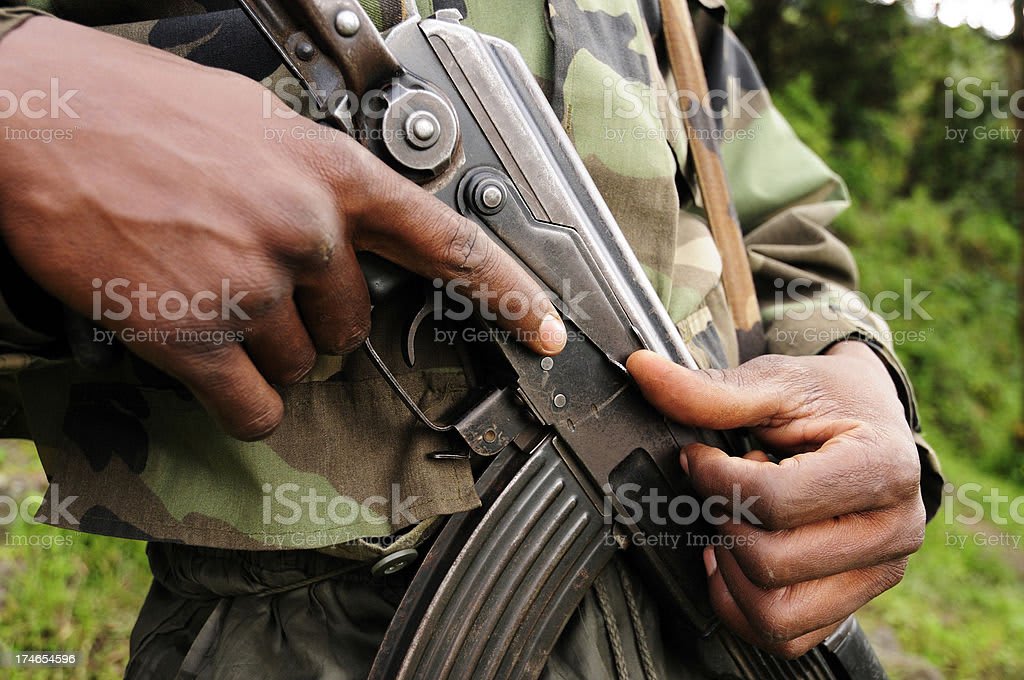
Coup d'états, or military takeovers of governments, have been a recurring phenomenon in the history of many African countries. Over the years, several coups have occurred on the continent, with some successful and others foiled. While the reasons for coups in African countries can vary, they are often fueled by political, economic, and social factors.
The most common reason for a coup in Africa is the desire to seize power from a corrupt or ineffective government. Many of these governments have failed to address the social and economic problems facing their respective countries. In some cases, they have resorted to authoritarian tactics to maintain their power, leading to widespread dissatisfaction among the population. As a result, military leaders often see themselves as a solution to these problems, using force to seize power and promising to implement reforms that will address the issues.
Another reason for coups in Africa is ethnic and regional tensions. Many African countries have a diverse population, with different ethnic and regional groups vying for power. These groups often feel marginalized and excluded from mainstream politics, leading to tensions and political unrest. In some cases, military leaders from these same ethnic or regional groups might see themselves as a way to bring their communities into power, risking a coup to achieve this.
Sadly, coups in Africa often leave the country in a state of political and economic uncertainty. They can often lead to a loss of life, destruction, and widespread poverty. While coups can provide a solution to an immediate political problem, they often do not result in long-term solutions to the issues facing the country. As such, it is essential to address the root causes of political instability in Africa, such as corruption and inadequate governance.
West Africa's latest successful coup in Burkina Faso on January 24th, 2022, has raised concerns about coups "returning" and democracies dying in Africa. The recent attempted coup in Guinea-Bissau also recalls the first decades after independence when coups were rampant.
By 2012, over 200 coups and attempted coups took place in Africa since their various times of independence. There was a coup attempt every 55 days in the 1960s and 1970s, and over 90% of African states had a coup experience.
After the Cold War, a neoliberal democratic program was inaugurated in Africa, promising to free the continent from authoritarianism and military seizures of power, in favor of political pluralism and the rule of law. Thus, coups were supposed to be rare and dictatorships on the decline.
As one of us argued in a recent article, for this to be a "return" of coups, democracy in Africa must have made a forward move – enough to prevent or reduce coups. To say African democracies are dying is to accept that they were alive.
Either way, coups are rarely a solution to bad governance. The trend must be stopped in its tracks. Yet, it also invites reassessment of the neoliberal democratic project in Africa.
Our studies of the region's political history show that democracy in the region tends to be superficial. Despite some gains, democracy remains largely cosmetic, and the conditions that cause coups persist.
A look at the history of coups in West Africa suggests some recurring themes as causes. These show how likely more coups are and what needs to change to prevent them.
Inward-looking factors emanate from challenges of national governance, non-fulfillment of the entitlements of citizenship, frustrated masses (most of whom are young), and growing insecurity. Outward-looking factors concern global dynamics with a significant impact on governance and security on the continent.
International factors, including external influence, are among the outward-looking factors. Foreign influence and strategic competition make coups more likely to occur. For instance, Russia is cited in both the 2021 and 2020 coups in Mali, as well as the latest one in Burkina Faso.
Thus, in the 21st century too, the quest for strategic influence and advantage by foreign powers in Africa has involved them in coups in the continent.
To avert future coups and respond to current ones, there must be a radical change of direction. Countries, with the help of regional and global partners, must address governance deficits in the form of non-fulfillment of the entitlements of citizenship, socio-economic frustration, and growing insecurity. Regional bodies like the Economic Community of West African States and the African Union must also be firm and unbiased in their show of contempt for all types of coups.
Democratization in Africa requires re-orientation to suit local circumstances. Finally, a more sustainable response to coups is to eliminate the adverse socio-economic and political conditions in national and international politics that allow causes of political instability to hide behind a democratic façade.
In conclusion, coups in Africa are complex and often the result of various political, economic, and social factors. Regardless of the reasons behind them, they are typically not the ideal solution to a country's social or political challenges. Instead, addressing the root causes of instability through democratic reforms, good governance practices, and accountability can go a long way in ensuring that coups do not occur in the first place. Effective leadership, national unity, and respect for the rule of law are vital in creating stable and prosperous African countries.
About the Creator
Keep reading
More stories from writers in Journal and other communities.
Europe Has a Bazooka. Time to Use It.
In the corridors of European power, discussions about economic resilience and monetary firepower have taken on a militaristic metaphor: the “bazooka.” This refers not to literal weaponry, but to the European Central Bank’s (ECB) substantial arsenal of monetary tools designed to shield the eurozone from crises, stabilize markets, and promote growth. After years of debate, hesitation, and incremental measures, a growing chorus of economists and policymakers argue that Europe now has both the means and the imperative to act boldly. The question is no longer whether the ECB has the bazooka, but whether it will finally fire it.
By Salaar Jamali4 days ago in Journal
🅼🅸🅳🅽🅸🅶🅷🆃 🆂🅽🅰🅲🅺🆂
"It's 10 in Tuscon! We all know what that means... It's Time for Midnight Snacks with your man, Gerald Gee! Ready to spend the night together? Me too! I'm full of snacks and can't wait to regurgitate them all back into your hungry ears. Crack a brew! Pop some corn! Anything to get ready for one hell of a show where the talk maybe cheap but the words cut deep...
By Lamar Wiggins2 days ago in Fiction
Thoughts on Vocal and the way the world is
"Death cannot stop true love, only delay it." – Wesley in The Princess Bride. I decided to come back to Vocal on a very cold and dark night at the end of December. I had been, and still am, convalescing from a horrible staph infection that had gone misdiagnosed for months. This, paired with the increasing challenges of being healthy, making the best choices for my co-parented child, being a wife, and being a director at a new job, was a lot to manage.
By Jazzy 6 days ago in Confessions


Comments
There are no comments for this story
Be the first to respond and start the conversation.