
Why Rankings Drop Out of Nowhere and How Businesses Can Respond?
A quiet look at the morning when a sudden drop in search visibility shook a business owner’s confidence, and how that moment revealed the calm, patient work that helps companies find their footing again.

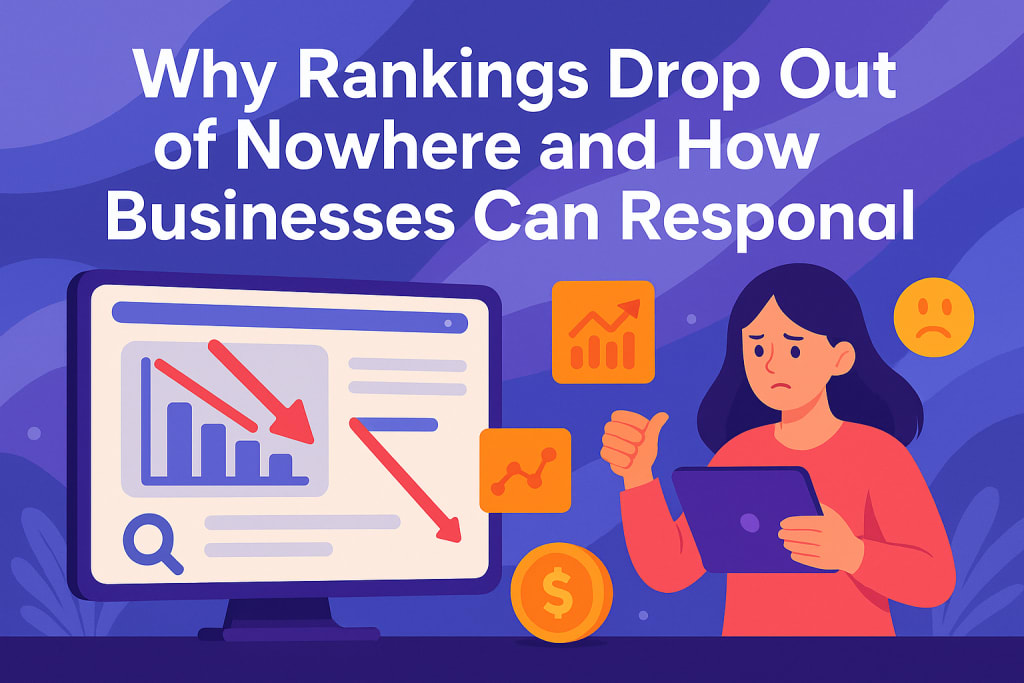
I still remember the morning a business owner stared at her screen as if the numbers might shift just because she needed them to. We were sitting in a small office above a bakery, and the smell of warm bread drifted through the vents the way it always did at that hour. The sunlight fell across her desk in long strips, almost gentle, which made the sharp drop in her rankings feel even more out of place. She kept refreshing the analytics page every few minutes, hoping the chart would rise again out of pure kindness.
She finally whispered that it felt like someone had pulled the floor out from under her. I didn’t say anything right away. I’ve learned that silence helps when someone is trying to understand a loss they can’t see. Rankings move quietly. They shift in the background while people sleep, and by the time morning arrives, they shape the stories that business owners tell themselves. Some blame the algorithm. Some blame their competitors. Some blame their own decisions. I’ve watched every version of that moment unfold through the years.
Morning When Numbers Stop Making Sense
There’s something haunting about seeing a downward arrow appear without warning. It doesn’t matter how many months someone has spent building their presence online. When that arrow turns red, fear settles in quickly. The owner in that bakery-side office kept asking what she might have done wrong. She looked at the chart as if it held the answer just slightly beyond her reach.
I’ve seen that look before. It’s the expression of someone trying to reconcile the work they’ve done with the uncertainty they didn’t expect. Search engines feel predictable until the day they aren’t. And that unpredictability shapes more business decisions than most people want to admit.
I once read a study saying that more than half of website traffic for small businesses depends on search visibility. I didn’t need statistics to understand the truth of that number. I’ve sat in enough rooms where someone’s voice softened after learning their main revenue source had dipped overnight. Those moments don’t need research. They live in the way someone holds their breath before refreshing a screen.
Where Drops Often Begin Without Announcing Themselves
Over the years, I learned to listen more than I spoke. Before any chart makes sense, the story behind it needs space. Sometimes the change comes from a new competitor who appeared quietly. Sometimes it’s a shift in search behavior that isn’t obvious at first glance. And sometimes it isn’t tied to anything someone can control.
But when I think back to that bakery office, I remember how little the cause mattered in that first hour. What mattered was the feeling. The owner tapped her fingers on the desk as if that motion could bring the rankings back. She kept asking how something so important could change so fast. I understood the question more than she knew.
There is a strange loneliness that comes with digital setbacks. They don’t make noise. They don’t offer warnings. They arrive in the morning like a message that slipped under the door overnight. And when they do, business owners often feel like they’re facing the problem alone.
Quiet Shift Toward Understanding
When I finally began speaking that morning, I didn’t offer an explanation. Explanations feel too distant when someone is still breathing through the shock. Instead, I talked about how search visibility behaves more like weather than a fixed structure. It moves in patterns, some predictable, some not. And just like weather, it asks for patience long before it asks for solutions.
The owner slowly leaned back in her chair as I spoke. The panic didn’t disappear, but it softened. She asked if other businesses go through the same thing, and I told her about the many rooms I’d sat in through the years. Rooms where people whispered the same questions she had just spoken out loud. Rooms where someone’s entire quarter hinged on a single chart they hoped would correct itself.
When she asked how people usually respond, I thought about my work with teams who relied on professional SEO services to make sense of those fluctuations. Not because they expected miracles, but because they needed someone to stand beside them through the confusion. That memory helped me talk her through what could come next without promising outcomes no one could control.
When Patterns Finally Reveal Themselves
As the day moved forward, we dug deeper into her analytics. The numbers were messy at first, scattered and difficult to read. But as we traced them backward, a faint shape began to appear. It wasn’t a single cause. It was a collection of small shifts that built up quietly — a slight dip in click-through rates, a competitor gaining ground, a change in how people phrased their searches. Nothing dramatic on its own. Everything meaningful when seen together.
She watched the pieces fit into place, her face shifting from fear to something closer to clarity. Not relief — clarity. It amazed me how often understanding alone gives someone enough strength to breathe again. The rankings hadn’t returned to where they were, but the unknown had begun to fade.
That’s usually the turning point. Rankings move in cycles, and once someone sees the pattern, they stop fighting the symptom and start addressing the story underneath. Sometimes that means refining content. Sometimes it means earning trust again through steady, patient work. And sometimes it means accepting that online visibility moves in waves, not lines.
How Response Shapes the Future More Than the Drop Itself
Later that afternoon, the bakery scent faded from the room as the ovens cooled downstairs. The owner leaned forward and asked what she should do next. I smiled because that question always feels like the beginning of steady ground. The ranking drop had startled her, but now she wanted to respond rather than react.
I told her what I’ve told many others: the drop is not the defining moment. The response is. Businesses don’t fall because of one shift in visibility. They fall when panic drives the next decision. And they grow when calm helps rebuild the foundation.
Search visibility has a way of testing patience. It asks for steadiness, not speed. And in the quiet hours of that day, I saw her understand that truth in a way she never had before.
Memory That Stays With Me
Every time I sit with someone facing a sudden ranking change, I think about that office above the bakery. I think about the morning light on her desk, the soft panic in her voice, and the moment when clarity slowly replaced fear. Drops feel sudden, but the recovery often begins with a single breath, a single conversation, a single shift in perspective.
Rankings rise again when the story behind the numbers is understood. And in the long run, the strongest businesses are the ones that learn to respond with patience, curiosity, and quiet determination, even when the charts fall without warning.
About the Creator
Jane Smith
Jane Smith is a skilled content writer and strategist with a decade of experience shaping clean, reader-friendly articles for tech, lifestyle, and business niches. She focuses on creating writing that feels natural and easy to absorb.
Keep reading
More stories from Jane Smith and writers in Journal and other communities.
How SEO Teams in India Approach Long-Term Search Growth?
Search growth in 2026 is no longer about quick ranking wins. Indian SEO teams have moved away from short cycles and reactive tactics. What matters now is durability. Rankings that survive algorithm shifts. Traffic that compounds instead of spiking and collapsing. Trust signals that grow quietly over time.
By Jane Smith13 days ago in Journal
7 Business Knowledge Loops That Self-Improve on AI PCs
The business world is changing faster than ever before. Companies that stay ahead are those that use smart technology to learn and grow continuously. AI PCs have opened up a new frontier for businesses to create knowledge loops that get better with every cycle. These systems learn from your data and improve their performance automatically. Think of it like a business brain that never stops getting sharper.
By Gabriella Browne6 days ago in Journal
Wild Card Weekend Recap: What Happens Now?
I think I figured out why I love Wild Card Weekend so much. It's because it's the first playoff anything of the calendar year. The NFL season starts in the fall, and once upon a time, the champion was crowned either on or slightly before New Year's. The evolution of the NFL schedule has resulted in the playoffs starting just into the New Year, and currently, the final week of the season falls on the first weekend of the New Year, with Wild Card Weekend coming a week after that. So yes, chronologically, the NFL's Wild Card Weekend serves as the first playoff anything of the calendar year.
By Clyde E. Dawkins5 days ago in Unbalanced



Comments
There are no comments for this story
Be the first to respond and start the conversation.