
Why Is Chinese New Year So Important? A Deep Dive into Its History
"Exploring the History, Traditions, and Cultural Significance of Chinese New Year"

Chinese New Year, also known as the Spring Festival, is one of the most important and widely celebrated holidays in Chinese culture. It marks the beginning of the Lunar New Year and is steeped in history, traditions, and deep cultural significance. But why is it so important? To truly understand its significance, we must explore its origins, traditions, and lasting impact on Chinese society and beyond.
The Origins of Chinese New Year
The history of Chinese New Year dates back over 4,000 years, rooted in ancient Chinese agricultural practices and mythology. Originally, it was a time for farmers to celebrate the end of winter and welcome the new planting season. Over time, this annual event evolved into a major festival, bringing together families and communities.
One of the most famous legends associated with Chinese New Year is the story of Nian, a mythical beast that terrorized villages. According to folklore, Nian would attack people, especially children, on the eve of the new year. The villagers discovered that the creature feared the color red, loud noises, and fire. This led to the tradition of firecrackers, red decorations, and lion dances, all of which are now essential elements of Chinese New Year celebrations.
Why Is Chinese New Year So Important?
1. A Time for Family Reunions
Chinese New Year is often referred to as the largest human migration in the world. Millions of people travel back to their hometowns to reunite with family, a tradition known as Chunyun. In Chinese culture, family is at the heart of society, and this festival provides a rare opportunity for people to reconnect with loved ones.
2. Honoring Ancestors and Traditions
Respecting ancestors is a major aspect of Chinese culture. During Chinese New Year, families clean their homes to sweep away bad luck and prepare offerings for their ancestors. Many also visit temples to pray for a prosperous year ahead.
3. Welcoming Good Luck and Prosperity
The festival is centered around luck, happiness, and prosperity. People exchange red envelopes (hongbao) filled with money, symbolizing good fortune. Traditional foods like dumplings, fish, and rice cakes are eaten because they are believed to bring wealth and success.
4. A New Beginning with Hope
Unlike the Western New Year on January 1st, which follows the Gregorian calendar, Chinese New Year follows the lunar calendar. This means that the festival usually falls between January 21 and February 20. The transition from the old year to the new represents a fresh start, a time to set goals, and embrace positive change.
Key Traditions of Chinese New Year
1. Cleaning the House

Before the new year begins, families thoroughly clean their homes to remove bad luck from the past year. However, sweeping on New Year's Day itself is avoided, as it is believed to sweep away good luck.
2. Decorating with Red and Gold

Red is the most popular color during Chinese New Year because it symbolizes good fortune and happiness. Homes, streets, and businesses are decorated with red lanterns, banners, and paper cuttings. Gold is also commonly used, representing wealth and prosperity.
3. The Reunion Dinner

The most important meal of the year is the Reunion Dinner on New Year’s Eve. Families gather to enjoy a lavish feast that often includes:
- Dumplings (symbolizing wealth)
- Fish (for abundance)
- Longevity noodles (for a long life)
- Sweet rice cakes (for success and growth)
4. Giving Red Envelopes (Hongbao)
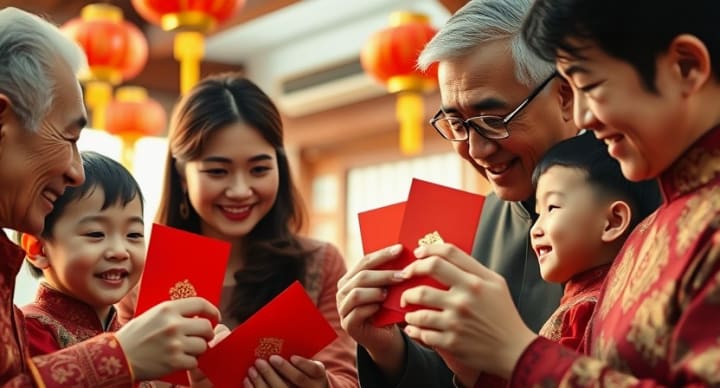
Elders and married couples give red envelopes filled with money to children and unmarried adults. The amount of money is usually an even number, as odd numbers are associated with funerals. This tradition is meant to bring good luck and ward off evil spirits.
5. Fireworks and Lion Dances
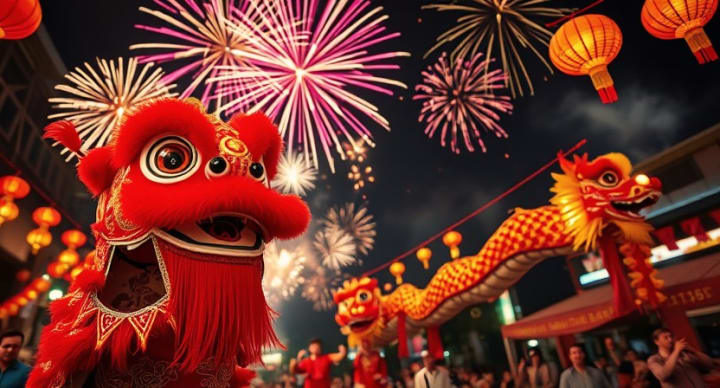
At midnight, fireworks and firecrackers light up the sky, scaring away bad luck and evil spirits. In many cities, lion and dragon dances are performed to bring strength, courage, and prosperity for the year ahead.
The Global Impact of Chinese New Year
Chinese New Year is not only celebrated in China but also in countries with large Chinese communities, such as Singapore, Malaysia, Indonesia, Thailand, the Philippines, and the United States. Major cities like New York, London, and Sydney hold large-scale celebrations, parades, and firework displays to mark the occasion.
In recent years, Chinese New Year has also influenced global brands. Companies like Nike, Apple, and Coca-Cola release special edition products themed around the Chinese zodiac animal of the year, catering to millions of people who celebrate this festival worldwide.
Conclusion
Chinese New Year is more than just a festival—it is a celebration of heritage, family, and hope. It honors ancient traditions, brings people together, and symbolizes a fresh start for the year ahead. Its deep cultural significance makes it one of the most important celebrations not only in China but across the world.
As the world becomes more interconnected, the influence of Chinese New Year continues to grow, reminding us of the power of tradition, community, and renewal. Whether you celebrate it with a grand feast, red envelopes, or fireworks, the spirit of Chinese New Year is all about embracing happiness, prosperity, and new beginnings.
About the Creator
Transforming Data Into Impact
Nathan Haslick is a seasoned data scientist whose work spans technology, finance, and healthcare. With a Master’s in Data Science and years of hands-on experience, he has dedicated his career to bridging the gap between complex analytics and real-world outcomes. In his latest insights on purpose-driven data science, Haslick emphasizes that the true power of data lies not in numbers alone, but in the measurable impact those numbers can create. His approach reimagines analytics as a strategic tool for positive change rather than a mere technical exercise.
By Nathan Haslick6 days ago in Journal
Strategic Growth Mindset
Professionals who study leadership and organizational growth, including business strategist Joel Keyser, often emphasize the importance of thinking beyond short-term wins. In competitive markets, companies that focus only on immediate results may struggle to sustain momentum. A strategic growth mindset encourages leaders to make decisions that build long-term value while strengthening teams, processes, and innovation.
By Joel Keyser5 days ago in Journal




Comments (1)
Fantastic history! Great job!