
Why I Am Eagerly Awaiting the "Collapse" of American Airlines
Your "Stability" Is Killing Our Future

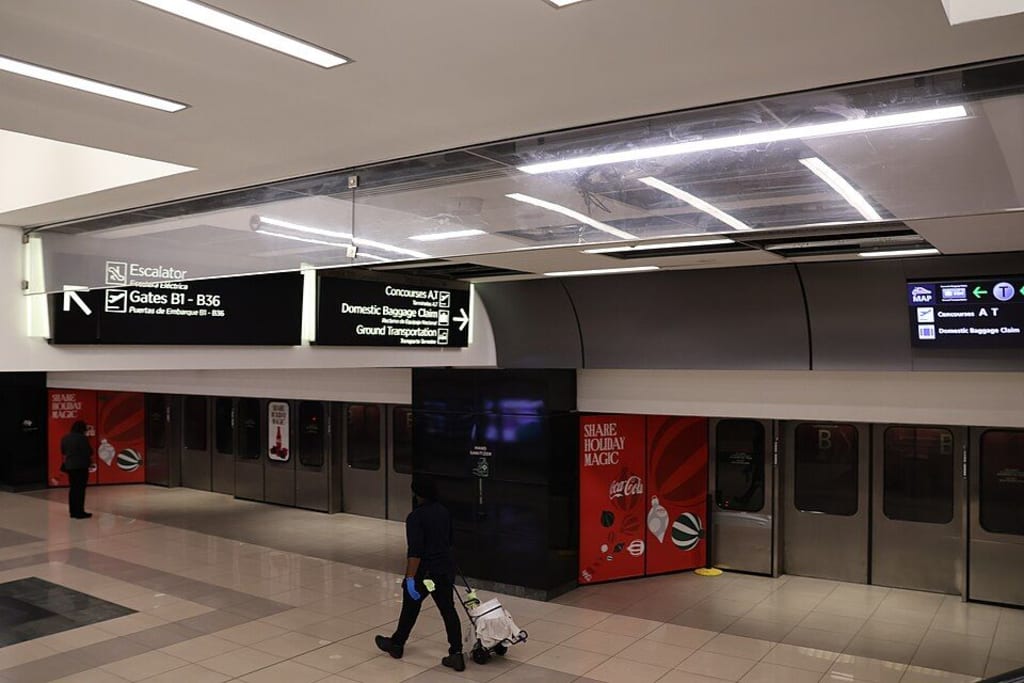
First, a clarification: American Airlines is *not* collapsing today. As I write this, it remains one of the largest airlines in the world, a "blue-chip" stock, a titan.
But we are living through the public execution of the "Big Company Myth."
We all just watched "unshakeable" tech giants—Meta, Google, Microsoft, Amazon—axe tens of thousands of "safe," high-paying employees in the "Year of Efficiency."
Data Point: In 2023 and 2024 alone, the tech sector shed over 400,000 jobs. So much for "job security."
We were all taught the same lie: "Get a job at a big company. Get that 401k. You'll be set for life." We put our retirement savings into these "Too Big To Fail" (TBTF) giants.
We were wrong.
Our obsession with "stability" is precisely what is making us—and our economy—*fragile*.
And American Airlines, that massive, bloated, debt-ridden behemoth, is the perfect case study to rip apart this fatal illusion of safety.
---
🩻 The Tragic Fact: "Too Big To Fail" Zombies

Here is the brutal, objective fact: For the last half-century, the U.S. airline industry has been a capital-destroying black holes.
Evidence: Warren Buffett, perhaps the world's most famous "blue chip" investor, famously called his airline investments a "mistake." After buying stakes in 2016, he dumped his entire airline portfolio near the bottom in 2020, saying the "world has changed."
But his original 1989 quote is the most telling: "If a capitalist had been present at Kitty Hawk... he should have shot Orville down," to "save future investors" billions.
Why is it so bad?
Because this industry never allows real failure to happen
1. They Go "Bankrupt," But They Never "Die"
You may not know this, but American Airlines has already "failed."
It filed for Chapter 11 bankruptcy in 2011.
But it wasn't alone:
- Delta Air Lines?Filed for bankruptcy in 2005.
- United Airlines?Filed for bankruptcy in 2002.
Did they "die"? Did their planes and gates dissolve into dust?
No.
They used the legal trick of "Chapter 11" to legally dump their heavy debts, wipe out their shareholders, and slash their pension obligations (screwing over their employees), only to re-emerge—often after merging—to continue their inefficient operations.
This isn't failure. This is a taxpayer-subsidized "do-over."
2. "Bailouts" Are Their Business Model
The most critical evidence came in 2020.
When the pandemic hit and demand vanished, the market should have rendered its verdict. These companies, which had enjoyed a decade of record profits, were completely unprepared.
What did they do with those profits? Save for a rainy day?
No.
Data Point: From 2010 to 2019, the major U.S. airlines spent $45 BILLION on stock buybacks to artificially inflate their share prices and boost executive bonuses. They had minimal cash on hand.
They were reckless. They were leveraged. They deserved to fail.
But the government stepped in.
Data Point: The U.S. government, via the CARES Act, handed the airline industry over $54 BILLION in taxpayer-funded grants, loans, and payroll support.
This isn't a market economy. This is political economy. This is corporatism.
---
🩺 The Wrong Attribution: What Are We "Saving"?

When this $54 billion bailout happened, the public and the media cheered:
- "Thank goodness! Jobs are saved!"
- "This is necessary to stabilize the economy and prevent chaos!"
- "America can't function without its airlines!"
This reasoning is not just wrong; it's dangerously wrong.
1. You Aren't "Saving Jobs," You're "Locking" Them
We all see the visible—the tens of thousands of pilots, attendants, and mechanics whose jobs were "saved."
What we don't see is the unseen (as Frédéric Bastiat and Henry Hazlitt taught us): the new, innovative, efficient companies that should have received that $54 billion, which will now never be born.
That $54 billion could have funded:
- A high-speed rail network to make short-haul flights obsolete.
- A dozen new, flexible, low-cost airlines.
- New technologies in clean fuel or remote work that would reduce the need for C-suite business travel.
Instead, that capital was incinerated. It was given to zombies to maintain a broken status quo. We didn't "save" jobs; we trapped labor in unproductive, inefficient companies.
2. You Aren't "Preventing Risk," You're "Manufacturing" It
When a company knows it is "Too Big To Fail," what is the rational response for its CEO?
It's to take on more risks.
Why save money? Why be prudent? Why keep cash?
You don't have to. You can spend every dollar on buybacks, knowing that when the next crisis hits—a pandemic, a war, a financial crash—you can just go to Washington, D.C., with your hand out.
The promise of a bailout is the ultimate reward for recklessness and the ultimate punishment for prudence.
It creates systemic risk.
---
💥 Why "Failure" Is the Only Thing That Will Save Us

This is the core of my argument: I eagerly await a real collapse (a liquidation, not a "re-org") because failure is the market's only path to "Creative Destruction."
(This is a term coined by Joseph Schumpeter, an Austrian-influenced economist.)
If American Airlines were truly allowed to liquidate tomorrow, what would happen?
Would its 900+ planes, its valuable airport gates, its landing slots at Heathrow and JFK, and its maintenance hubs... vanish?
Of course not!
They are real assets. They would be auctioned off in the market at fire-sale prices.
1. New Life Emerges From the Rubble
This is when a new, smarter, leaner, more efficient startup—let's call it 'FutureJet'—steps in.
'FutureJet' can buy those same Boeing 787s and airport gates for 1/10th of the cost at a bankruptcy sale.
This new company has zero historical baggage:
- No massive, underfunded pension black holes.
- No bloated, six-figure management "synergies."
- No "no-show" jobs tied to 80-year-old union contracts.
- No crushing $30 billion in old debt.
2. What This "Failure" Means for You.
- For Consumers: 'FutureJet' has an incredibly low cost-basis. It can offer dramatically cheaper tickets and better service (because it must compete to survive).
- For Employees: The best, most skilled pilots, attendants, and mechanics from the "zombie" airline will be immediately hired by 'FutureJet' and other vibrant new companies. Their jobs are truly secure because their new company is actually creating value, not siphoning tax dollars.
- For the Economy: Capital and labor (the two most precious resources) finally flow from a place of low efficiency (AA) to a place of high efficiency (FutureJet). The entire society's productivity improves.
A real failure is a cleansing. It's detox.
The bailouts we practice are like giving blood transfusions to a gangrenous limb. You're not saving the limb; you're killing the body by pumping resources into something that is already dead.
---
📈 The Counter-Intuitive Conclusion: What This Means for Your Job and Your Portfolio
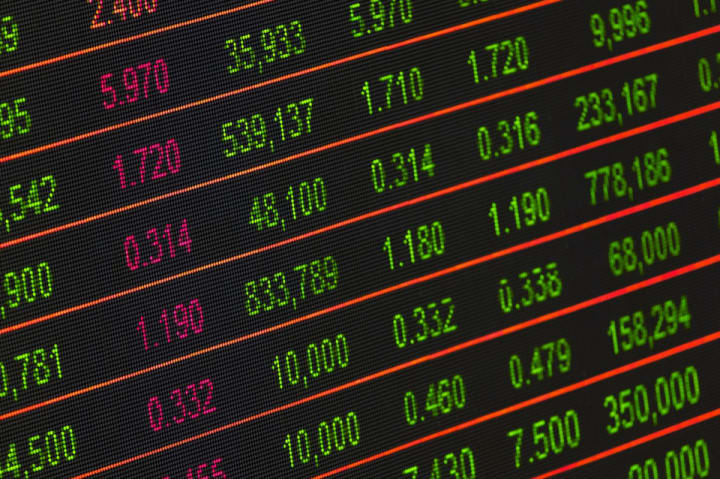
We can derive two critical, life-changing lessons from this.
1. Your Career Guide: Stop Chasing "Stability"
- The Truth: You must stop anchoring your sense of security to the "stability" of a "big" company. The TBTF companies are the most dangerous places to work. They are bloated, inefficient, and run by political operators, not innovators. They proved they will dump you in a second (see: 2011 pensions, or the 2021 layoffs after taking bailout money).
- What You Must Do: See yourself as an independent entrepreneur. Your security must come from your skills, not your employer's logo. Go to the companies that are disrupting the old industries. They look "risky" on the outside, but they are creating real value, which is the only true security.
2. Your Investment Guide: Stop Investing in Zombies
- The Truth: When you buy a stock like American Airlines (or any other bailed-out, politically-connected giant), you are not "investing." You are speculating. You are placing a bet that the government will bail it out again. You are betting on political connections, not on value creation.
- The Austrian Insight:True investment is giving your scarce capital to the entrepreneurs who are most efficient at satisfying real consumer needs.
- What You Must Do: Find companies with low debt, high cash flow, management of skin in the game, and a religious obsession with customer value. If a company's 50-year history proves it is a "capital furnace," stay away.
About the Creator
Cher Che
New media writer with 10 years in advertising, exploring how we see and make sense of the world. What we look at matters, but how we look matters more.
Author’s Advice
If you would’ve asked me 20 years ago did I know I’d become a writer and an author, I would’ve said “nope, ain’t happening”. As fate would have it I did become an author and I can honestly say I’m loving it so far. It really does feel good to be a writer. I’ve learned a lot on this journey and I feel like with even me being as new to this world as I am, there’s some wisdom I need to share with every other aspiring author.
By Joe Patterson2 days ago in Journal




Comments
There are no comments for this story
Be the first to respond and start the conversation.