
Why Bananas Are Banned from Fishing Boats?
Veil of Superstition
In the labyrinth of our modern world, there are still corners where the ancient whispers of superstition find a home. These are not merely quaint beliefs but stories etched into the human psyche, tales that remind us of our enduring fascination with the unexplained, the supernatural, and the mysterious.
Imagine a time when life was tethered to the land, where peasants toiled on the soil, their very existence intertwined with the rhythms of nature. In moments of doubt, when the specter of misfortune loomed, they turned to an unusual ritual - the act of knocking on wood.
This curious practice, now familiar to many, has roots that stretch back over two thousand years to the cobblestone streets of Europe and the sprawling landscapes of the United States. The peasants, in their wisdom, knocked on tree trunks, believing it would rouse the spirits residing within, spirits that could shield them from malevolent forces seeking to disrupt their lives.
Yet, the legacy of this superstition extends far beyond the countryside, finding its place in our modern world as a token of defiance against the unknown.
In a land where the sun blazed relentlessly and the sands of time seemed unyielding, the people of ancient Egypt held triangles in profound reverence. These triangles, symbols of the divine, held sway over their beliefs. But fate often played tricks, for leaning ladders, with their triangular shapes, became an unwitting sacrilege.
To walk beneath such a ladder was to court misfortune, to disrupt the sacred geometry that bound their world. The superstition, born in the shadows of the pyramids, took root and spread like a desert wind, an enduring mystery buried in the sands of time.
Now, turn your gaze to the world of ancient Greece, a realm of philosophers and visionaries. Here, mirrors were not mere vanities but gateways to the mystical. Mystics and seers would peer into these reflective surfaces, searching for glimpses of the future. Distorted reflections were dark omens, harbingers of troubles yet to unfold.
As centuries flowed like the currents of a river, this superstition transcended cultures and boundaries, evolving into the fear of breaking mirrors, a belief that endures to this day.
In the tapestry of human history, there exists a precious commodity - salt. Yet, its value extends beyond the culinary. In ancient Sumer, where civilization first took root, salt was akin to gold. To spill it on the floor was not a mere accident; it was throwing away wealth, a grievous mistake.
To counteract this misfortune, the people of Sumer would toss a pinch of salt over their left shoulder, a symbolic offering to the unseen forces. This act, born from the crucible of ancient civilization, blinded malevolent spirits lurking in the shadows, thwarting their dark designs.
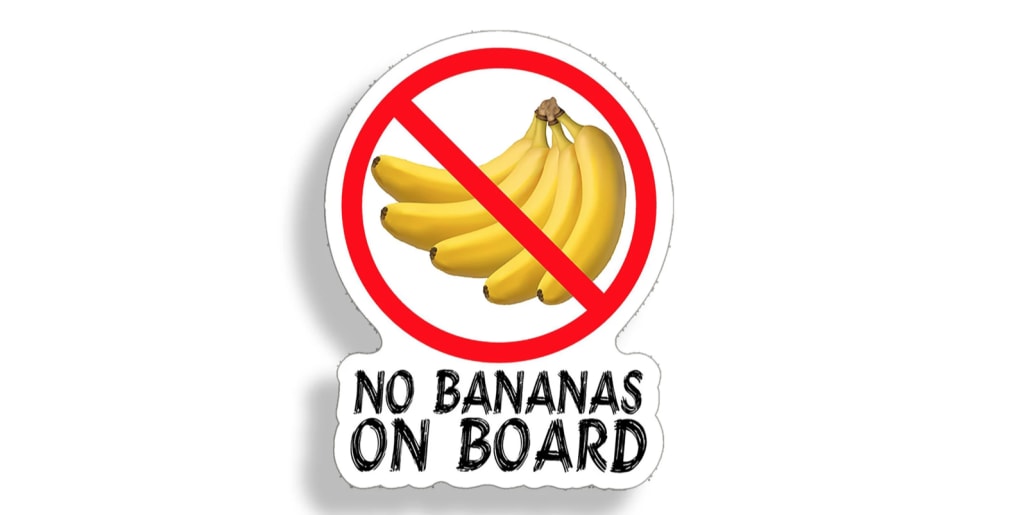
Let us voyage to an era of brave sailors who dared to navigate the tempestuous seas. Among their many superstitions, one stands out - the curious fear of bananas. Picture a world where merchant vessels set sail from the tropical shores of the Caribbean to distant lands.
During these treacherous voyages, a strange pattern emerged. Ships laden with bananas, a seemingly innocent cargo, mysteriously disappeared. Bananas became omens of disaster, their presence a curse that foretold doom.
In the annals of ancient Greece, iron was more than a mere metal; it was a guardian against malevolent forces. Horseshoes, shaped like crescent moons, became symbols of protection and good fortune. These talismans adorned the front doors of homes, warding off the darkness that lurked beyond.
As centuries unfurled, the superstition of opening umbrellas indoors found its place in Victorian England. In those times, umbrellas were not the lightweight contraptions we know today. Their frames were sturdy, often crafted from iron. Opening them indoors posed hazards - injuries, broken objects, and heated disputes.
In the quiet moments of a moonlit night, a black cat crosses your path. It is a sight that evokes both trepidation and fascination, for this superstition exists in dualities, a reflection of both good and bad omens.
In ancient Egypt, black cats were revered as sacred beings, bestowing blessings upon those who encountered them. However, as civilizations evolved, the perception of black cats underwent a transformation, becoming entwined with the mysterious world of witches and dark forces.
Among the birds that grace our skies, magpies hold a unique place. Yet, a peculiar superstition surrounds them - the practice of politeness. Imagine yourself in the countryside, strolling along a quiet lane, when you chance upon a magpie perched on a branch.
What do you say? "Good morning, Mr. Magpie, how's your lady wife today?" These words, spoken with a hint of whimsy, hold a special significance, a belief that by acknowledging the magpie's partner, you can banish misfortune.
In a world driven by numbers and logic, the fear of one number defies explanation. Triskaidkaphobia, the fear of the number 13, is a superstition that transcends cultures and generations. Yet, its origins lie in Scandinavian mythology, in a fabled banquet hall where gods and heroes feasted.
Amidst the lush landscapes of nature, a botanical treasure awaits discovery - the four-leaf clover. Its rarity, with odds of one in ten thousand, makes it a cherished find. But it is not just rarity that makes this clover special; it is the legend that surrounds it.
Legend has it that Eve, cast out from the Garden of Eden, carried a four-leaf clover as a memento of paradise lost. It became a symbol of prosperity, good luck, and happiness.
These are the stories of superstition, woven into the tapestry of our lives, reminders that the mysteries of the universe still beckon, even in our modern age. These beliefs, like whispers from the past, offer a glimpse into the enduring human quest for meaning in the enigmatic dance of life.
About the Creator
Keep reading
More stories from Almustapha Babangida and writers in Journal and other communities.
EXPLORING REMARKABLE TALES OF SURVIVAL!!! 'AGAINST ALL ODDS: WHEN PLANES BREAK APART, LIVES ARE SAVED' SHEDS LIGHT ON THE RESILIENCE AND RESOURCEFULNESS OF INDIVIDUALS FACING AVIATION EMERGENCIES
A Near Miss in Japanese Skies (2001): In the early months of 2001, two commercial airplanes found themselves on a potentially catastrophic collision course high above Japan. The first aircraft, a massive Boeing 747, carried over 400 passengers and was soaring skyward from Tokyo's Haneda International Airport. Meanwhile, the second plane, a slightly smaller one with approximately 250 passengers, had initiated its journey from Busan, South Korea, en route to Tokyo, Japan. Both flights seemed to be progressing as routine air travel does: passengers were indulging in in-flight meals, stretching their legs, and engaging in typical activities.
By Almustapha Babangida2 years ago in Journal
The Wheat Paradox
Wheat is one of humanity’s oldest cultivated crops and remains a cornerstone of the global food system. From bread and pasta to flatbreads and noodles, it provides nearly 20 percent of the world’s daily calories. Yet despite record levels of production in many years and advanced agricultural technologies, wheat has become a symbol of contradiction in the modern world. This contradiction — often referred to as the “wheat paradox” — lies in the fact that while global wheat supplies are broadly sufficient, access to affordable wheat-based food is becoming more fragile for millions of people.
By Salaar Jamali2 days ago in Journal
🅼🅸🅳🅽🅸🅶🅷🆃 🆂🅽🅰🅲🅺🆂
"It's 10 in Tuscon! We all know what that means... It's Time for Midnight Snacks with your man, Gerald Gee! Ready to spend the night together? Me too! I'm full of snacks and can't wait to regurgitate them all back into your hungry ears. Crack a brew! Pop some corn! Anything to get ready for one hell of a show where the talk maybe cheap but the words cut deep...
By Lamar Wiggins6 days ago in Fiction



Comments
There are no comments for this story
Be the first to respond and start the conversation.